MIT-WPU, NIPM Karnataka and Industry Leaders Call for Industry-Led Learning and AI-Ready Talent
Industry leaders from IBM, Biocon, Canonical, Kraft Heinz India and JLL join NIPM Karnataka and MIT-WPU to discuss AI-ready talent and future workforce needs.
 City Air News
May 29, 2026 06:21
0
City Air News
May 29, 2026 06:21
0
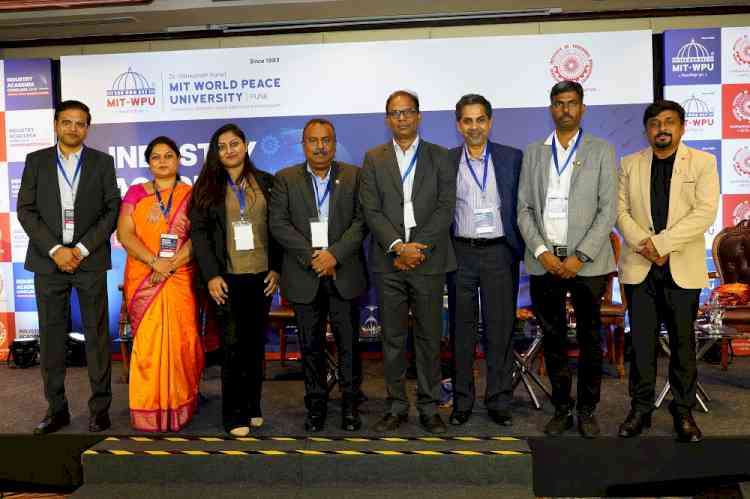
Bengaluru May 29,2026: As Artificial Intelligence (AI), automation, and rapid technological advancements continue to reshape workplaces globally, industry leaders and academicians at the Industry Academia Conclave 2026 organised by MIT World Peace University (MIT-WPU), Pune, in association with the National Institute of Personnel Management (NIPM), Karnataka Chapter, called for stronger collaboration between academia and industry to create future-ready talent and bridge the growing employability gap.
Held in Bengaluru under the theme “Bridging Ideas. Building Futures,” the conclave brought together senior HR leaders, academicians, technology experts, manufacturing professionals, and industry stakeholders to deliberate on the future of work, AI-led disruption, changing workforce expectations, and the need for continuous upskilling and reskilling. The event featured multiple panel discussions, keynote sessions, and industry-academia interactions focused on preparing students and professionals for rapidly evolving workplace demands.
The event featured keynote addresses and panel discussions with industry leaders including Thyagu Valliappa, Vice Chairman, Sona Valliappa Group; Prof. Prasad D. Khandekar, Chief Academic Officer, MIT-WPU; Sanjay Mitra, Chairman, NIPM Karnataka Chapter; and senior professionals from IBM, Biocon, Canonical, Kraft Heinz India, JLL, and other leading organisations.
In his keynote address, Thyagu Valliappa highlighted how industry-integrated learning models are improving employability outcomes for students. He stressed that educational institutions must evolve from simply responding to industry trends to actively anticipating future technologies and workforce requirements.
“The future belongs to institutions that can teach tomorrow’s technologies today. One-size-fits-all models will no longer work in education or skilling,” he added.
The discussions also focused on the shrinking shelf-life of skills in sectors such as technology, electronics, semiconductor manufacturing, and advanced manufacturing, where rapid innovation is continuously changing job roles and skill requirements. Industry experts noted that organisations today are increasingly looking for talent with practical exposure, interdisciplinary capabilities, problem-solving ability, and adaptability alongside academic qualifications.
Sanjay Mitra, Chairman, NIPM Karnataka Chapter, said closer collaboration between HR professionals and educational institutions is critical to ensure academic curricula remain aligned with evolving industry expectations and workplace realities.
Addressing the conclave, Prof. Prasad D. Khandekar said educational institutions are facing increasing pressure to redesign curricula and teaching methodologies to keep pace with AI-led transformation across industries.
“Industry expectations are changing faster than ever before. Universities today are not just preparing students for current jobs, but for roles that may evolve significantly over the next three to four years. This challenge can only be solved when academia and industry work together continuously,” he said.
He added that universities must focus not only on technical knowledge, but also on mindset development, adaptability, experiential learning, and interdisciplinary thinking to prepare students for the future workplace.
The discussions concluded with a collective call for long-term industry-academia partnerships, innovation-driven learning ecosystems, and collaborative skilling initiatives that can help India build globally competitive, AI-ready talent for the future economy.