Maha govt sets up study groups for integrated bus transport in MMR
In a bid to streamline public transit across the Mumbai Metropolitan Region (MMR), the state Urban Development Department on Monday issued a Government Resolution (GR) to establish a Technical Group and a Study Group. These groups are tasked with formulating a comprehensive roadmap for an integrated bus transportation system across various municipal transport undertakings.
 IANS
Jun 15, 2026 11:39
0
IANS
Jun 15, 2026 11:39
0
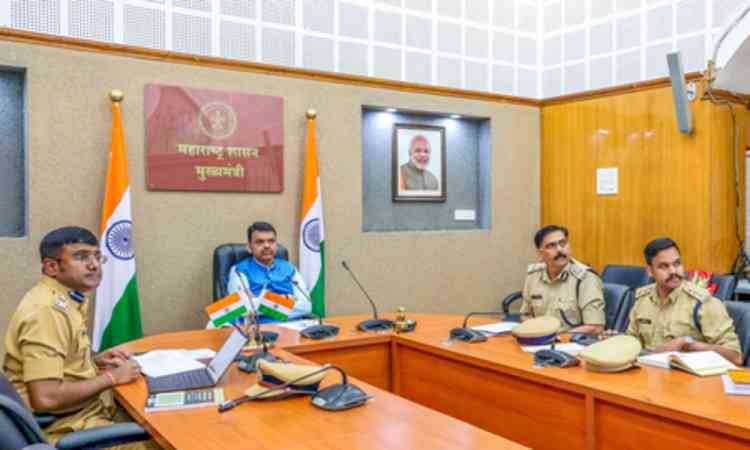
Mumbai, June 15 (IANS) In a bid to streamline public transit across the Mumbai Metropolitan Region (MMR), the state Urban Development Department on Monday issued a Government Resolution (GR) to establish a Technical Group and a Study Group. These groups are tasked with formulating a comprehensive roadmap for an integrated bus transportation system across various municipal transport undertakings.
This initiative falls under NITI Aayog’s broader pilot project concept of transforming select urban areas into ‘Growth Hubs’ (G‑HUB) to drive economic strategy and implementation. To steer this vision, a G‑HUB Regulatory Board, chaired by the Chief Minister, and a coordination committee, headed by the Chief Secretary, have already been operationalised.
Following the directives of the G‑HUB Regulatory Board, a Task Force was established on June 10, 2025, to draft the initial integrated plan, leading to the formal creation of these dedicated study and technical bodies today.
The Technical Group will be chaired by the Assistant General Manager (Traffic and Operations) of the Brihanmumbai Electric Supply and Transport (BEST). The newly formed Technical Group comprises transport managers from various municipal corporations, including Navi Mumbai, Thane, Mira Bhayander, Kalyan Dombivli, Vasai Virar, and Panvel.
The primary terms of reference for this group include rationalising bus routes across municipal boundaries, harmonising service schedules and timetables for seamless connections, creating a collaborative roadmap for technology integration and shared infrastructure use among all Public Transport Operators (PTOs), and recommending fare-rationalisation formulas and revenue‑sharing models for inter‑jurisdictional and multi‑operator routes.
The Technical Group must submit its detailed findings and recommendations to the Study Group by July 15, 2026. The Study Group has been formed to examine the uniform fare structure and revenue allocation. The overarching Study Group will be led by the General Manager of BEST, with Municipal Commissioners from Thane, Navi Mumbai, Kalyan‑Dombivli, Vasai‑Virar, Mira‑Bhayander, Bhiwandi‑Nizampur, Ulhasnagar and Panvel serving as its key members. The Study Group's primary objectives focus on policy implementation, passenger convenience, and financial models.
The Study Group will evaluate and establish a uniform and rationalised fare structure across the MMR, formulate a ‘Telescopic Fare’ system (where the fare per kilometre decreases gradually for longer distances) to improve cost‑effectiveness for long‑distance commuters, and finalise revenue distribution and reconciliation mechanisms under a unified ticketing framework. Integrating the technical inputs, the Study Group is mandated to submit its final comprehensive proposal to the state government by July 31, 2026.
According to the GR, the planned integration is poised to significantly eliminate the hurdles posed by changing regional operators, disjointed ticketing systems, and conflicting schedules for millions of daily commuters moving between Mumbai and its sister cities. By deploying smart technology integration, uniform ticketing and optimised multi‑city routing, the Maharashtra government aims to deliver a unified urban transit ecosystem for the entire metropolitan belt.
--IANS
sj/dan