Last Day of BHARANGAM: Sri Lankan play "Colombo Hathe Thorana” highlights a story of Love, Marriage, and Conflict
The 25th edition of the Bharat Rang Mahotsav (Bhararangam), organized by the National School of Drama (NSD), New Delhi, at the Dada Lakhmi Chand State University of the Performing and Visual Arts (DLC SUPVA), concluded on Thursday.
 Girish Saini
Feb 12, 2026 11:07
0
Girish Saini
Feb 12, 2026 11:07
0
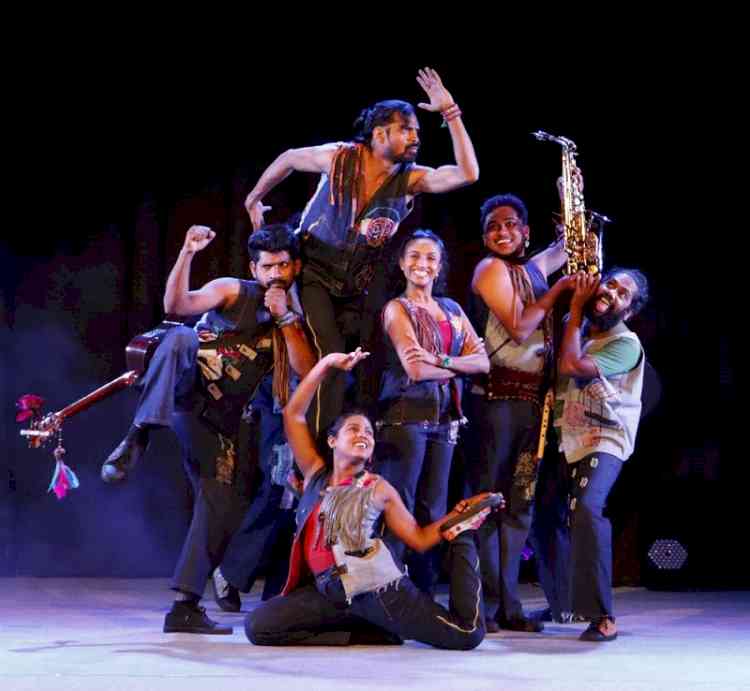
Rohtak, February 12, 2026: The 25th edition of the Bharat Rang Mahotsav (Bhararangam), organized by the National School of Drama (NSD), New Delhi, at the Dada Lakhmi Chand State University of the Performing and Visual Arts (DLC SUPVA), concluded on Thursday.
On the last day of this four-day festival, artists from Sri Lanka's Apoorva Theatre Group staged the play "Colombo Hathe Thorana." This play, which highlights the fragility of human relationships, was performed in Sinhala, the Sri Lankan language. A projector screen was also installed in the auditorium to display the play's synopsis and subtitles for the dialogues. However, the audience felt the language was not a barrier due to the actors' brilliant performances.
The play was directed and written by Dr. Chamika Hatlahawatta. In the two-hour-long Play “Colombo Hathe Thorana”, eight musicians, singers, and actors collaborated to invite the audience to imagine a pavilion created not with lights and cloth, but by their own voices and bodies. This play, realized through music, acting, and physical expression, was divided into three parts: love, marriage, and struggle.
Each act featured characters changing roles, and the stories taking on new forms. The love section depicted a school assembly where a student demanded justice. This event sparked a conflict between love and despair. The marriage section relived the story of forced marriage, broken relationships, and loneliness. The conflict section placed these personal struggles against a broader political backdrop, depicting personal conflict and social unrest, which later escalated into violence, betrayal, and tragic consequences. The play powerfully and sensitively presented the complex relationships between love, marriage, struggle, and society.
The play was performed on stage by Nipuni Sharda, Thilini Jayamali, Jeanot Anthony, Akalanka Prabhashwara, Sudarshan Krishnatha, Hesan Kuruppu, Pasan Ranawira, and Chanuka Sandeep. Behind the stage, Nilanka Nisalanjala handled production and marketing, Sandun Lakshan handled production manager, Lasith Liyanage and Nishanka Rajapaksha handled stage management, Lahiru Madiwila handled music, Dulaj Chamara handled body percussion, Devangani Dissanayaka handled choreography, Asela Nuwan handled light design, and U.R. de Silva handled production.