Koshala Literature Festival 2025 Concludes Four Days of Stories, Discussions, and Cultural Heritage
The Koshala Literature Festival concluded its four-day journey in Lucknow, bringing together writers, social activists, filmmakers, cultural custodians, and performers to celebrate ideas, storytelling, and heritage. The festival offered a platform for dialogue across literature, mythology, cinema, culture, and social issues, engaging audiences in sessions that combined intellectual rigor with creative expression.
 City Air News
Dec 3, 2025 08:41
0
City Air News
Dec 3, 2025 08:41
0
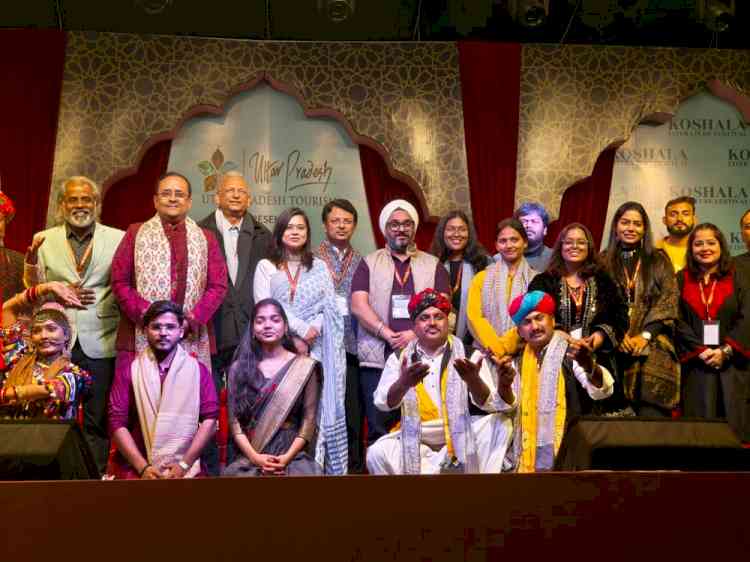
Lucknow: The Koshala Literature Festival concluded its four-day journey in Lucknow, bringing together writers, social activists, filmmakers, cultural custodians, and performers to celebrate ideas, storytelling, and heritage. The festival offered a platform for dialogue across literature, mythology, cinema, culture, and social issues, engaging audiences in sessions that combined intellectual rigor with creative expression.
The festival opened with “Revolutionary Voices of Lucknow,” where young social activists Versha Verma, Rakhi Kishore, Nilay Agarwal, and Harshit Singh shared insights from their grassroots initiatives across India. Moderated by Aanchal Awasthi, the panel highlighted youth-led programs including nationwide blood donation networks, education and welfare initiatives for underprivileged children, and debates around animal welfare and street dog management. The session showcased how Lucknow’s young voices are shaping social change far beyond the city’s boundaries.
In “Clash of Ideals: Myth and Modernity,” writer Sharad Bindal explored the divergence between popular beliefs and original Indian scriptures. From questioning well-known narratives in the Ramayana to examining cultural and linguistic connections between ancient India and regions like Russia, the discussion emphasized the human drive to reinterpret mythology. The conversation also highlighted how mythology, history, and mytho-fiction each contribute uniquely—mythology offering meaning and faith, history providing verified facts, and mytho-fiction filling gaps with imagination.
“Living Legacies: The Intangible Art of Awadh” brought together Taha Ahmed, Maroof Kulman, Taqi Abbas, Devanshi Seth, and Asma Hussain to discuss the preservation of Awadh’s cultural heritage. From digital platforms like Naav Lucknow and “Lucknow Undiscovered” to international promotion of chikankari, zardozi, mukaish, and jamdani weaving, panelists emphasized the economic and intergenerational challenges artisans face. The session underscored the need for authentic representation, fair compensation, and initiatives that connect younger audiences with the city’s rich heritage.
The festival also focused on cinema and storytelling. In “Scripted Realities: Mirror of a Streaming Nation,” screenwriter Vaibhav Vishal shared his immersive approach to creating authentic characters, stressing dialect coaching, field research, and ethical representation. Filmmaker Tigmanshu Dhulia, in “The Tigmanshu Effect,” discussed his cinematic philosophy rooted in realism, social responsibility, and ethical storytelling, critiquing trends of hyper-masculinity and commercialized cinema while emphasizing inclusive distribution and the revival of single-screen theaters.
The festival explored sensitive storytelling in “Unspoken: Writing Lives in Conflict” with authors Neha Dixit and Aarti Jamal. They detailed their experiences writing real-life narratives, highlighting challenges around consent, ethical reporting, and the socio-cultural realities of marginalized communities, including migrant women and people living in conflict zones. Similarly, “Tell All the Truth, Tell It Slant” featured writer Amy Singh, photojournalist Soumya Khandelwal, and documentary filmmaker Wamiq discussing responsible representation, consent, and navigating nuanced truths in creative work.
Rajat Ranjan’s literary performance captivated audiences with a blend of poetry, prose, and social commentary. From tributes to Lata Mangeshkar and Faiz Ahmed Faiz to readings from Harishankar Parsai and Gulzar, Ranjan’s evocative storytelling highlighted the power of live literary performance to transform familiar narratives into compelling, immediate experiences.
Across four days, the Koshala Literature Festival facilitated a confluence of ideas, talent, and dialogue, reinforcing Lucknow’s stature as a hub for literature, culture, and intellectual engagement. From heritage preservation to ethical storytelling, mythology to modern narratives, and cinema to poetry, the festival showcased the vibrancy and diversity of creative expression, leaving audiences inspired and engaged.