India's strategic autonomy key to building independent global partnerships: Delhi LG at JGU lecture
 IANS
Nov 3, 2026 01:28
0
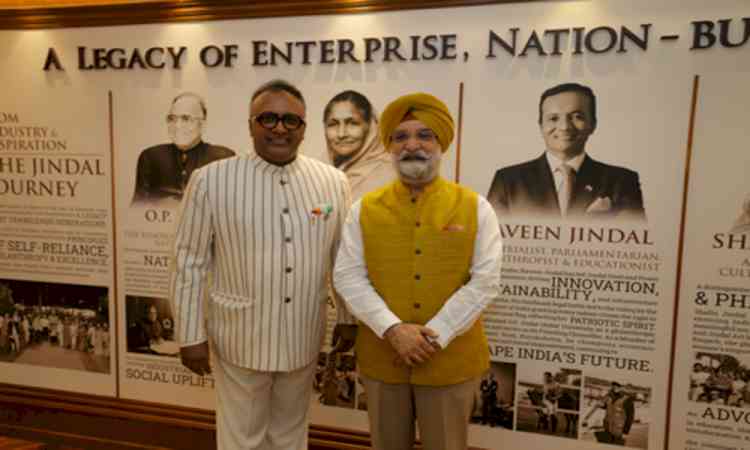
Sonipat, Nov 3 (IANS) "We are living through a period of significant geopolitical transformation. The international order is being reshaped by strategic competition, regional conflicts and a growing contest over economic and resource security. Countries are reassessing their partnerships. They are diversifying their supply chains and looking for reliable economic and strategic partners in this changing environment,” said Sardar Taranjit Singh Sandhu, the Lieutenant Governor of Delhi, who was speaking at a distinguished public lecture on the theme “India’s Role in Evolving Geopolitics” at O.P. Jindal Global University.
“We have the scale of a major economy, the demographic strength of a young nation, growing technological capabilities, and established relationships across different centres of global power. More importantly, we have the ability to engage with countries that may not necessarily agree with one another. India’s foreign policy has always been guided by the pursuit of national interest. Strategic autonomy gives us the freedom to assess international developments independently, develop partnerships and take decisions based on our national priorities,” said Sardar Taranjit Singh Sandhu.
“What is particularly significant is that India’s partnerships are not limited to any one country or grouping. We engage with the United States, Europe, Russia, Japan, Australia and countries across the Global South. This gives India a distinctive diplomatic reach at a time when international relationships are becoming more complicated. The ability to maintain meaningful engagement with different players is itself a strategic asset. The current global situation has reinforced this importance. Conflicts, economic uncertainty, and disruptions to energy and supply chains are affecting countries across continents. The world is looking for dependable partners that can contribute to stability in critical sectors, provide economic opportunities, and help manage the consequences of geopolitical disruptions. India has both the capacity and the credibility to play a larger role,” the Governor explained.
“This is particularly relevant during periods of crisis, when communications between countries become more difficult. India’s ability to maintain relationships across different geopolitical groupings can create opportunities for engagement, protect our interests, and contribute to addressing wider international challenges. Ultimately, India’s geopolitical influence will depend on how effectively we translate our strengths into capabilities. We need continued investment in education, research, infrastructure, defence, manufacturing, energy security, and advanced technology. Another important dimension is India’s relationship with the Global South. Many developing countries are seeking affordable technology, reliable healthcare, infrastructure investment and access to international markets. We can share our expertise, facilitate technology partnerships, and help build capabilities rather than merely provide assistance, drawing on our engagement with major powers and our credibility across developing economies,” he further elucidated.
“India must approach this moment with ambition, confidence and a clear understanding of its national interests. Our role should not be confined to adapting to the decisions of others. We must participate in shaping the rules, institutions, technologies and economic partnerships that will define the international order in the years ahead. India’s opportunity is not simply to find its place in the emerging world. It is to help shape that world!” the Lt. Governor concluded.
Welcoming the Lt. Governor, Prof. (Dr.) C. Raj Kumar, the Founding Vice Chancellor, O.P. Jindal Global University, said, “We are very privileged to welcome Sardar Taranjit Singh Sandhu not only because he holds the distinguished position of the Lieutenant Governor of Delhi, but also because he has been a witness, a participant and an active player in shaping the geopolitics of what we are seeing today. He is a distinguished public intellectual who has made significant contributions to global policymaking as an Indian Foreign Service officer and served with distinction as India’s ambassador to the United States. He comes with vast experience of looking at societies and contributing to the relationships that India has built with many countries, including the United States, where the foundations of the relationship’s early strength and evolution were indeed laid down by our distinguished chief guest. In fact, the India-US relationship has been possible to a large extent because of the leadership of our chief guest at a critical time and juncture in its history.”
The Vice Chancellor also announced the launch of the inaugural World Ideas Forum 2027, conceived by O.P. Jindal Global University, and said, “Our vision is now to be a leader in the realm of thoughts and ideas that can shape the future. Why should the Global South only be a consumer of ideas rather than generate them? While we need to partner and collaborate with every country in the world, it is important for us, in India and representing the broader Global South, to play a leadership role in generating ideas and in convening leaders to be able to come up with ideas.”
Dr. Mohan Kumar, Professor & Dean, Strategic and Office of the JGU Vice Chancellor, and Professor of Diplomatic Practice, who was India’s ambassador to France and is also a former diplomat from the Indian Foreign Service, introduced the distinguished speaker and recalled the time that the Governor had spent as a distinguished diplomat in his various roles across the world.
Prof. (Dr.) Arpita Gupta, Dean of Research, O.P. Jindal Global University, gave an overview of the research environment at the university, where world-class research documents of the highest standard have been published in globally recognised and peer-reviewed publications.
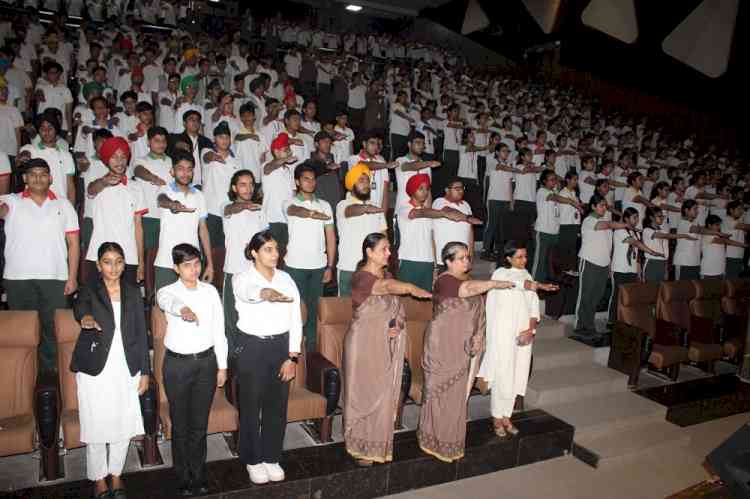
The Q&A session was moderated by Prof. Ambreen Khan, Adjunct Professor of Practice, and featured a wide-ranging interaction with JGU students focusing on India’s future and geopolitics.
The concluding remarks and vote of thanks were given by Prof. Dabiru Sridhar Patnaik, Registrar, O.P. Jindal Global University.
--IANS
skp/