“India’s Real Challenge Is Converting Academic Research into Technology and Products” Says Abhay Karandikar, Member, NITI Aayog at Ashoka University’s Research X Impact Conclave 2026
Ashoka University, in collaboration with the Anusandhan National Research Foundation (ANRF), hosted the Research X Impact Conclave 2026 at its campus today, bringing together researchers, academics, policymakers and stakeholders from across the research ecosystem to deliberate on advancing the impact of research through dialogue, training and peer engagement. Organised by the University’s Research and Development Office, the conclave focused on strengthening pathways for translating research into meaningful societal and economic impact.
 City Air News
Sep 9, 2026 08:58
0
City Air News
Sep 9, 2026 08:58
0
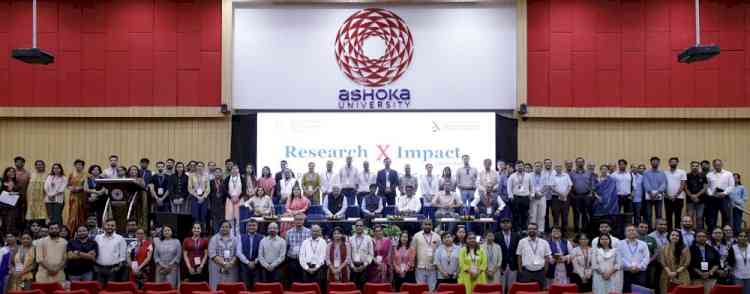
New Delhi, September 9, 2026: Ashoka University, in collaboration with the Anusandhan National Research Foundation (ANRF), hosted the Research X Impact Conclave 2026 at its campus today, bringing together researchers, academics, policymakers and stakeholders from across the research ecosystem to deliberate on advancing the impact of research through dialogue, training and peer engagement. Organised by the University’s Research and Development Office, the conclave focused on strengthening pathways for translating research into meaningful societal and economic impact.
The conclave featured esteemed speakers including Prof. Abhay Karandikar, Member, NITI Aayog, Government of India, Dr. Shivkumar Kalyanaraman, Chief Executive Officer, ANRF, Ashish Dhawan, Founding Chairperson, Board of Trustees, Ashoka University, Rishikesha T. Krishnan, Vice-Chancellor, Ashoka University, Prof. Gautam Bhattacharyya, Dean, Research, Ashoka University, Shilpy Kochhar, Director, Research and Development Office, Ashoka University, among others.
Delivering his keynote address, Abhay Karandikar, Member, NITI Aayog, Government of India, said, “India has emerged as the third largest in the world in terms of publications in science and engineering, but clearly there is a gap from academic research into translational research. We are not able to convert the research happening in our universities and scientific R&D labs into commercial deployable technologies and products. Something our country lacks is a mature corporate R&D ecosystem in the industry and the private sector which can interact with academia. This is one of the reasons why we do not have very robust industry-academia relationships in the country. We need to incentivise the private sector to invest in R&D so that the research happening in our academia and universities can be converted into technology development and products.”
Professor Abhay Karandikar also outlined three broad ‘buckets’ of challenges that science and technology must address as India moves towards a developed economy. Further highlighting the three buckets, he said, “We have divided the problems into majorly three buckets when we go towards Viksit Bharat. One is the bucket of sustainability and fragility. The second bucket is the resource constraint which includes food, water and material scarcity. The third bucket is transforming lifestyle and quality of life, which includes transportation, housing, pollution, and affordable health care. Science and technology have to solve the problems which are facing our society.”
Dr. Shivkumar Kalyanaraman, Chief Executive Officer, ANRF, in his session, highlighted the importance of building a strong research-to-impact ecosystem through deeper collaboration and engagement among researchers. He added “Unless we have deep science, we will not have deep technology. We have to convert deep science to deep technology, deep technology to deep entrepreneurship, and then go beyond. That journey requires connections, collaborations and teams coming together—and connections need conversations. This conclave is one way of enabling those conversations and building an ecosystem where we can do bigger things together.
In his special address Ashish Dhawan, Founding Chairperson, Board of Trustees, Ashoka University provided an overview of the changing research and innovation landscape in the country and drew parallels with Ashoka University’s own evolving research journey. He said, “I think it’s an interesting juncture for the country. For the first time, we’re seeing an uptick in R&D, with greater output coming out of academia and research labs, and industry also participating in a significant way. Even as the country is at a takeoff moment, I think Ashoka is also at that interesting inflection point where the science journey for Ashoka has just begun. Ashoka’s science infrastructure will increase many fold in the years ahead, and so will the number of faculty. We are at the outset of our journey and look forward to contributing to this changing research landscape.”
Prof. Gautam Bhattacharyya, Dean, Research, Ashoka University also highlighted the consistent effort Ashoka University is making in the field of science and research and said, “As a young university, Ashoka has already made a name as a leading institution in undergraduate liberal arts training, and now we have a huge ambition to be recognised as a world-class research university. Today, Ashoka has high-end imaging, spatial genomics, and other research infrastructure. We seriously believe in the importance of research leaving laboratories and reaching out to the masses and here we need the support of national bodies like ANRF that are actively rethinking how research should be strengthened in India.”
A key highlight of the conclave was the ANRF Grantee Pitches, which provided researchers with an opportunity to present their ongoing work and engage with peers and stakeholders. The programme also featured a hands-on session on SARAL AI, led by Prof. Ponnurangam Kumaraguru, Visiting Scientist, Anusandhan National Research Foundation (ANRF), exploring the role of emerging technologies in supporting research and innovation.
The discussions then moved from research creation to its application through ‘Science to Commercialisation: From Lab to Market’, led by Dr. Premnath Venugopal, Founder-Director, Venture Center. The session examined the journey from scientific discovery to commercialisation and the role of innovation, incubation and entrepreneurship in enabling research to move beyond the laboratory and create wider impact.
Through a day of insightful discussions, research presentations, hands-on sessions and peer engagement, Research X Impact Conclave 2026 brought together diverse perspectives on strengthening India’s research and innovation ecosystem. Participants took away deeper insights into the pathways from fundamental research to translation, technology and entrepreneurship, while also exploring opportunities for greater collaboration across academia, government and industry to enable research to create meaningful societal and economic impact.