IIT Roorkee Study Charts Scaling up Floating Solar Photovoltaic Systems to Support India’s Net Zero Goals
In a significant contribution to India’s clean energy transition, the Indian Institute of Technology Roorkee has prepared a comprehensive national-level report titled “Scaling up Floating Solar Photovoltaic Systems (FSPV)”, outlining recommendations to enable rapid development of FSPV in India in alignment with Pradhan Mantri Surya Sarovar Yojana (PM-SSY) to support the country’s Net Zero 2070 goals.
 City Air News
Sep 3, 2026 04:58
0
City Air News
Sep 3, 2026 04:58
0
Roorkee / New Delhi, September 3, 2026: In a significant contribution to India’s clean energy transition, the Indian Institute of Technology Roorkee has prepared a comprehensive national-level report titled “Scaling up Floating Solar Photovoltaic Systems (FSPV)”, outlining recommendations to enable rapid development of FSPV in India in alignment with Pradhan Mantri Surya Sarovar Yojana (PM-SSY) to support the country’s Net Zero 2070 goals.
These projects would provide an opportunity to gainfully utilize existing water reservoirs & industrial ponds, and eliminate competition for scarce land resources. FSPV will contribute to renewable energy capacity addition, support the achievement of national energy and climate objectives, and facilitate optimal utilisation of water resources while advancing the vision of Viksit Bharat.
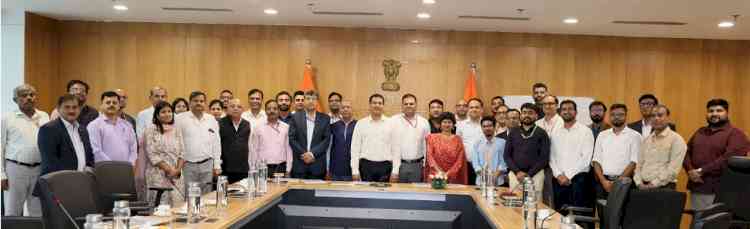
The report was formally released by Santosh Kumar Sarangi, Secretary, Ministry of New and Renewable Energy (MNRE), who emphasized the importance of FSPV in India’s energy transition.
Santosh Kumar Sarangi stated, “Floating Solar PV systems will play an important role in enabling large-scale integration of renewable energy and optimizing the use scarce water resources. As India accelerates towards its Net Zero targets, such evidence-based studies are essential to guide policy, investment, and implementation. This report provides valuable insights to strengthen our efforts towards building a resilient, reliable, and sustainable energy ecosystem.”
Conducted under the leadership of Prof Arun Kumar, the study presents a comprehensive review of the global status, growth trends, and deployment of FPV systems, with particular emphasis on India. The study also reviews the policy and regulatory frameworks governing FPV development in various countries. Based on the findings of this international review, recommendations are proposed for the development of a robust and effective framework to support FPV deployment in India.
The key highlight of the study is the formulation of a strategy/ framework to support FSPV development in India. The recommended framework will facilitate the deployment of this technology, with key focus areas including site identification, environmental safeguards, and financial incentives.
Prof. Kamal Kishore Pant, Director, IIT Roorkee, in his foreword reflected IIT Roorkee’s commitment to advancing science-driven solutions for India’s clean energy transition. FSPV will play an important role in enabling scalable, and sustainable energy systems, not only supporting national priorities but also contributing to global climate and water conservation goals.”
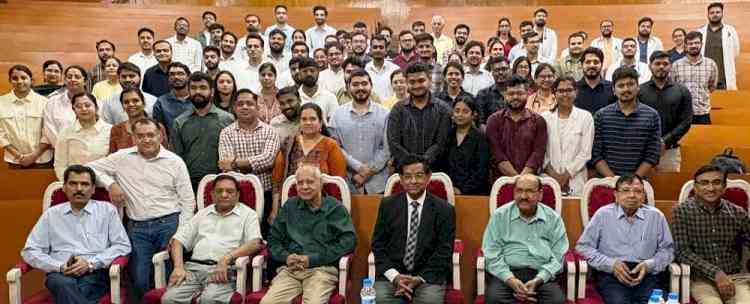
The event featured senior officials from MNRE, the Central Electricity Authority (CEA), Solar Energy Corporation of India (SECI), National Institute of Solar Energy (NISE), along with a diverse group of industry leaders, government and private developers, financial institutions, and domain experts, underscoring the growing national emphasis on energy transition.
Distinguished attendees included Mayank Tiwari, Additional Secretary, MNRE; Akash Tripathi, Managing Director, Solar Energy Corporation of India Ltd.; JVN Subramanyam, Joint Secretary, MNRE, S D Sharma, CWC and Md. Musharraf Ali Faruqui, Vice Chairman & MD, TGREDCO Ltd., Hyderabad. They were joined by senior officials from MNRE and CEA, FSPV developers, equipment suppliers, consultants, representatives from government institutions, CPSUs and state PSUs, leading advisory firms, financial institutions, and technology providers.
Speaking on the occasion, Prof. Arun Kumar, IIT Roorkee, thanked the Secretary MNRE for graciously agreeing to release the report. Prof. Kumar emphasised that this report was developed in close coordination with various FSPV stakeholders across the country and can serve as a basis for further studies and the development of FSPV. He further mentioned that India must invest in research and development to increase the indigenous development of FSPV technologies and impacts on water bodies.
By bridging research, policy, and industry perspectives, the study positions IIT Roorkee at the forefront of India’s clean energy discourse. It is expected to serve as a critical reference for policymakers, utilities, and global stakeholders working towards resilient, low-carbon energy systems.
Beyond its technical contributions, the initiative underscores the broader societal impact of sustainable energy, ensuring reliable power access, supporting economic growth, and enabling a cleaner environment for future generations, while reinforcing India’s leadership in the global transition towards renewable and climate-resilient energy systems.