IIT Roorkee Hosts High-Level Workshop on Disaster Risk Resilience & Mitigation with Focus on Himalayan Safety and Nation-Building
Indian Institute of Technology Roorkee & Shri Trilochan Upreti Smriti Himalyai Sodh Sansthan successfully organised a one-day Workshop on Disaster Risk Resilience & Mitigation on Friday at the O.P. Jain Auditorium, bringing together policymakers, scientists, disaster-response agencies, and academic leaders to deliberate on strengthening preparedness and resilience in disaster-prone regions, particularly the fragile Himalayan ecosystem of Uttarakhand.
 City Air News
Jan 16, 2026 10:08
0
City Air News
Jan 16, 2026 10:08
0
IIT Roorkee, Uttarakhand, January 16, 2026: Indian Institute of Technology Roorkee & Shri Trilochan Upreti Smriti Himalyai Sodh Sansthan successfully organised a one-day Workshop on Disaster Risk Resilience & Mitigation on Friday at the O.P. Jain Auditorium, bringing together policymakers, scientists, disaster-response agencies, and academic leaders to deliberate on strengthening preparedness and resilience in disaster-prone regions, particularly the fragile Himalayan ecosystem of Uttarakhand.
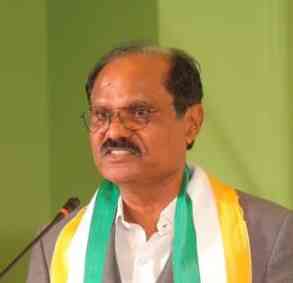
The workshop was virtually graced by Pushkar Singh Dhami, Chief Minister of Uttarakhand, as the Chief Guest. The programme was presided over by Prof. K. K. Pant, Director, IIT Roorkee, and witnessed the presence of eminent dignitaries on the dais including Prof. U. P. Singh, Deputy Director, IIT Roorkee; Prof. Sandeep Singh, Head, Department of Earth Sciences, IIT Roorkee and Convenor of the Workshop; Bhagwati Prasad Raghav, Zonal Convenor (Uttarakhand & Uttar Pradesh) and Akhil Bharatiya Executive Member, Prajna Pravah; senior officials of the Uttarakhand Government; and representatives of national disaster-response and research institutions.
Setting the context of the workshop in his welcome address, Prof. Sandeep Singh highlighted the need to move from response-centric disaster management to anticipatory, technology-enabled resilience, underscoring the critical role of earth sciences, real-time data, and interdisciplinary research. He also acknowledged the valuable collaboration with Shri Trilochan Upreti Smriti Himalayi Sodh Sansthan in advancing Himalayan-focused research and knowledge dissemination. Reinforcing this vision, IIT Roorkee reaffirmed its long-standing commitment rooted in over a century and a half of engineering and scientific excellence to translating research into practical solutions, with sustained contributions in earthquake science, landslide and flood risk assessment, early-warning systems, resilient infrastructure, and capacity building for Uttarakhand and other hazard-prone regions of the country.
In his inaugural address, Prof. K. K. Pant, Director, IIT Roorkee, emphasised that disaster resilience must be viewed as a cornerstone of sustainable development, aligned with the national vision of Viksit Bharat @2047 and global frameworks such as the Sendai Framework for Disaster Risk Reduction and the UN Sustainable Development Goals. He noted that IIT Roorkee is actively working with governments, industry, and international partners to deploy scalable technologies, foster interdisciplinary research, and build skilled human capital for disaster-resilient infrastructure and communities.
“IIT Roorkee’s responsibility extends beyond knowledge creation to knowledge application. By integrating advanced science, digital technologies, and policy engagement, we aim to support Uttarakhand and the nation in transitioning from disaster response to long-term resilience, while also contributing to global best practices in risk mitigation,” said Prof. K. K. Pant, Director, IIT Roorkee.
Addressing the gathering through an online address, the Chief Minister highlighted the vulnerability of Uttarakhand to earthquakes, landslides, floods, cloudbursts, avalanches, and forest fires, and stressed the need to move beyond relief-centric approaches towards integrated, technology-driven disaster resilience embedded in development planning. He particularly acknowledged IIT Roorkee’s nationally significant contributions in the development of Earthquake Early Warning Systems, AI-enabled forecasting, remote sensing and GIS-based modelling, and scientific support for policy formulation and field-level implementation.
“For a Himalayan state like Uttarakhand, science-led and technology-enabled disaster preparedness is not an option but a necessity. IIT Roorkee has emerged as a key national partner in strengthening early-warning systems, scientific mapping, and capacity building, and the State Government is fully committed to deepening MoU-based collaboration so that research outcomes translate into real-time protection of lives and livelihoods,” said Pushkar Singh Dhami, Chief Minister of Uttarakhand.
Offering his remarks as a distinguished guest, Bhagwati Prasad Raghav highlighted the importance of collective societal engagement, ethical leadership, and community-centric approaches in disaster preparedness, complementing technological interventions with social awareness and institutional coordination.
“True resilience emerges when technology, policy, and community action converge. Platforms like this workshop play a critical role in aligning scientific capability with societal responsibility,” said Bhagwati Prasad Raghav, Zonal Convenor (Uttarakhand & Uttar Pradesh), Prajna Pravah.
The technical sessions, comprising expert lectures and a high-level panel discussion on “From Response to Resilience: Strengthening Disaster Risk Mitigation through Technology, Policy, and Community Action”, brought together leading scientists and Director, Wadia Institute of Himalayan Geology, senior officers from NDRF and SDRF, defence engineering establishments, and experts from national research institutions to deliberate on early-warning dissemination, resilient infrastructure in mountainous terrain, climate-linked disaster risks, and coordinated response mechanisms. The workshop concluded with IIT Roorkee reaffirming its commitment to collaborative research, pilot deployments, capacity-building and training programmes, and policy support for disaster risk reduction strengthening resilience in Uttarakhand, contributing to national preparedness, and advancing partnerships with global institutions to build safer and more resilient societies.
The workshop brought together senior leaders and experts from premier institutions including NIH, CSIR–CBRI, WIHG, Indian Institute of Petroleum, GBPIET, ICFAI University, Dev Sanskriti Vishwavidyalaya, NIHE, and JBIT Dehradun, along with senior officers from SDRF and the Indian Army (BEG & Centre, Roorkee). Their participation enriched discussions through diverse scientific, policy, and operational perspectives on disaster resilience. The event was concluded with address of Prof. U.P. Singh, Deputy Director, IIT Roorkee.
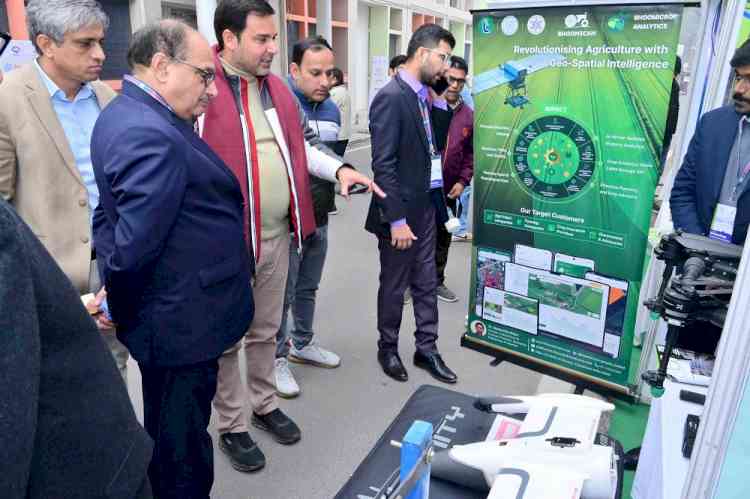
The event also featured technology demonstration stalls showcasing AI-driven crowd monitoring and video analytics for disaster preparedness (Parimitra Pvt. Ltd.); sodium-ion battery–based energy storage solutions for resilient power systems (Indi Energy); non-contact water level measurement systems for flood monitoring; geospatial technologies for hazard mapping and risk assessment (Bhoomicam Pvt. Ltd., Department of Civil Engineering, IIT Roorkee); and advanced, indigenous disaster risk mitigation technologies developed by Seismic Hazard & Risk Investigations Pvt. Ltd. (SHRI) in collaboration with its AI partner NanoAI. Collectively, the exhibits highlighted practical, scalable innovations strengthening early warning, infrastructure resilience, and emergency preparedness.