Fortis Mohali Performs Life-Saving Interventions on Two Newborns with Rare Congenital Conditions
Doctors at Fortis Hospital Mohali have successfully treated two critically ill newborns with rare and life-threatening congenital conditions, underscoring the importance of timely diagnosis and specialized neonatal surgical care. The complex surgeries were performed by a multidisciplinary team of doctors led by Dr Sandeep Kumar Jaglan, Consultant, Paediatric Surgery, Fortis Hospital Mohali, showcasing advanced paediatric surgical expertise in managing high-risk neonatal cases.
 City Air News
Apr 29, 2026 06:49
0
City Air News
Apr 29, 2026 06:49
0
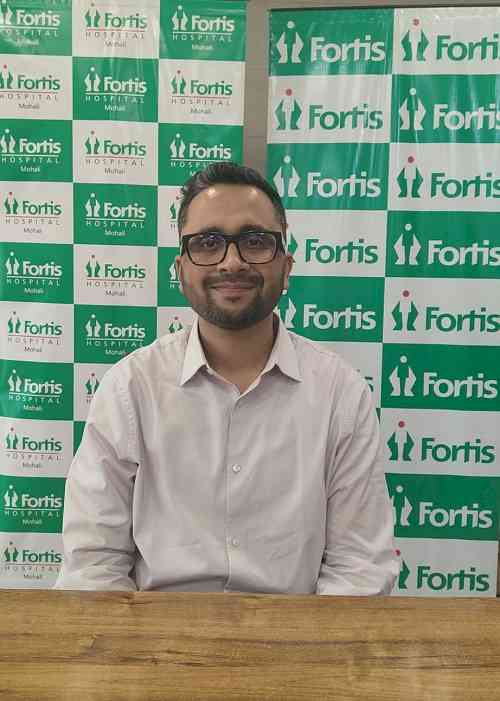
Chandigarh, April 29, 2026: Doctors at Fortis Hospital Mohali have successfully treated two critically ill newborns with rare and life-threatening congenital conditions, underscoring the importance of timely diagnosis and specialized neonatal surgical care. The complex surgeries were performed by a multidisciplinary team of doctors led by Dr Sandeep Kumar Jaglan, Consultant, Paediatric Surgery, Fortis Hospital Mohali, showcasing advanced paediatric surgical expertise in managing high-risk neonatal cases.
In the first case, the hospital’s paediatric surgery team gave a new lease of life to a one-day-old preterm baby diagnosed with Esophageal Atresia with Distal Tracheoesophageal Fistula, a rare congenital condition in which the food pipe is not fully developed and remains disconnected from the stomach, while forming an abnormal connection with the windpipe. This condition is reported in nearly 1 in 3,000 - 4,000 live births. The case was particularly challenging as the baby weighed just 1.9 kgs and was also suffering from Tetralogy of Fallot - a rare congenital heart defect that affects nearly 5 in every 10,000 births and results in oxygen deficient blood circulating through the body. The newborn experienced severe breathing difficulties soon after birth. Following detailed clinical evaluation, the medical team performed a complex three-hour surgery.
During the procedure, doctors found that the upper part of the oesophagus ended blindly, while the lower segment was abnormally connected to the trachea, with a 3.5 cm gap between the two ends. The surgical team successfully corrected the defect by closing the abnormal connection between the windpipe and food pipe and carefully reconnecting the oesophageal ends. Despite the complexity of the procedure, blood loss was minimal and the baby made a full recovery within 15 days.
In another critical case, the team of doctors treated a 35-day-old infant diagnosed with Extrahepatic Biliary Atresia - a rare and life-threatening liver condition in newborns caused by blockage in the bile ducts that carry bile from the liver to the intestine. The condition affects nearly one in 10,000 –15,000 live births. The infant had persistent jaundice since birth, along with pale stools and dark urine - key warning signs of the disease. The surgical team performed a Kasai Portoenterostomy, a specialised procedure to create a new pathway for bile drainage directly into the intestine. Following surgery, the baby began passing normal-coloured stools and showed significant improvement in jaundice. The procedure was technically demanding due to the infant’s fragile condition.
Giving details about the cases, Dr Sandeep Kumar Jaglan, Consultant, Paediatric Surgery, Fortis Hospital Mohali said, “Early diagnosis and timely intervention are critical in neonatal surgery, particularly in complex congenital anomalies where every hour can make a significant difference to outcomes. These cases were especially challenging because of the babies’ fragile condition, low body weight, and associated complications. Managing such conditions require not just surgical precision, but a highly coordinated multidisciplinary approach involving neonatologists, anaesthetists, intensivists, and specialised NICU support. With advances in paediatric surgery and neonatal care, many life-threatening congenital conditions can now be treated successfully, significantly improving survival and long-term quality of life for these children.”