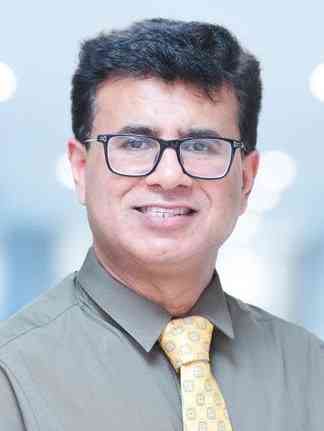
Department of Biochemistry organises an Alumnus Talk
The Department of Biochemistry, Panjab University, Chandigarh today hosted an Alumnus Talk by an international scientist Dr. Arun Narota, at Arthritis & Autoimmune Diseases Center, Boston University School of Medicine, Boston USA.
 City Air News
Dec 22, 2025 06:37
0
City Air News
Dec 22, 2025 06:37
0
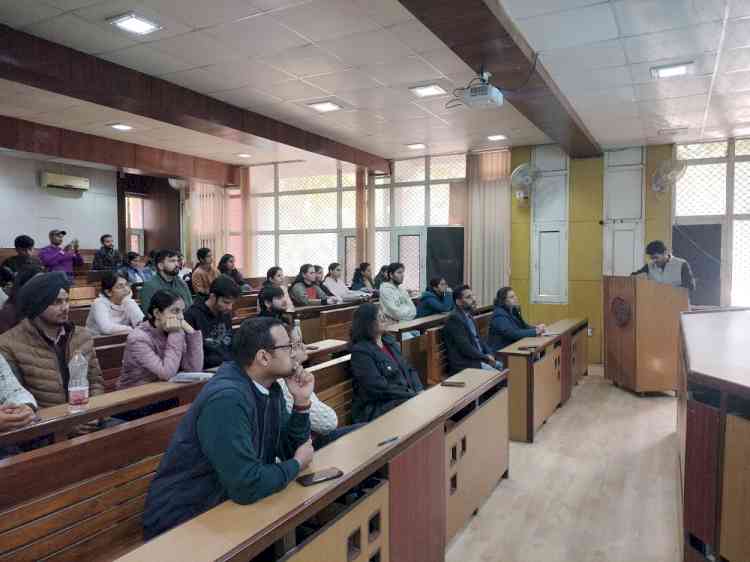
Chandigarh, December 22, 2025: The Department of Biochemistry, Panjab University, Chandigarh today hosted an Alumnus Talk by an international scientist Dr. Arun Narota, at Arthritis & Autoimmune Diseases Center, Boston University School of Medicine, Boston USA.
The title of the talk was ‘The ERG-EDNRB Signalling Switch: Enhancing lymphatic clearance to attenuate Bleomycin induced Pulmonary Fibrosis’. The program was supported by DBT-BUILDER grant sanction by the Department of Biotechnology, Govt of India.
Dr. Narota is an Alumus of the Department of Biochemistry and has earned appreciation for his work on fibrosis particularly pulmonary fibrosis. His expertise in the field can be gauged from the fact he has received awards for his work. The work being carried out by him is novel and currently the group is working on exploring EDNRB agonist based therapies against fibrosis.
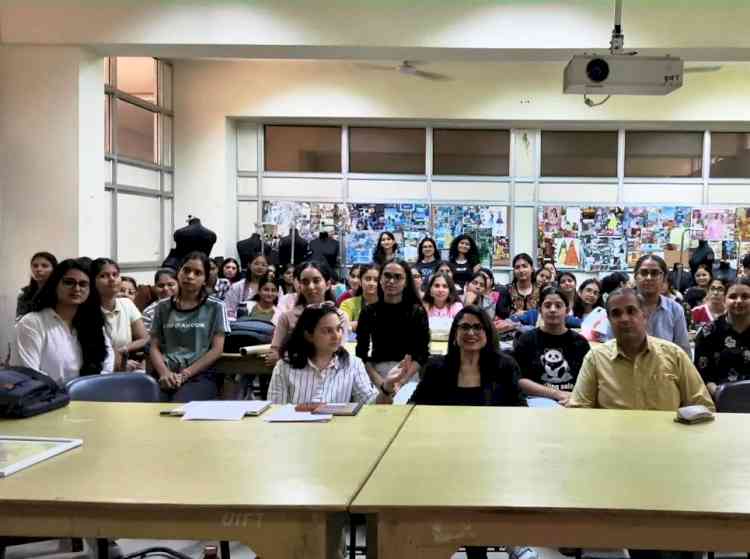
In his talk, Dr. Arun highlighted that the quiet pulmonary lymphatic system is not so when in trouble. The system gets to work when fibrosis is round the corner. In the end, an exclusive interaction with the students was held, where Dr. Narota shared his experiences during academic journey and kept the audience thoroughly engaged throughout the session. The question raised by the audience were well attended by the speaker.
Earlier, the coordinator of the departmental Alumni Cell Prof. Archana Bhatnagar introduced the speaker and thanked him for sparing a valuable time to deliver a talk at the department.
Prof. Amarjit Singh Naura, chairperson of the department presented a vote of thanks. He highlighted the contribution of Dr. Narota in unraveling the molecular understanding of pulmonary fibrosis to pave a way for devising newer treatment strategies of a debilitating disease which has no treatment so far. He lauded the exciting findings in this area.