Delhi: NDMC chief declares Sangli Apartments as ‘Anupam Colony’ for zero-waste
New Delhi Municipal Council Chairman Keshav Chandra on Monday declared Sangli Apartments, Copernicus Marg, as an ‘Anupam Colony’ by unveiling a plaque, recognising it as a model residential community for exemplary waste management and sustainability practices.
 IANS
Jun 22, 2026 09:49
0
IANS
Jun 22, 2026 09:49
0
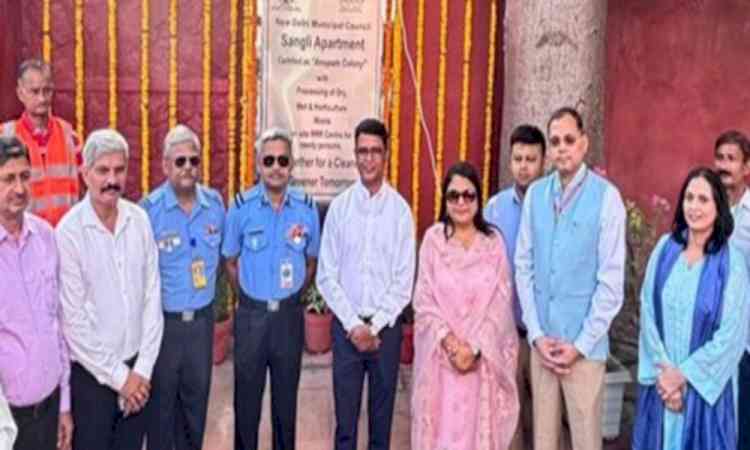
New Delhi, June 22 (IANS) New Delhi Municipal Council Chairman Keshav Chandra on Monday declared Sangli Apartments, Copernicus Marg, as an ‘Anupam Colony’ by unveiling a plaque, recognising it as a model residential community for exemplary waste management and sustainability practices.
‘Anupam Colony’ is a certification/tag given by the NDMC to colonies that achieve high standards of zero-waste and self-sustainable living.
Sangli Apartments has achieved near 100 per cent source segregation, ensuring every household actively participates in responsible waste management, an official said in a statement.
Chandra said the initiative at Sangli Apartments marks a significant step in strengthening community-led environmental stewardship and promoting a cleaner, greener and more sustainable New Delhi.
The NDMC Chairman said, "The most important thing is the enthusiasm, energy, and spirit with which the residents of this colony have come forward. You can see that the Air Commodore himself is present here, and at every step, the residents' participation has been precise and proactive.”
“It is because of this involvement that we have been able to achieve this in such a short period of time," said Chandra.
Earlier, NDMC had conferred the title of ‘Anupam Colony’ on other residential complexes and colonies, including Jor Bagh, New Moti Bagh, D1, D2, Satya Sadan Officers’ Flats, Bharti Nagar, Aradhana (Burmah Shell Cooperative Housing Society Ltd) and Bapu Dham.
Chandra said that to further strengthen citizen participation and encourage responsible disposal practices, most of the ‘Anupam Colonies’ colonies house an RRR (Reduce, Reuse, Recycle) Centre, where residents donate items such as clothes, books, and household goods for reuse.
Additionally, a plastic waste collection-cum-vending machine is installed to incentivise the return of plastic bottles, promoting a culture of conscious waste segregation and recycling at the source.
Wet waste from households is treated at an Organic Waste Converter (OWC) to produce compost, which is used to maintain the colony’s parks and green areas. Horticulture waste, such as dry leaves and trimmings, is transformed into eco-friendly briquettes, creating a waste-to-wealth model, the official said.
--IANS
rch/dan