Delhi Minister releases Summer Action Plan for water, sewer, clean Yamuna
In a major push to strengthen Delhi’s water supply, sewer management, and Yamuna rejuvenation efforts, Water Minister Parvesh Verma on Monday unveiled the Summer Action Plan 2026–27 at the Delhi Jal Board headquarters.
 IANS
Mar 30, 2026 10:46
0
IANS
Mar 30, 2026 10:46
0
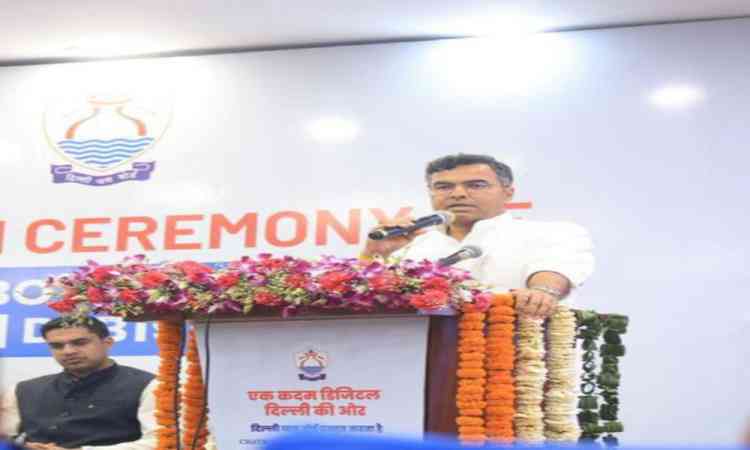
New Delhi, March 30 (IANS) In a major push to strengthen Delhi’s water supply, sewer management, and Yamuna rejuvenation efforts, Water Minister Parvesh Verma on Monday unveiled the Summer Action Plan 2026–27 at the Delhi Jal Board headquarters.
The occasion also marked the launch of key digital initiatives, including a Chatbot, Advanced CRM system, and the DJB 1916 Mobile App, aimed at bringing transparency, accountability, and citizen participation into water governance.
Addressing officials and stakeholders, the Minister underscored that Delhi’s water challenges must be approached with both urgency and responsibility.
“I have been given the opportunity to serve Maa Yamuna, and I consider it a matter of duty and honour. Every official must see this as a responsibility to deliver clean water and protect our river,” he said.
“At every level, we must remember that supplying clean water is not just a service…it reflects directly on our commitment to the people of Delhi,” he said.
Key highlights of the Summer Action Plan include Strengthening Water Production and Supply. It aims to provide peak water production of around 1,002 MGD during summer 2026.
Parvesh Verma said all major Water Treatment Plants (WTPs), including Chandrawal, Wazirabad, Haiderpur, Nangloi, Okhla, Dwarka, Bawana, and Sonia Vihar, are fully operational.
“Delhi has limited water resources, but it is our responsibility to ensure that every citizen receives adequate supply,” said the minister.
He also highlighted the plan to expand the city’s tube-well infrastructure. Apart from the 5854 tube-wells currently functional, additional 436 tube-wells will be commissioned before summer.
With a focus on bridging gaps in water-deficient areas, the Summer Plan promises improved distribution and leak management.
The Plan also offered a water tanker deployment schedule. Around 1,221 tankers per month will be deployed during peak summer. These will include 1,030 hired and 191 departmental. The Plan has also identified 13,000 fixed supply points identified.
The GPS-based tracking and geo-tagging of tankers will ensure real-time monitoring through dashboards, and digitised route tracking shall eliminate misuse.
“The tanker system is not a permanent solution. Our focus is to make it transparent and accountable while strengthening pipeline infrastructure,” said the Minister
The Minister also launched a new digital ecosystem aimed at improving service delivery and citizen engagement: Advanced CRM System for complaint tracking and escalation; DJB 1916 Mobile App for real-time complaint registration and monitoring; AI-powered Chatbot for instant grievance support and WhatsApp-based complaint interface
“Earlier, outdated systems slowed down our work. Today, we are introducing modern, transparent systems where citizens themselves can monitor services,” he said.
The Minister said the complaint redressal mechanism has been strengthened with features like: 24x7 call centre operational (1916/1800117118); Automatic escalation from JE to senior levels if unresolved; Real-time updates for citizens and time-bound resolution ensured under strict monitoring.
Promising structural reforms, the Minister shared plans for replacement and upgradation of 80-year-old water and sewer pipelines, upgradation for Wazirabad and other command areas and infrastructure work across 10 Assembly constituencies.
He said the Chandrawal WTP’s modernisation has been initiated and its performance is stabilising.
--IANS
rch/uk