DAV University Hosts Panel Discussion on Punjab’s Social Challenges, Ethical Living and Digital Responsibility
DAV University, Jalandhar, organised a panel discussion titled “Gall Punjab Di: Tuttan Wale Khuh Te”, focusing on Punjab’s focusing on Punjab’s ethical use of social media and civic sense.
 Rajat Kumar
Oct 17, 2026 09:34
0
Rajat Kumar
Oct 17, 2026 09:34
0
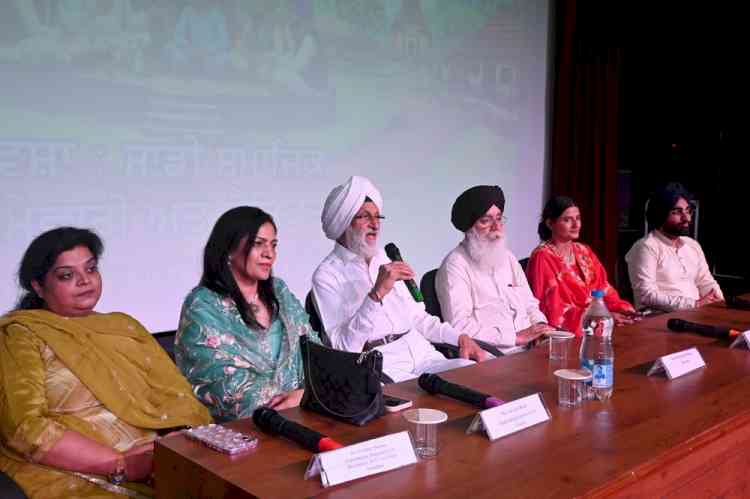
Jalandhar, October 16, 2026: DAV University, Jalandhar, organised a panel discussion titled “Gall Punjab Di: Tuttan Wale Khuh Te”, focusing on Punjab’s focusing on Punjab’s ethical use of social media and civic sense.
The programme commenced with the opening address by Prof. (Dr.) Manoj Kumar, Vice Chancellor, DAV University, who emphasised that an individual’s character is reflected in the way they carry themselves and conduct their lives. Highlighting the challenges posed by the contemporary information environment, he observed that information overload can hinder the development of young minds by affecting their ability to think critically and make informed decisions.
Prof. Kumar also elaborated on the ten traps of social media, explaining how digital platforms can capture audience attention, influence perceptions and complicate the pursuit of an ethical life. He expressed concern over the continuous circulation of fake news and misleading information, underscoring the need for critical thinking, responsible digital behaviour and ethical decision-making.
The programme also featured Baltej Singh Dhillon, Advocate, Punjab and Haryana High Court, who opened the discussion on how ordinary citizens can inadvertently enable corruption by giving in to the demands of the small minority that seeks or offers bribes. He emphasised that the people of Indiahave the collective responsibility to uphold ethical living, resist corrupt demands and refuse to participate in corrupt practices. He urged citizens to promote integrity in their daily lives and contribute to building a more ethical society. Prof. (Dr.) Avtar Singh, Professor and Head, Ramgarhia College, Phagwara, drew a distinction between academic scores and meaningful education. Encouraging students to prioritise learning over marks, he remarked, “Run after education, and scores will follow.” He further highlighted the distinction between eligibility and capability, explaining that while a degree may make an individual eligible for an opportunity, genuine knowledge, skills and competence are what make them capable of performing effectively.
Tarveen Kaur, Motivational Speaker and Life Coach, highlighted the growing challenge of misinformation and stressed the importance of verification before believing or sharing information. Comparing social media forwards to the game of Chinese whispers, she explained how the original message can become distorted as it passes from one person to another. Her observations emphasised the need to verify facts, question unverified claims and exercise responsibility before circulating information online.
Addressing the psychological and physical consequences of excessive social media use, Dr.Pratima Sharma, Coordinator, Department of Psychology, DAV University, Jalandhar, discussed how social media addiction can affect physical health, mood and mental well-being. She highlighted the habit of doomscrolling, in which individuals continue consuming negative or distressing online content for prolonged periods. She stressed the importance of setting time limits for social media use and developing healthier digital habits to avoid falling into its addictive patterns.
During the discussion, Maninder Singh shared his personal journey in social work, recalling how people once made fun of him for dedicating himself to serving society. He said that their attitude changed completely after he received the President’s Award, when the same people came forward to congratulate him. Encouraging the youth to remain committed to their goals, he emphasised, “Never let your spirit die.”
Barun Kaur Maan highlighted that morality is central to education and that true education cannot be attained without moral values. She added that knowledge becomes meaningful only when it is guided by integrity, compassion and a sense of responsibility towards society.
The discussion highlighted the importance of ethical conduct, meaningful education, media literacy and responsible technology use in addressing contemporary social challenges. It reinforced the need for individuals, educational institutions and society at large to promote integrity, critical thinking and informed citizenship, particularly among young people.
The vote of thanks was delivered by Dr. Kamaljit Kaur Sidhu, Dean, Students’ Welfare and Law, DAV University, Jalandhar, who expressed gratitude to the distinguished panellists, university leadership, faculty members, students and everyone who contributed to the successful organisation of the programme.
Through this initiative, DAV University reaffirmed its commitment to fostering socially relevant dialogue and encouraging a culture of ethical awareness, responsible communication and holistic youth development.