BJP Chandigarh’s Intellectual Cell Organises Panel Discussion - ‘Union Budget 2026 From Economic Policy to National Policy’
The Panel Discussion Decoded Union Budget 2026 for The Common Citizen: Dr Monica B Sood, Convenor, Intellectual cell, BJP Chandigarh
 City Air News
Feb 6, 2026 09:23
0
City Air News
Feb 6, 2026 09:23
0
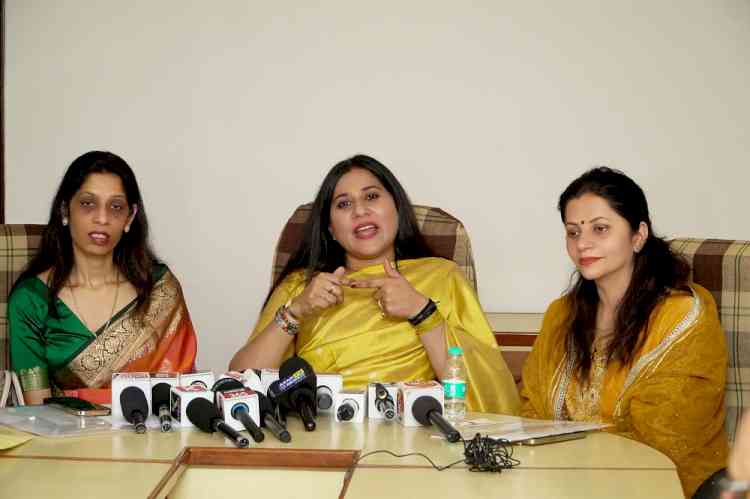
Chandigarh, February 6, 2026: The Intellectual Cell of BJP Chandigarh on Friday organised a panel discussion titled ‘Union Budget 2026 From Economic Policy to National Policy’.
The session held at Rajasthan Bhawan was organised by Dr Monica B Sood, Convenor, Intellectual Cell, BJP Chandigarh, and the cell’s core team. BJP President Jitender Pal Malhotra was the chief guest.
While interacting with media on the side-lines of the panel discussion, Dr Monica B Sood said, “The programme was organised as part of the Bharatiya Janata Party’s nationwide outreach to demystify the Union Budget and connect economic policy with everyday life. The panel discussion aimed at breaking down the key provisions of the budget in simple terms and highlighting how its people-centric allocations aim to generate employment, strengthen self-reliance and accelerate inclusive economic growth across the country.”
During the panel discussion, speakers highlighted that Union Budget 2026–27 places strong emphasis on technology-driven growth, employment generation, innovation and self-reliance. Dr Sood told media persons that global power dynamics are undergoing a fundamental shift. “Thirty to forty years ago, wars were fought over oil and fuel. In the coming decades, competition will be over semiconductors and control of data. Semiconductors form the backbone of artificial intelligence and digital infrastructure,” she said.
She added that artificial intelligence will define the future of defence, education, agriculture, healthcare and medicine, making investments in semiconductor manufacturing and advanced technology a strategic national priority. To support this vision, the Budget has allocated funds for the establishment of 15,000 advanced technology laboratories across the country to train students in AI, robotics, data science, gaming technologies and quantum computing. Special emphasis has also been placed on STEM education for girls, along with the creation of hostels in every district to ensure equitable access to advanced technical education.
Meanwhile, the panel discussion was moderated by Pooja Nayar, Advocate and Chairperson, TiE Women at TiE Chandigarh and featured Dr Dharinder Tayal, Academician and Entrepreneur; CMA Rakesh Bhalla, Financial Expert; Naveen Kumar Soni, CA, LLB; and Puneet Verma, President, TiE Chandigarh.
The panellists addressed infrastructure and connectivity and explained how economic growth and national strength rest on robust infrastructure. It was noted in the discussions that the proposed seven high-speed rail corridors and operationalization of 20 national waterways will reduce logistics costs, connect Tier-II and Tier-III cities, and boost trade, tourism and employment. The sharp rise in defence exports under the Make in India initiative, and defence self-reliance being a key driver of economic strength and GDP growth, was also highlighted.
The panel also discussed the Budget’s strong push for start-ups and MSMEs. With an allocation of ₹10,000 crores to strengthen MSMEs and SMEs, the Budget aims to encourage youth entrepreneurship and job creation. Dr Sood pointed out that under the Prime Minister’s Start-up Mission, nearly 1.4 lakh start-ups are launched annually, which collectively generate lakhs of new jobs even with modest employment per enterprise.
Healthcare reforms featured prominently in the discussion. Dr Sood highlighted the removal of import duties on critical life-saving drugs to make essential medicines more affordable. She also underlined the establishment of three AIIMS-level Ayurveda institutions to revive India’s ancient medical science, alongside special funding under the Bio-Shakti Mission to promote domestic pharmaceutical manufacturing.
Responding to queries, Dr Sood emphasized that Union Budget 2026–27 is not a short-term exercise but a long-term, future-building roadmap, fully aligned with Prime Minister Narendra Modi’s vision of transforming India into a global super economy. She urged citizens to deepen their understanding of finance, technology and taxation, noting that India’s rapid economic rise is now being closely watched across the world.