Ashoka University’s ACPET and Chintan Research Foundation Convene High-Level Dialogue on Coal-to-Chemicals and Hydrogen Pathways for India’s Energy Transition
The Ashoka Centre for a People-centric Energy Transition (ACPET) of Ashoka University in collaboration with the Chintan Research Foundation (CRF), today convened a high-level dialogue on “Reimagining India’s Energy Transition: The Role of Coal-to-Chemicals and Hydrogen Pathways” at the India Habitat Centre, New Delhi.
 City Air News
Jun 11, 2026 09:35
0
City Air News
Jun 11, 2026 09:35
0
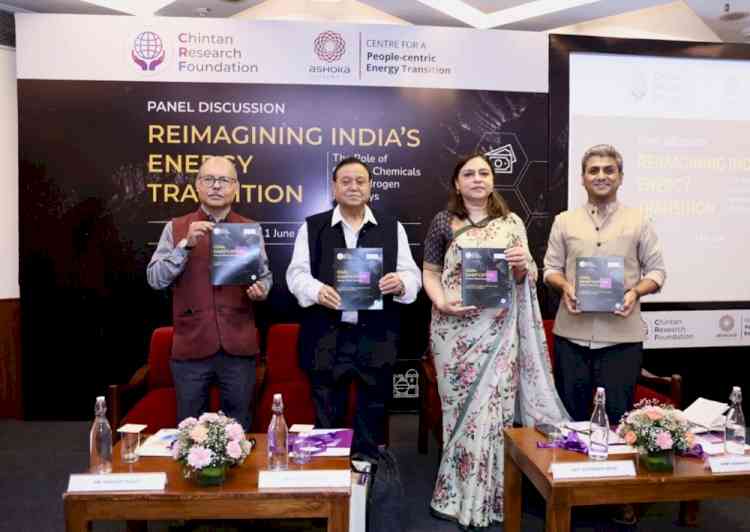
New Delhi, June 11, 2026: The Ashoka Centre for a People-centric Energy Transition (ACPET) of Ashoka University in collaboration with the Chintan Research Foundation (CRF), today convened a high-level dialogue on “Reimagining India’s Energy Transition: The Role of Coal-to-Chemicals and Hydrogen Pathways” at the India Habitat Centre, New Delhi. The discussion brought together senior policymakers, industry leaders, researchers and experts to examine how coal can be strategically repositioned from a conventional fuel to a value-generating feedstock for chemicals, hydrogen and other industrial applications in support of India’s long-term energy transition objectives.
As India advances towards its climate and development goals, the dialogue explored the need for an energy transition pathway that balances decarbonisation with energy security, industrial growth and economic resilience. While renewable energy continues to expand rapidly, participants noted that coal remains central to India’s energy system and industrial economy. The discussion further focused on how emerging technologies such as coal gasification, carbon capture, utilisation and storage (CCUS), and coal-to-chemicals pathways can create new opportunities for value addition while supporting a diversified and pragmatic transition strategy.
In his inaugural address, Dr V.K. Saraswat, Former Member, NITI Aayog, underscored the importance of strengthening India's energy security amid growing geopolitical uncertainties and rising import dependence across critical energy and industrial sectors. He emphasised that while coal is expected to remain an important part of India's energy mix for decades to come, the country must move beyond its conventional use in power generation and embrace clean coal technologies, particularly coal gasification, carbon capture, utilisation and storage (CCUS), and coal-to-chemicals pathways.
Dr Saraswat further added, “Coal gasification is the answer India wants to become independent of geopolitical tensions, build resilient domestic supply chains and meet net-zero objectives. Coal gasification is the answer. Coal must stay as our main feedstock if we want to become independent of geopolitical tensions, build supply chains that are well within our country, and meet our net-zero objectives. Coal must be transformed into hydrogen, methanol, ammonia and other value-added products through clean coal technologies so that it can support both energy security and industrial development.”
Delivering the keynote address, Rupinder Brar, Additional Secretary, Ministry of Coal, highlighted the strategic importance of coal in supporting India's aspirations of becoming a developed economy while ensuring energy security and industrial growth. She noted that coal remains one of India's most abundant domestic resources and emphasised the need to accelerate the adoption of coal gasification. She further underscored the importance of fostering collaborative partnerships among government, industry, academia and research institutions to develop technologies suited to Indian conditions, while ensuring that future growth remains aligned with environmental sustainability and the well-being of communities affected by mining activities.
Further emphasising the importance of enhanced research and innovation within India, Smt. Rupinder Brar said, “Somewhere we keep missing the need to focus on research. We need to put more heads together, we need to research more, and we need to spend more on innovation. Unless we create collaborative partnerships between government, industry, academia and research institutions, and work together to adapt technologies to Indian conditions, we will not fully realise the potential of coal gasification and related technologies.”
This was followed by two power-packed panel discussions—Coal to Syngas: The Coal Gasification Route and From Syngas to Value: Chemicals and Hydrogen Pathways—which explored how coal can be transformed into a strategic feedstock for hydrogen, chemicals and other value-added products to support India's energy transition.
A key theme that emerged from the discussions was the need to reposition coal from being viewed primarily as a fuel for power generation to a strategic industrial feedstock capable of supporting India's long-term energy security and economic development objectives. Participants highlighted the potential of coal gasification to unlock new value chains by converting coal into syngas, which can be used to produce hydrogen, methanol, ammonia, sustainable aviation fuel and a range of industrial chemicals. Such pathways, speakers noted, can help reduce dependence on imported fuels and feedstocks, strengthen fertiliser and chemical security, support domestic manufacturing, and create new opportunities for value addition from India's abundant coal resources.
The dialogue also examined the role of hydrogen and other low-carbon fuels in India's future energy landscape. Experts emphasised that achieving the country's energy transition and net-zero ambitions would require a diversified portfolio of technologies and production pathways that reflect India's developmental priorities and resource realities. Discussions underscored the importance of advancing indigenous research and innovation, developing technologies suited to Indian conditions, and fostering greater collaboration between government, industry and academia to ensure that emerging solutions are economically viable, scalable and aligned with national priorities relating to energy security, industrial competitiveness and sustainable development.
Industry leaders and technical experts, including A.K. Jha, Former Chairman and Managing Director, Coal India Limited, and Dr A.K. Balyan, Director General, Coal Gasifiers Association of India, shared perspectives on the opportunities and challenges associated with scaling coal gasification in India. Discussions covered technology readiness, feedstock availability, infrastructure requirements, investment needs and policy frameworks required to accelerate commercial deployment and strengthen downstream value chains.
Speaking on the significance of the dialogue, Vaibhav Chowdhary, Director, ACPET, said, "India’s energy transition must be viewed through multiple lenses including energy security, industrial competitiveness, sustainability and the well-being of communities whose lives and livelihoods are linked to existing energy systems. As the country charts its pathway towards a low-carbon future, it is important to explore solutions that leverage domestic resources while supporting economic growth and technological innovation. This dialogue reflects ACPET’s commitment to fostering evidence-based discussions that contribute to a resilient, inclusive and people-centric energy transition.”
The dialogue forms part of ACPET’s broader efforts to advance interdisciplinary research, stakeholder engagement and policy discourse on issues critical to India’s energy transition. By bringing together government, industry, academia and civil society, ACPET aims to support the development of practical, people-centric solutions that strengthen both sustainability and economic development outcomes.