A Joint Initiative by the Army and SOTO Haryana saves 4 Lives through 3 Green Corridors; VC Dr. H.K. Agarwal urges People to Join the Organ Donation Campaign
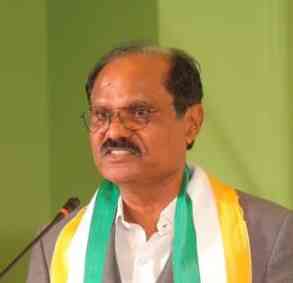
The organ donation by the wife of a Colonel—who was declared brain-dead at the Command Hospital, Chandimandir—has given a new lease on life to four individuals. This act represents not merely an organ donation, but a shining example of sacrifice, duty, and patriotism that will inspire future generations. These sentiments were expressed by Dr. H.K. Agarwal, Vice-Chancellor of the Pt. Bhagwat Dayal Sharma University of Health Sciences.
 Girish Saini
May 3, 2026 11:00
0
Girish Saini
May 3, 2026 11:00
0
Rohtak, May 3, 2026: The organ donation by the wife of a Colonel—who was declared brain-dead at the Command Hospital, Chandimandir—has given a new lease on life to four individuals. This act represents not merely an organ donation, but a shining example of sacrifice, duty, and patriotism that will inspire future generations. These sentiments were expressed by Dr. H.K. Agarwal, Vice-Chancellor of the Pt. Bhagwat Dayal Sharma University of Health Sciences.
VC Dr. Agarwal noted that, for the first time in the history of Haryana, organs were airlifted from the Army's Command Hospital in Chandimandir—through the coordinated efforts of the Army and SOTO Haryana—and transported to the R.R. Hospital in Delhi and PGIMER in Chandigarh. During this operation, the Haryana Police played a pivotal role by establishing "Green Corridors" across three states, thereby ensuring the timely delivery of the organs to the recipient patients.
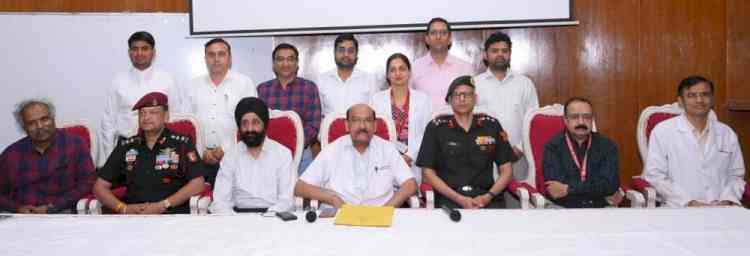
Vice-Chancellor Dr. Agarwal was briefing the media on Sunday, alongside senior military medical officers, regarding the organ donation undertaken by the family of a military officer. He explained that doctors at the Command Hospital, Chandimandir, had declared the wife of a serving military officer—who had been admitted there—as brain-dead. Upon receiving this devastating news, the grief-stricken family—even amidst their tears—made the profound decision that she would continue to serve the nation even in her passing; they subsequently gave their consent for organ donation.
The team from SOTO Haryana—comprising Nodal Officer Dr. Sukhbir Singh, Transplant Coordinator Deepti, and Media Advisor Rajesh—played a crucial role in facilitating the creation of the Green Corridors. The military officer's wife's heart, liver, two kidneys, and pancreas were successfully retrieved. Army doctors and SOTO nodal officers worked in tandem to execute the entire procedure with the utmost scientific precision and sensitivity.
Present on the occasion were Registrar Dr. Roop Singh, Director Dr. S.K. Singhal, Medical Superintendent Dr. Kundan Mittal, Dr. Sukhbir, Dr. Arun, Dr. Deepak Jain, DDA Dr. Varun Sharma, Dr. Tarun, Dr. Gaurav Pandey, Sanjeev, Media Advisor Rajesh Kumar, Transplant Coordinator Deepti Kharab, Rohit, and other dignitaries.
The Vice-Chancellor said that the contribution of Haryana DGP, Ajay Singhal, was decisive throughout this entire operation. By coordinating with police officials from Punjab, Chandigarh, and Haryana, he facilitated the establishment of three "Green Corridors"; consequently, the use of ambulances, police escorts, and traffic-free routes ensured that the organs reached their destination within just a few minutes. The Vice-Chancellor also expressed his gratitude to the entire team, including the Western Army Commander, Lieutenant General Pushpendra Pal Singh, and Dr. Anurag from the Command Hospital, Chandimandir.
Dr. S.K. Singhal, Director of PGIMS, remarked that there is no greater virtuous act than organ donation. Drawing inspiration from the family of this army officer, a statewide campaign to raise awareness about organ donation should be launched across the entire region.
Dr. Sukhbir Singh, the Nodal Officer for SOTO Haryana, observed that the promptness and sensitivity with which the Army executed the organ donation process serve as an inspiration for every hospital.
Representing the Army, Brigadier Dr. Pawan Dhull and Chief Transplant Coordinator Colonel Dr. Anurag Garg stated that this joint operation between the Army and the civil administration was nothing short of a "Mission Jeevan" (Mission Life). As soon as the patient was declared brain-dead at the Command Hospital, Chandimandir, SOTO Haryana was duly informed. Army doctors provided counseling to the Colonel's family, and once the family gave their consent, a schedule for organ retrieval was finalized.
Registrar Dr. Roop Singh noted that statistics from SOTO Haryana indicate that a single brain-dead individual has the potential to save the lives of eight people. He further emphasized that organ donation is possible only in cases where a person has been declared brain-dead.