Year-Ender 2025 & Outlook for 2026: Building the Next Chapter of Mumbai’s Urban Story
As 2025 draws to a close, it is evident that Mumbai’s real estate landscape has entered a phase of structural transformation, driven largely by accelerated infrastructure development and improved urban mobility. The year gone by reinforced a simple yet powerful truth—connectivity is no longer an enabler; it is the primary driver of real estate value.
 City Air News
Dec 25, 2025 11:50
0
City Air News
Dec 25, 2025 11:50
0

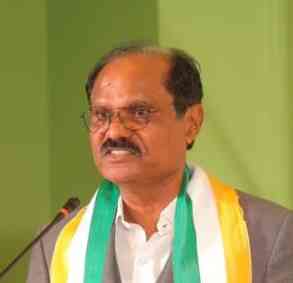
By Vijay Choraria, Managing Director, Crest Ventures Limited
As 2025 draws to a close, it is evident that Mumbai’s real estate landscape has entered a phase of structural transformation, driven largely by accelerated infrastructure development and improved urban mobility. The year gone by reinforced a simple yet powerful truth—connectivity is no longer an enabler; it is the primary driver of real estate value.
Over the past year, key infrastructure upgrades such as the Santacruz–Chembur Link Road (SCLR) strengthening east–west connectivity, the seamless flow enabled by the Eastern Freeway, and capacity enhancements along the Eastern Express Highway have significantly reduced travel times across the city. Simultaneously, the rapid expansion of the Mumbai Metro network has redefined daily commuting, bringing once-distant micro-markets closer to commercial and lifestyle hubs. Enhanced connectivity to Navi Mumbai through Sion-Panvel Highway and Atal Setu has further expanded the city’s effective boundaries, unlocking new development potential while easing pressure on traditional cores.
2025 also marked a shift in how “signature addresses” are perceived. Prime locations are no longer defined only by legacy or pin codes; they are being reshaped by redevelopment, better infrastructure, and integrated urban planning. Established neighbourhoods are witnessing a renewed relevance as modern development blends with improved access, creating aspirational addresses that offer both convenience and long-term value.
Outlook: Mumbai’s Next Five Years — A City Redefined by Connectivity
Over the next five years, Mumbai will undergo a structural expansion that fundamentally redefines what constitutes “Greater Mumbai.” The city will no longer be viewed as a compact island core with peripheral extensions; instead, it will evolve into a multi-nodal metropolitan region spanning Panvel, Virar and Alibaug, enabled by a once-in-a-generation infrastructure build-out.
Landmark projects such as the Atal Setu have already compressed travel time between Mumbai and Navi Mumbai, effectively integrating Panvel and the new airport zone into the city’s daily commute map. The ongoing Mumbai Coastal Road is transforming north–south mobility along the western edge, while the rapidly expanding Mumbai Metro network is stitching together east–west corridors that were historically underserved. The upcoming Navi Mumbai International Airport and the proposed Mumbai–Ahmedabad Bullet Train further cement Mumbai’s position as a globally connected urban region rather than a constrained island city.
The implication for real estate is clear: connectivity will dictate demand more decisively than legacy pin codes. As commuting friction reduces, residential and commercial demand will increasingly concentrate around well-linked nodes that offer rapid access to multiple business districts. Micro-markets that sit at the intersection of these infrastructure corridors will emerge as the most sought-after addresses.
In this context, locations such as Chembur are poised to see sustained demand and value appreciation. With seamless access to the Eastern Freeway, SCLR, metro corridors, and direct connectivity to Navi Mumbai via Atal Setu, Chembur exemplifies the future of urban living in Mumbai—central, connected, and efficient. As the city’s effective boundaries expand, it is these strategically positioned neighbourhoods that will define the next chapter of Mumbai’s real estate growth.
Mumbai’s transformation over the coming years will not be about sprawl, but about integration—where infrastructure collapses distance, expands opportunity, and reshapes the hierarchy of urban value across the metropolitan region.