West Bengal government assures a tectonic shift in the public culture of the State; is working on special incentives to attract investments into the State
There is likely to be a “tectonic shift” in the public culture of West Bengal and the state is set to move from being a “contrarian” to becoming a part of the mainstream. The state government is working on creating a structure and providing incentives, which are at par with the neighbouring states of Odisha and Assam, so as to attract investments into the state.
 City Air News
Jun 24, 2026 08:58
0
City Air News
Jun 24, 2026 08:58
0
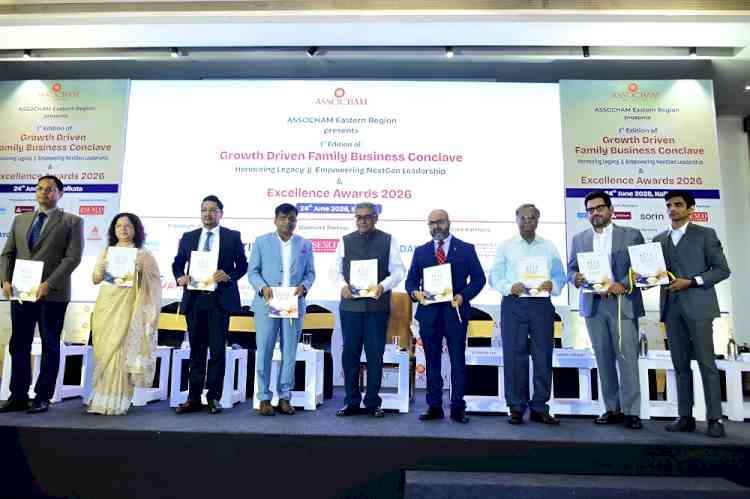
Kolkata, June 24, 2026: There is likely to be a “tectonic shift” in the public culture of West Bengal and the state is set to move from being a “contrarian” to becoming a part of the mainstream. The state government is working on creating a structure and providing incentives, which are at par with the neighbouring states of Odisha and Assam, so as to attract investments into the state.
The government would strive to link the State’s economy to the national economy, Dr Swapan Dasgupta, West Bengal Finance Minister, said at the Inaugural Edition of Growth Driven Family Business Conclave organised by Assocham under the vision of Viksit Bengal for Viksit Bharat, here on Wednesday.
“One of the most important contributions which we can make in the coming days is to assure everyone that there is a certain tectonic shift in the public culture of West Bengal and that from a position of being contrarian we are now part of a mainstream, that we are pro-business, unequivocally so and emphatically pro-business. And more importantly, that we want to link our economy to the national economy. I think it was that disengagement from the national economy which cost us a lot,” Dr Dasgupta said.
There is a certain perceptional issue about the state, which needs to be tackled.
“I understand that we must make the structure, the government incentives etc on par with the rest of the neighbouring states. So that Assam doesn't have a disproportionate advantage. Odisha doesn't benefit too much because we didn't quite get our sums right. So, we should have a level playing field,” he pointed out.
Speaking at the occasion, Sudipta Mukherjee, Managing Director, Texmaco Rail & Engineering said, family business typically evolves through three stages. First, is the entrepreneurship or the foundation, then professionalization and then comes institutionalization.
“The difference lies in the leadership and leadership today is no longer about authority. It is about the influence with relevance. It is no longer about controlling people. It is no longer about preserving the past. It is about preparing for the future. And I think that's how family businesses are surviving generations after generation because it runs with those values, intrinsic values and by the way, it's creating the legacy,” he said.
Expressing confidence at the government’s pro-industry stance, Sanjib Patwari, Co-Chairman, Assocham Eastern Region Council and Director, Rashmi Group, said that the pro investment approach of the government is likely to provide an impetus to the state and ensure a good growth in the coming days.
It is important for family businesses to judiciously carry forward their business and go for mass production, and try to involve more and more people, as that will help the industry to progress, Padma Shree Awardee, Dr Narayan Chakrabarty said.
“Diversification and the research and development are required for the growth of any industry,” he added.