VIT-AP University's Students-Built Space Payload, VISWA-M, Successfully Launched Aboard Skyroot Aerospace's Vikram-1 from the Satish Dhawan Space Centre, Sriharikota
VIT-AP University today announced that VISWA-M (VIT Satellite Wavelength Analysis Module), an experimental payload designed and developed by its students and faculty, launched from Sriharikota space centre into space aboard the SOLARAS nanosatellite on Skyroot Aerospace's Vikram-1 orbital launch vehicle. The launch on 18 July 2026 at 12.05 PM IST, marked a historic milestone in the University's journey towards advancing space technology research and innovation.
 City Air News
Jul 18, 2026 04:27
0
City Air News
Jul 18, 2026 04:27
0
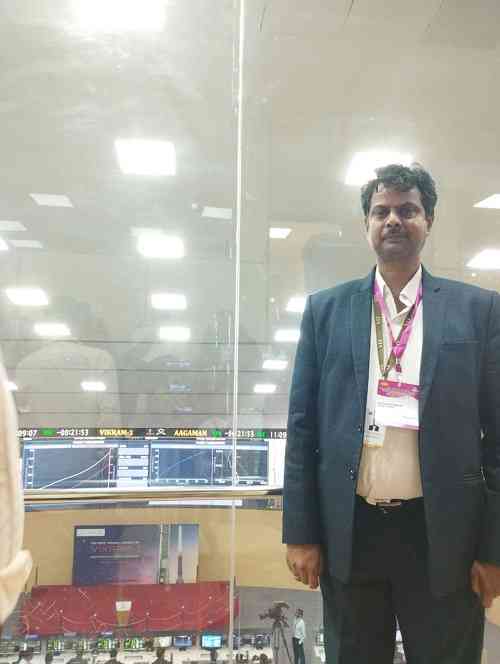
Amaravati / Sriharikota, Andhra Pradesh, July 18, 2026: VIT-AP University today announced that VISWA-M (VIT Satellite Wavelength Analysis Module), an experimental payload designed and developed by its students and faculty, launched from Sriharikota space centre into space aboard the SOLARAS nanosatellite on Skyroot Aerospace's Vikram-1 orbital launch vehicle. The launch on 18 July 2026 at 12.05 PM IST, marked a historic milestone in the University's journey towards advancing space technology research and innovation.
VISWA-M has been conceived as a compact spaceborne experimental module to study the solar spectrum across multiple wavelengths using Commercial Off-The-Shelf (COTS) components and sensing systems. The payload has been developed in collaboration with Bengaluru-based spacetech start-up Grahaa Space (Akshath Aerospace Private Limited) under a Memorandum of Understanding signed in 2023.
The mission, named Mission SIDDHI by Grahaa Space, represents VIT-AP University's first spaceborne payload and signifies the University's growing contribution to India's emerging space ecosystem.
The project serves as an academic and technological demonstration mission, enabling students and researchers to gain hands-on experience in the complete lifecycle of space payload development—from design and integration to testing and mission operations.
The mission objectives include:
• Measuring and analysing solar radiation across multiple wavelength bands.
• Demonstrating a cost-effective hosted payload architecture for academic satellite missions.
• Creating foundational datasets for future research in solar spectrum monitoring and miniaturised sensing technologies.
Speaking on this landmark achievement, Dr. P. Arulmozhivarman, Vice Chancellor, VIT-AP University, said:"The launch of VISWA-M is a milestone for VIT-AP University and reflects our commitment to fostering research-driven education and innovation. Seeing a payload designed and developed by our students reach space demonstrates the transformative power of experiential learning, strong academic mentorship, and meaningful industry collaboration. We are proud to contribute to India's growing space ecosystem while inspiring the next generation of scientists and engineers."
The VISWA-M project exemplifies the strong collaboration between academia and India's rapidly expanding private space sector. It aligns with the vision of the Indian Space Policy 2023, encouraging greater participation of educational institutions and private enterprises in the country's space missions.
Dr. Jagadish Chandra, Registrar, VIT-AP University, said:"VISWA-M reflects VIT-AP University's commitment to creating an ecosystem where academic excellence, research, and industry collaboration converge to deliver meaningful innovation. This achievement highlights the dedication of our students, faculty, and partners, and reinforces our vision of empowering young minds to contribute to India's growing capabilities in space science and technology."
Dr. Ellison Mathe, Director, Innovation, Incubation and Entrepreneurship Cell (IIEC), VIT-AP University, added:"VISWA-M showcased what is possible when academic excellence meets entrepreneurial innovation. Our partnership with Grahaa Space has provided students with an unparalleled opportunity to work on a real space mission, equipping them with the technical skills, systems-thinking mindset, and confidence required to solve future challenges in the global space industry."
For the students involved, the mission is the culmination of years of dedication, collaboration, and technical excellence.
Professor Mahesh Miriyala of the VISWA-M student team faculty who guided them on it said: "Being part of a mission that will place our work in orbit is an unforgettable experience. Designing, building, and testing a space payload has taught put students a lesson far beyond the classroom. We are grateful to VIT-AP University, and management for trusting us with this incredible opportunity."
With the successful launch of VISWA-M, VIT-AP University joins a select group of Indian academic institutions to have developed an active spaceborne research payload, reinforcing its commitment to interdisciplinary research, innovation, and nation-building through science and technology.