Tests underway for uncrewed mission, Gaganyaan slated for 2027: ISRO Chairman
The ISRO is undertaking several tests for the launch of Gaganyaan's first uncrewed mission G1, slated for March, ahead of its human spaceflight in 2027, Chairman V. Narayanan said on Friday.
 IANS
Jan 30, 2026 10:54
0
IANS
Jan 30, 2026 10:54
0
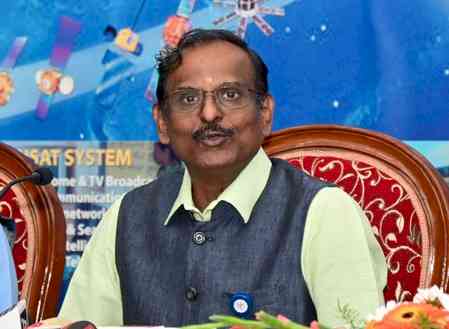
New Delhi, Jan 30 (IANS) The ISRO is undertaking several tests for the launch of Gaganyaan's first uncrewed mission G1, slated for March, ahead of its human spaceflight in 2027, Chairman V. Narayanan said on Friday.
Speaking to reporters, Narayanan stated that the tests are focused on enhancing the safety of Gaganyatris -- Shubhanshu Shukla, Prasanth Balakrishnan Nair, Ajit Krishnan, and Angad Pratap.
Every system involved in the mission has to be qualified, he said.
"Gaganyaan programme is planned in 2027. Before that, three uncrewed missions are planned. We are working towards the first uncrewed mission," the ISRO chief said.
"There are a lot of tests that are happening. The safety of the Gaganyaan mission is very important. We have to be very careful and qualify every system. In the rocket system, we need to score a hundred out of a hundred," he added.
The G1 mission is about 90 per cent complete, with more than 8,000 ground tests, including structural qualifications, successfully conducted. This is paving the way for software simulations and environmental validations to meet the targeted schedule.
The G1 test, along with the Vyommitra robot, is being planned for March 2026 and will validate life support, re-entry, and recovery systems.
Previously, Narayanan also ruled out possible delays in the Gaganyaan mission due to the back-to-back PSLV rocket launch failure.
While noting that an investigation into the failures is underway, he stated that the programmes are independent of each other.
The Gaganyaan mission will carry astronauts to low Earth orbit for a 3-day mission and bring them back safely to Earth.
The astronauts will be launched into a 400 km orbit aboard the human-rated LVM3 rocket.
Gaganyaan's success will mark a major step for India in space exploration. It will also pave the way for future missions and a space station by 2035 and a manned moon mission by 2040.
--IANS
rvt/vd