Study Warns of Growing Water Stress in Uttarakhand's Kosi River Basin Under Climate Change
Research Highlights Rising Temperatures, Reduced Groundwater Recharge, and Increased Drought Risk in the Central Himalaya
 City Air News
Jul 24, 2026 02:24
0
City Air News
Jul 24, 2026 02:24
0
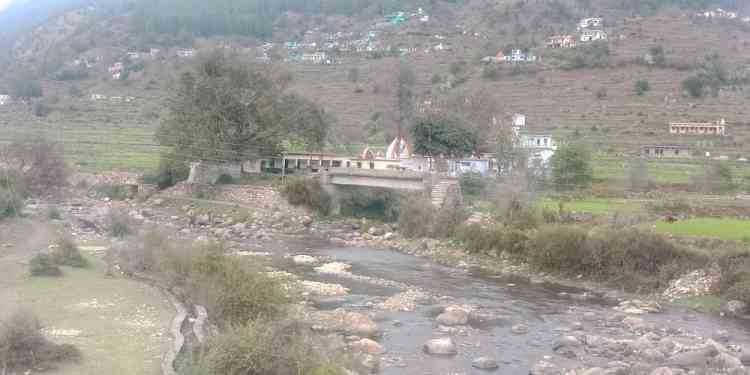
Uttarakhand, Roorkee, July 24, 2026: A recent study by researchers from the Indian Institute of Technology Roorkee (IIT Roorkee) and G. B. Pant National Institute of Himalayan Environment (GBPNIHE), Kosi, has warned that climate change could significantly impact long-term water security in Uttarakhand's Kosi River Basin. The findings indicate rising temperatures, declining groundwater recharge, and increasing drought risks that could affect agriculture, drinking water supplies, and fragile Himalayan ecosystems across the Kumaon region.
The study, published in the journal Theoretical and Applied Climatology, was carried out by Dr. B. Das and Dr. S. Sen from IIT Roorkee, along with Dr. Sandipan Mukherjee from GBPNIHE. Using the Soil and Water Assessment Tool (SWAT) model integrated with projections from five leading global climate models, the researchers assessed the likely impacts of future climate scenarios on the hydrological behaviour of the basin.
The projections point to substantial changes in the basin's hydrological cycle throughout the 21st century, with temperatures expected to rise steadily across all climate scenarios. Peak temperatures in the basin, currently averaging around 38.4°C, could increase to approximately 41.6°C under a moderate-emissions scenario and nearly 43.2°C under a high-emissions scenario by the end of the century. Both maximum and minimum temperatures are projected to rise substantially, intensifying water loss through evaporation and affecting overall water availability.
Dr. I. D. Bhatt, Director, GBPNIHE: " The study highlights a critical shift in the hydrology of Himalayan catchments, where warmer temperatures are expected to intensify evapotranspiration and reduce groundwater replenishment. As mountain communities depend heavily on springs and local water sources, proactive adaptation measures and science-based water management strategies will be essential to enhance resilience against future climate and drought risks."
Despite uncertainties in future rainfall patterns, the study suggests that total water yield in the basin may decline by approximately 4–7 percent by 2100. Increased temperatures are expected to raise evapotranspiration by nearly 13 percent, while groundwater recharge may decrease by more than 20 percent. At the same time, surface runoff could increase by about 20 percent, resulting in faster movement of rainwater through the landscape and reduced infiltration into groundwater systems.
Prof. Kamal Kishore Pant, Director, IIT Roorkee: "Climate change poses one of the most significant challenges to water security in mountain ecosystems. Studies such as this provide vital scientific insights for developing evidence-based policies and adaptation strategies that can help safeguard water resources, livelihoods, and ecological sustainability in the Himalayan region."
The study further indicates that the region may experience more frequent and prolonged drought conditions in the future. Such changes could adversely affect springs, wells, agricultural productivity, and local water resources that support communities throughout the basin.
The researchers emphasize that proactive interventions such as watershed management, spring rejuvenation, soil and water conservation, groundwater recharge enhancement, and nature-based solutions can play a crucial role in strengthening the basin's resilience to future climate impacts.