'Situation ambiguous', 'Iran came out stronger': Former Ambassador to China on US-Iran ceasefire (IANS Exclusive)
India's former Ambassador to China Ashok K. Kantha on Wednesday termed the two-week ceasefire agreement by the US and Iran as "ambiguous", though he also expressed optimism by calling it a "window of opportunity".
 IANS
Apr 8, 2026 04:21
0
IANS
Apr 8, 2026 04:21
0
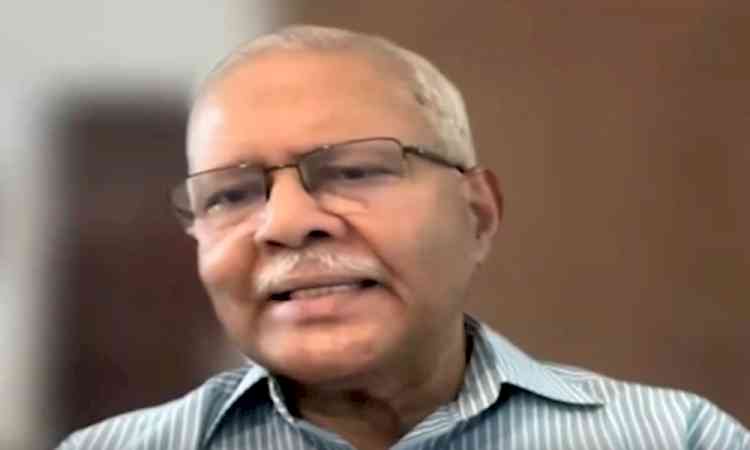
New Delhi, April 8 (IANS) India's former Ambassador to China Ashok K. Kantha on Wednesday termed the two-week ceasefire agreement by the US and Iran as "ambiguous", though he also expressed optimism by calling it a "window of opportunity".
Speaking to IANS, Kantha cautioned that the ceasefire is not a full-fledged understanding. "It is a 14-day de-escalation. Lot of issues remain to be resolved. At this stage, Israel and the USA on one side and Iran on the other, will make contradictory claims," he said.
After President Donald Trump's announcement of a conditional two-week pause in planned attacks tied to reopening the Strait of Hormuz, the former diplomat emphasised that there is no joint understanding at present that has been implemented.
"Situation at present is ambiguous, but there is a window of opportunity," he said.
He stressed that the bottom line will be to see what really happens on the ground.
About the nature of understanding reached regarding management of the Strait of Hormuz, Kantha highlighted that while Iran has agreed to allow resumption of commercial shipping through the Strait, the "statement it has issued indicates that it will be done under a sort of aegis of military authority of Iran and also subject to certain technical conditions which have not been spelled out so far".
The former diplomat said: "The USA, in particular, is pulling back from a brink that it created on its own with President Donald Trump's ultimatum that if Iran doesn't open the Strait of Hormuz, there will be an end of civilisation."
He was referring to Tuesday's social media post by President Trump, where he had warned Iran that "a whole civilisation will die tonight, never to be brought back again".
Kantha also elaborated how Iran used the Strait of Hormuz as a trump card and as a result "could come out stronger".
"Though Iran has taken a good part of damage, with a majority of its leadership being eliminated, damage to its infrastructure and military capability, but strategically it seems to have not only held its ground but perhaps come out stronger."
"Iran's ability to close the Strait of Hormuz has become its trump card. Something which has not been done since 1979, when US-Iran relations deteriorated very sharply with the hostage crisis, etc. Iran has not given up that trump card," he added.
"Even now, during the period of de-escalation, it is indicating that reopening the Strait of Hormuz will be conditional on Iran playing an important role there."
Moreover, Kantha cited reports indicating that Oman and Iran are in negotiations to work out some kind of protocol for the management of the Strait of Hormuz. "That again shows the US accepting Iran's role in management of this vital chokepoint, which goes against the traditional US position of freedom of navigation because they are willingly conceding."
"Despite taking damages, Iran has shown that a weaker country can inflict considerable damage on militarily superior adversaries, the USA and Israel in this case, even though they had virtual control of its airspace," he said.
On the USA removing sanctions on Iranian oil, Kantha said: "Iran's oil is being given unimpeded movement. The world is encouraging Iran to sell oil."
"At this point, one can't see what the USA has achieved through its misadventure in Iran and that part of the world."
--IANS
cg/vd