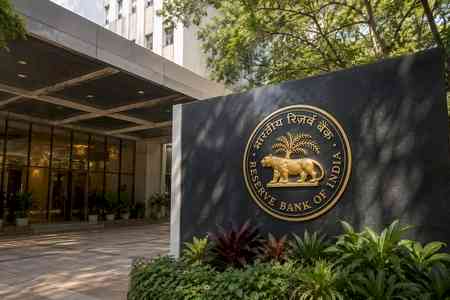
RBI Holds Repo Rate at 5.25% Amid Inflation Concerns and Global Uncertainty; Experts Flag Mixed Signals for Growth, Real Estate and Investment Outlook
 City Air News
Jun 5, 2026 01:58
0
City Air News
Jun 5, 2026 01:58
0

Ashwani Dhanawat, Executive Director & Chief Investment Officer, Shriram General Insurance
“The Reserve Bank of India’s Monetary Policy Committee has held the repo rate steady at 5.25%, a decision that, on its surface, signals continuity but the revised forecasts embedded in today’s statement tell a more cautious story.
On Inflation: The Comfort Zone is Narrowing
The upward revision in CPI projection — now 5.1% for the year, against the earlier estimate of ~4.6% — is the most consequential signal from today’s policy. The trajectory is unambiguously front-loaded in its risk: Q2 at 5.1%, Q3 at 5.9%, before a modest easing to 5.4% in Q4. A Q3 print approaching 6% will keep the MPC on edge, given that it sits at the upper tolerance band of the 4±2% framework.
The RBI has been explicit about upside risks — global commodity shocks, supply chain disruptions, and, most critically, El Niño conditions. If the monsoon turns spatially skewed, the Q3 projection could easily breach the 6% handle. The pause today does not foreclose a rate action later in the year.
On Growth: Modest Downgrade, but Resilience Intact
The GDP growth revision from 6.9% to 6.6% reflects pragmatism, not alarm. The quarterly profile — 6.3% in Q2 before recovery to 6.8% in Q4 — suggests a mid-year soft patch, likely driven by global financial market volatility and weather-linked agricultural uncertainty. India’s domestic demand story remains broadly intact, but the external environment is doing the committee no favours.
The Takeaway: Conditional Pause
Today’s hold is a data-dependent pause, not a pivot. The MPC is effectively watching three variables closely before its next move: the actual monsoon distribution, global crude and commodity trajectories, and the Q1 CPI print. If the Q3 inflation forecast materialises near 5.9%, a 25 bps hike in the October policy cannot be ruled out.”
Ritesh Taksali, Chief Investment Officer, Edelweiss Life Insurance
“RBI keeps key policy rate and stance unchanged citing uncertainty; Inflation revised upwards and growth revised downwards due to clouded monsoon outlook and higher commodity prices on account of the ongoing West Asia war. However, various policy initiatives announced to strengthen BOP such as expanding the universe of securities where FPIs can invest without limit and scheme for FX deposits from overseas funds amidst other should limit further weakness in currency. The government notification on removing capital gains tax on government securities added further to the positive momentum for the rupee.”
Ankur Jalan, CEO, Golden Growth Fund (GGF)
“The RBI's decision to keep policy rates unchanged and retain ‘neutral’ stance reflects a prudent approach amid ongoing geopolitical uncertainties, volatile commodity prices and global market disruptions. A status quo provides stability and predictability that investors value during uncertain times.
For the real estate sector, two factors are beginning to play out – shift of investment from the middle east and financialization of real estate as uncertainty around the real estate sector persist.
Besides, as traditional asset classes such as equities and bonds remain susceptible to geopolitical developments and market volatility, well-structured Alternative Investment Funds (AIFs) can offer investors access to tangible assets, relatively predictable cash flows and portfolio diversification. Amidst rising inflation, AIFs are increasingly emerging as a preferred avenue for high-net-worth and institutional investors seeking risk-adjusted returns enhancing its attractiveness.
We believe the current environment could accelerate the shift towards alternative investments, with investors focusing on income-generating assets. The RBI's stable rate stance provides a conducive backdrop for long-term capital deployment, and quality real estate assets remain well-positioned to attract both domestic and global capital.”
Lalit Parihar, Managing Director, Aaiji Group
“The RBI’s decision to maintain a status quo on policy rates is a welcome move for the real estate sector and overall economy. Given the current economic backdrop marked by geopolitical uncertainty, inflationary pressures, elevated commodity prices and a weakening rupee, while having some impact on inflation, but a stable policy environment will spur India’s growth.
In this environment, policy continuity would be a positive outcome for the real estate sector. The housing market is currently navigating a combination of rising construction costs, cautious investor sentiment and some moderation in demand. A stable interest rate regime would help preserve affordability, support buyer confidence and provide greater flexibility to developers and investors alike.
The sector remains fundamentally resilient. Developers are increasingly focusing on cash-flow discipline, calibrated launches and timely project execution. We believe the industry is well positioned to adapt to the current disruptions, and a stable monetary policy framework will further support capital deployment, construction activity and overall market confidence.”
Umesh Gowda H A, chairman and founder of Sanjeevini Group
“The status quo on policy rates while retaining neutral stance signals the RBI’s focus on maintaining a stable interest rate environment in order to spur growth amidst the prolonged geopolitical tensions in West Asia that continue to exert pressure on commodity prices and currency markets and inflationary risks.
For the housing sector, rising construction costs and supply obstructions can have an impact on overall housing market. Any rise in price may be detrimental for housing sales and therefore, a stable policy environment will help not just homebuyers in planning their purchase but also developers to adjust their sales and supply pipelines in order to maintain affordability.”
Indranil Pan, Chief Economist, YES BANK
“This policy was more about addressing the paucity of foreign flows into the Indian economy and addressing the external sector problems, rather than to addressing the growth-inflation dynamics. The critical measures to boost FPI investments into the G-sec markets include tax measures such as withdrawal of withholding tax and the LTCG taxes. Banks are allowed to raise FCNR (B) deposits of 3–5-year maturity with RBI bearing the full hedging cost. Banks are also allowed to raise ECBs with a concessional forex swap. While it is difficult to exactly pin down the exact nature of inflows, USD 35-45 bn may be a decent estimate, almost enough to close the gap for the anticipated BoP for FY27. The policy challenge is to address falling growth and rising inflation. RBI, with its pause today has bought itself more time to understand the growth-inflation dynamics and probably did not want to immediately react with a rate hike to match its higher inflation forecasts. Having said that, all policy options remain open as the RBI assesses the risks to inflation trajectory alongside the second-round impact via inflation expectations surveys, before deciding on rate hikes.”
Srinivasan Vaidyanathan, Operating Partner, Essar Capital
"The RBI's decision to maintain the repo rate at 5.25% with a neutral stance is a balanced response to a genuinely challenging macro environment. The more telling signal lies in the central bank's evident caution on inflation, against a backdrop of elevated crude prices and a weaker rupee. This suggests that while the RBI remains supportive of growth for now, it is increasingly vigilant about external risks, and future actions will depend heavily on how energy prices and currency dynamics evolve. For capital-intensive businesses, the steadiness on rates is welcome, preserving the predictability that underpins long-cycle investment."
Dhanpat Nahata, Managing Partner, Essar Capital
"The RBI's decision was largely in line with market expectations, but the upward revision in inflation forecasts serves as a reminder that risks have not disappeared. With global uncertainty and energy prices rising, markets are likely to remain sensitive to inflation and currency developments. The neutral policy stance offers stability for now, but enterprises will continue to assess how evolving global conditions impact growth, liquidity and overall market sentiment."
Jitendra Tanwar, Managing Director & CEO, Namdev Finvest Limited
“The Reserve Bank of India’s decision to maintain the repo rate at 5.25% reflects a balanced and prudent approach towards supporting economic growth while remaining vigilant about emerging inflationary pressures. By retaining its neutral policy stance, the Monetary Policy Committee (MPC) has signaled a preference to closely monitor evolving domestic and global developments before taking further policy action. The RBI has revised its FY27 CPI inflation forecast upward to 5.1% and moderated its GDP growth projection to 6.6%, highlighting the challenges posed by geopolitical tensions, elevated crude oil prices, supply chain disruptions, rupee volatility, and weather-related uncertainties, including the risk of a sub-normal monsoon and El Niño conditions.
Despite these headwinds, India’s domestic demand remains resilient. For businesses operating in Tier 2, Tier 3, and rural markets, policy stability provides the confidence needed to plan investments, expand operations, and pursue growth opportunities in an uncertain economic environment.
MSMEs continue to navigate rising input costs, persistent inflationary pressures, seasonal business fluctuations, and working capital constraints, making predictable access to credit more critical than ever. The RBI’s data-driven and measured approach offers much-needed certainty to businesses focused on sustaining growth and building resilience. A stable interest rate environment also supports efficient funding and favorable hedging costs on our DFI borrowings, enabling us to pass on the benefits of competitively priced capital to the entrepreneurs and small businesses we serve.
At Namdev Finvest, we continue to witness strong credit demand across underserved and emerging markets. We remain committed to providing responsible, accessible, and sustainable financing solutions that empower entrepreneurs and small businesses to grow with confidence and contribute meaningfully to India’s economic development.”
Aditya Mulki, CEO, Navi AMC
“The RBI’s decision to hold the repo rate at 5.25% with a neutral stance reflects a pragmatic acknowledgment that the easing cycle has run its course for now. We have been cautious on the market over the past few months and have been calling out inflationary pressures due to the current oil crises as well as the probability of below normal monsoons which is also now reflected in revised RBIs CPI guidance of 5.1%.
The downward revision to GDP growth from 6.9% to 6.6% for FY27 is a candid admission that geopolitical headwinds and fuel price pass-throughs are beginning to weigh on the growth outlook. Although in the long run India’s macroeconomic fundamentals such as strong domestic consumption, sustained credit growth and government capex, remain intact.
The meaningful liberalisation of foreign investment limits, extension of the Fully Accessible Route to long-duration bonds, and the concessional forex swap facility for ECBs and FCNR(B) deposits are important measures that indicate the RBI’s intent to deepen India’s capital markets and attract durable long-term foreign flows. This is a constructive medium-term positive for Indian fixed income market.”
George Alexander Muthoot, Managing Director, Muthoot Finance
"The RBI's decision to hold the repo rate at 5.25% with a neutral stance is a prudent and well-considered one given the current global environment. With supply-side pressures from elevated crude prices, the ongoing West Asia conflict, and potential El Niño risks weighing on inflation, preserving policy space while keeping the stance neutral reflects a measured and balanced approach to monetary management. A stable rate environment supports business confidence and sustained credit demand, while the neutral stance appropriately keeps options open as the global situation evolves. This policy reinforces confidence in India's macroeconomic fundamentals, and we expect growth momentum and credit offtake to remain resilient in the near term."
Anurag Mathur, CEO, Savills India
"Amid India’s continued focus on economic resilience, the MPC’s decision to hold the repo rate at 5.25% for the fourth consecutive policy review while maintaining a neutral stance, is on expected lines. The decision reflects a measured approach in targeting inflation while balancing growth.
Given the recent uncertainty in international crude prices, inflationary risks, and climatic vagaries such as El Nino and monsoons, maintaining the status quo appears prudent. At a time when residential sales, particularly in the mid-market and mass segments have moderated and developers continue to face elevated input costs, a stable rate is most needed. The current stance should help preserve borrowing affordability, provide visibility on financing costs, support disciplined project execution, and reinforce investor confidence across residential and commercial real estate."
Lakshmanan V, Group President & Head - Treasury, Federal Bank
“MPC unanimously voted to keep the repo rate unchanged and was in line with expectations. The Growth and Inflation projections too aligned with broad market expectations.
To attract foreign investment :
* Increase the universe of the FAR securities.
* Concessional forex swap to incentivize ECB’s by PSU’s
* Hedging cost concession for AD banks for raising fresh 3-5 year FCNR deposits.
* Restore the time limit for realization of export proceeds to 9 months
All these steps are expected to arrest currency depreciation and bring inflow, giving stability to FX and bond markets.”
Vijay Kuppa, CEO, InCred Money
“The central bank’s decision to maintain a status quo was broadly in line with expectations. It’s reassuring to note that with today’s announcements, the central bank continues to exhibit its focus on the larger macroeconomic picture while continuing to remain watchful of the evolving global scenario. While the central bank too acceded the risks to growth and inflation, relatively resilient domestic economic activity and improved macro fundamentals of the economy continue to provide some respite in an otherwise harsh environment.
The measures announced to attract foreign flows by the central bank and the government are a good move and a step in the right direction. Given the narrower interest rate differential between the US and Indian benchmark yields, these measures may of limited help in the near term but they do provide a much needed boost to investor sentiment.”
V P Nandakumar, Chariman and Managing Director, Manappuram Finance Ltd.
"The RBI's decision to maintain the repo rate unchanged at 5.25% while keeping a neutral stance reflects a balanced, prudent approach — supporting growth while maintaining price stability amid elevated global volatility. With GDP growth projected at 6.6% and CPI inflation at 5.1%, the policy provides continuity at a time when global conditions remain uncertain. A stable interest rate environment should support credit demand across retail and business segments.
For NBFCs and their customers, rate stability sustains credit demand by providing certainty around borrowing costs — particularly relevant for retail borrowers, small businesses and self-employed customers for whom repayment predictability is crucial for financial planning. The RBI's continued focus on adequate liquidity and financial sector stability enables lenders to efficiently meet the credit needs of underserved and emerging segments.
Going forward, the RBI is expected to remain data-dependent, carefully assessing inflation and growth indicators before further action. Evolving geopolitical developments, supply disruptions, and their impact on global energy prices and inflation will remain critical factors influencing the policy outlook."