Rajasthan Cabinet approves vehicle scrapping policy
In a cabinet meeting chaired by Chief Minister Bhajan Lal Sharma on Tuesday at the Chief Minister’s Office, the Rajasthan government approved several major policy decisions focused on environmental protection, sustainable development, responsible use of Artificial Intelligence, industrial growth, and employee welfare.
 IANS
Dec 30, 2025 11:24
0
IANS
Dec 30, 2025 11:24
0
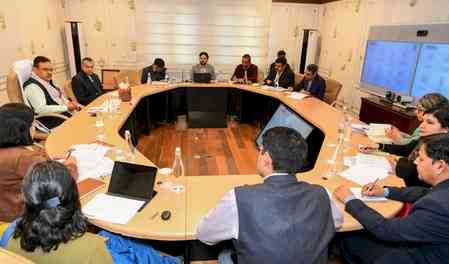
Jaipur, Dec 30 (IANS) In a cabinet meeting chaired by Chief Minister Bhajan Lal Sharma on Tuesday at the Chief Minister’s Office, the Rajasthan government approved several major policy decisions focused on environmental protection, sustainable development, responsible use of Artificial Intelligence, industrial growth, and employee welfare.
Deputy Chief Minister Premchand Bairwa, Parliamentary Affairs Minister Jogaram Patel, and PHED Minister Kanhaiyalal informed in a joint press briefing that the Rajasthan Vehicle Scrapping Policy-2025, announced in the 2025–26 Budget, has been approved.
The policy aims to phase out unfit, unregistered, and polluting vehicles and scrap them using scientific, safe and environmentally compliant processes.
Registered Vehicle Scrapping Facilities (RVSF) will be encouraged across the state to ensure transparent, digital and traceable scrapping operations integrated with the Vahan portal, eliminating any possibility of unauthorised use of scrapped vehicles.
Under the policy, government vehicles older than 15 years, unfit/unregistered vehicles, accident-damaged vehicles, auctioned scrap, unused or voluntarily surrendered vehicles can be scrapped. Vehicle owners will receive a Certificate of Deposit (CoD) and Certificate of Vehicle Scrapping (CVS), digitally uploaded on the portal.
Based on the CoD, buyers will get up to 50 per cent exemption on motor vehicle tax (maximum Rs 1 lakh) on the purchase of a new vehicle.
Scrapped vehicle chassis cut-pieces will be kept in safe custody by the authorised scrapper for six months and then deposited with the District Transport Officer for another 18 months.
The policy aims to strengthen the circular economy by enabling the reuse of steel, aluminium, plastic, rubber, and other materials, reducing raw material costs for the automobile, steel and manufacturing sectors.
To boost investments, the policy provides capital subsidy, state tax exemption, interest subsidy, and concessions in stamp duty and electricity duty for the first 20 scrapping units.
Startups in recycling and scrapping will receive support under the Rajasthan Startup Policy.
--IANS
arc/dan