Punjab’s Soul: Gurmat Music, Sufism and the Spirit of Human Fellowship
Boston-based author and thinker Sarabpreet Singh delivers an inspiring address at Guru Gobind Singh Study Circle Centre
 City Air News
Oct 30, 2026 08:19
0
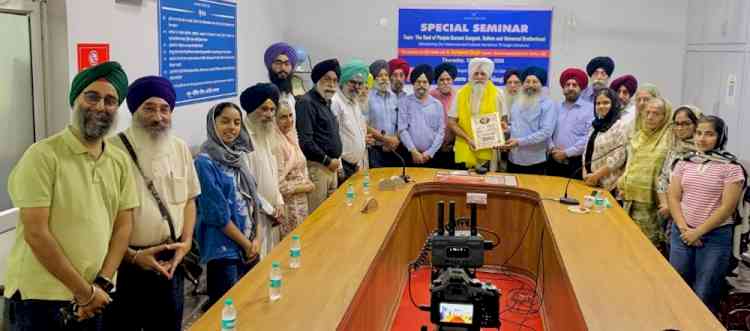
Ludhiana, October 30, 2026: Thousands of miles may separate Punjabis from their ancestral homeland, but the language, music, literature and spiritual traditions of their roots continue to nourish a deep and enduring sense of belonging. This bond between heritage and identity found eloquent expression at the Guru Gobind Singh Study Circle Centre, where Boston-based author and thinker Sarabpreet Singh delivered an illuminating address on Gurmat music, Sufism and communal harmony as defining expressions of Punjab’s soul. Drawing upon his own intellectual and spiritual journey, Sarabpreet Singh explored Punjabi identity, the narratives surrounding 1984, the preservation of traditional Gurmat music, his engagement with Sufi literature and his published works. His reflections in this session brought history, faith, music and humanism into a compelling conversation, holding scholars, writers, poets, music lovers and students spellbound.
Conducting the proceedings with warmth and finesse, Jaspal Singh Pinky described Sarabpreet Singh as a distinguished representative of Sikh thought and heritage on the international stage. Dr Balwinder Pal Singh, in his welcome address, highlighted the speaker’s intellectual stature and valuable contribution. Sardar Surjit Singh, President of the Ludhiana Zone, commended the address and expressed gratitude for his presence. Dr Hari Singh Jachak, a member of the governing body of the Punjabi Sahit Akademi, enriched the occasion with a poem composed for the gathering. Dr Gulzar Singh Pandher, General Secretary of the Akademi, observed that a writer does not resort to violence but engages with the world through reason and words, seeking to understand the deeper meaning of human identity. Sarabpreet Singh’s work, he suggested, exemplified this humanistic approach.
Principal Krishan Singh praised the speaker’s creative vitality, remarking that such originality and intellectual initiative were qualities that deserved greater cultivation in the local literary and academic environment. He particularly appreciated Sarabpreet Singh’s ability to unfold his subjects through three distinct yet interconnected dimensions.
Satbir Singh, editor of Cosmic Faith and former DGM of Punjab and Sind Bank, offered a perceptive interpretation of the speaker’s personality, identifying three defining strands in his life and work: historical research, devotion to the Divine and selfless love for humanity. He articulated the significance of this convergence with sensitivity, highlighting the spiritual depth underlying the speaker’s intellectual pursuits.The audience’s response reflected the impact of the address.
Dr Sarabjit Singh Renuka, visibly impressed by the discourse, ordered three of Sarabpreet Singh’s books through Amazon while the seminar was still in progress, expressing his delight at the opportunity to engage with the author’s ideas. A team of students from Sukrit also participated in the discussion.
Manveer Singh, a young Gurmat music enthusiast who had travelled especially from the United States, spoke about having read Sarabpreet Singh’s The Camel Merchant of Philadelphia. Professor Inderjit Kaur recalled events from 1978 and 1993, adding a personal and historical dimension to the discussion.
Gurjinder Singh, who had taken the initiative to organise the seminar, described Sarabpreet Singh as a jewel of the Sikh Panth.
Prabhsharan Singh, Director of Gurmat Gyan Missionary College; poet Hardev Singh Kalsi; Jaswinder Kaur Jassi; and Charanjit Singh Channi also shared their impressions of the address.
An engineer by training, Sarabpreet Singh worked with major corporations before his intellectual pursuits drew him towards a deeper exploration of history, identity and Punjabi heritage. Influenced in his childhood and youth by prevailing narratives about Punjabis, he gradually developed a more questioning outlook through reading, research and a determination to understand the past for himself. Although his identity as a Sabat Soorat Sikh had been familiar to him since childhood, its deeper significance and dignity awakened through his association with the Sikh congregation and the Gurdwara. His understanding of the violence of 1984 underwent a fundamental change during his research while working abroad. Examining the findings of Justice Tarkunde and numerous other commissions and fact-finding bodies brought him face to face with evidence of organised violence against the Sikh community. His experience underlined the importance of questioning received narratives, examining documentary evidence and confronting historical truth with intellectual honesty.His engagement with Gurmat music began under the inspiration of Dr Ravinderjit Singh. What followed was a dedicated search for traditional compositions and musical treasures that risked slipping into obscurity. In recalling the contributions of numerous lesser-known exponents of Gurmat music, including Bhai Dayal Singh associated with Rakab Ganj Sahib, he highlighted the invaluable role of unsung custodians in preserving this precious inheritance. His rendition of the shabad, “Hamari Pyari Amrit Dhari, Gur Nimakh Na Man Te Tari Re,” added a devotional dimension to the discourse. Equally profound is his engagement with the Sufi tradition. Through an intensive study of Shah Hussain, Waris Shah, Bulleh Shah and other mystic poets, he has developed a deep appreciation and command of Sufi kafis. Their poetry, rooted in spiritual longing, love and the transcendence of narrow identities, resonated with the larger theme of the seminar: Punjab’s enduring tradition of cultural confluence and human fellowship.
Sarabpreet Singh had also spoken about his English-language books, including works published by Penguin on Maharaja Ranjit Singh, Sufi literature, the events of 1984 and other historical subjects. His writings reflect a sustained commitment to historical inquiry and to recovering the deeper currents of Punjab’s composite cultural and spiritual heritage. The proceedings acquired a further devotional resonance when Simranjit Kaur, a teacher at the Bhai Samund Singh Gurmat Sangeet Academy, and Bhai Gurnam Singh rendered the shabad beginning “Priya Ki Preet Pyari…” in Raga Kadera. The Guru Gobind Singh Study Circle honoured the speaker in recognition of his contribution. Jaswinder Singh of Central Excise, Sardar Narinderpal Singh and Kawaljit Singh were among those present. The seminar was a reminder that Punjab’s soul transcends geographical boundaries. It lives in the divine strains of Gurbani, the mystical longing of Sufi poetry, the courage to confront historical truth and the conviction that human fellowship rises above divisions. Sarabpreet Singh’s journey brought these strands together, demonstrating how a rediscovery of one’s roots can become not merely a personal quest, but a lifelong endeavour to preserve and share the cultural, spiritual and humanistic riches of Punjab with the wider world.