Punishment, prevention and public trust: What new ‘Examination Bill’ attempts to change
The Lok Sabha on Tuesday began deliberations on the Public Examinations (Prevention of Unfair Means) Amendment Bill, 2026, amid renewed concerns over examination paper leaks and their impact on students and young aspirants. The proposed legislation is part of the government’s broader response to demands for stronger action against those involved in examination fraud.
 IANS
Jul 28, 2026 11:16
0
IANS
Jul 28, 2026 11:16
0
New Delhi, July 28 (IANS) The Lok Sabha on Tuesday began deliberations on the Public Examinations (Prevention of Unfair Means) Amendment Bill, 2026, amid renewed concerns over examination paper leaks and their impact on students and young aspirants. The proposed legislation is part of the government’s broader response to demands for stronger action against those involved in examination fraud.
The government has presented the amendment as a key reform aimed at strengthening accountability and preventing large-scale malpractice in competitive examinations.
The Bill seeks to amend the Public Examinations (Prevention of Unfair Means) Act, 2024, by increasing prison terms, raising financial penalties, and introducing strict timelines for investigations and trials.
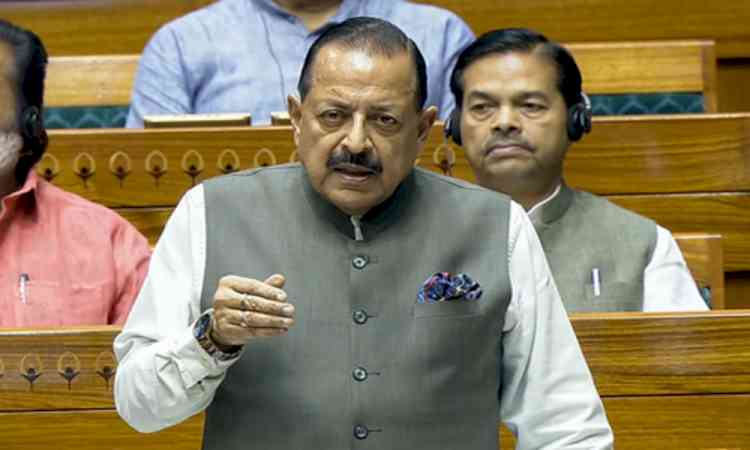
Moving the bill for consideration, Union Minister of State in the Prime Minister’s Office Jitendra Singh said the legislation reflected the government’s commitment to protecting the interests of students and youth. He described the amendment as a step towards making the existing framework more effective and stringent.
The original 2024 law was enacted following a series of examination paper leaks and came into force in June that year. It identified 15 categories of offences, including leaking question papers or answer keys, operating fake examination websites, and facilitating unfair practices. The law classified all offences as cognisable, non-bailable, and non-compoundable, while candidates themselves remained outside its scope.
The proposed amendment increases penalties across different levels of involvement. Individuals convicted of using unfair means would face a minimum jail term of five years, up from three years, with the maximum punishment rising to 10 years. The maximum fine would also increase from Rs 10 lakh to Rs 50 lakh.
Service providers involved in conducting examinations would face a higher penalty of Rs 5 crore, compared to the earlier limit of Rs 1 crore, and could be barred from handling public examinations for eight years instead of four. For organised attempts to manipulate examinations, the minimum punishment would rise from five years to seven years, along with a fine of Rs 10 crore.
The bill also introduces strict timelines for legal proceedings. Investigations must be completed within two months of a case being referred by the central government. It further provides for fast-track courts, requiring states and Union territories to designate courts of session for handling such cases.
Trials are expected to be completed within three months of the chargesheet being filed, while appeals in high courts would be handled by two-judge benches within a similar timeframe as far as possible.
--IANS
brt/uk