PU Vice Chancellor Releases Cyber Safety Handbook under RUSA 2.0 Outreach Initiative
As part of Panjab University (PU)’s series of Cyber Resilience Awareness Programmes, PU Vice Chancellor Prof. Meenakshi Goyal has released a Cyber Safety Handbook.
 City Air News
Sep 22, 2026 10:27
0
City Air News
Sep 22, 2026 10:27
0
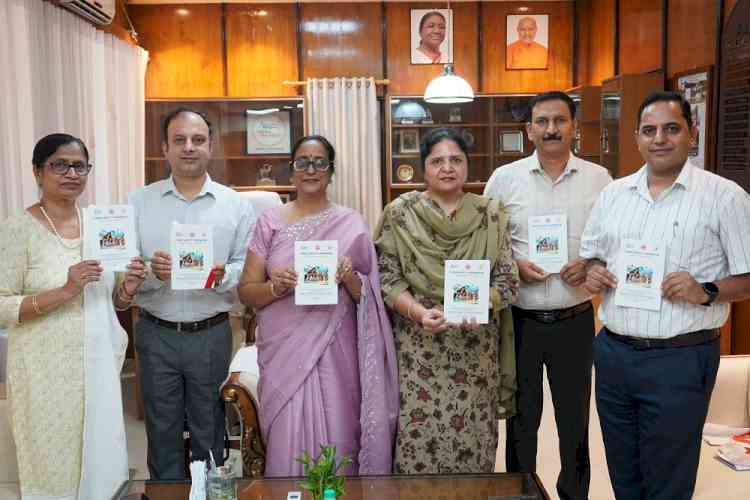
Chandigarh, September 22, 2026: As part of Panjab University (PU)’s series of Cyber Resilience Awareness Programmes, PU Vice Chancellor Prof. Meenakshi Goyal has released a Cyber Safety Handbook.
The handbook provides practical cyber-safety guidance for university and school students, women and senior citizens and is intended to support cyber-awareness efforts across the campus and wider community. The handbook is an outreach contribution from PU that combines universal cyber-safety practices with practical, audience-specific guidance for students, women and senior citizens.
The initiative is part of Cyber Resilience Awareness Programmes under the RUSA 2.0 Outreach and Public Engagement initiative titled “Building Cyber Resilience: From Campus to Community” by Centre for Skill Development & Entrepreneurship (CSDE), Panjab University (PU), Chandigarh.
The Handbook was released in the presence of Director, Research and Development Cell, Prof. Savita Gupta; RUSA Coordinator, Prof. Ganga Ram Chaudhary; Secretary to the Vice Chancellor, Prof. K.K. Saluja; Honorary Director, CSDE, Prof. Suveera Gill; and Coordinator, Cyber Wellness Centre and CSDE, Prof. Vishal Sharma.
The handbook covers essential cyber-hygiene practices, password and account security, social engineering, online financial fraud, data privacy, responsible use of social media, evidence preservation, incident response and available reporting mechanisms. Dedicated sections address the distinctive digital risks faced by students, women and senior citizens. It encourages readers to follow the simple cyber-safety routine Stop, Check, Protect and Report, while reinforcing the message “No blame. No shame. Report quickly.”
The publication also introduces readers to PU’s institutional framework for promoting cyber wellness. CSDE coordinates skill development, capacity building and community outreach by bringing together academic, professional and community partners.
The Cyber Wellness Centre, located at CSDE, provides cyber-awareness guidance, online-safety assistance, appropriate referrals and practical demonstrations, including the HONK mobile-device health-check kiosk. The handbook further highlights the role of the PU Women’s Cybersafe Club in sustaining peer-led cyber awareness and supporting women’s digital empowerment. Its members help extend safe digital practices, supportive conversations and referral awareness beyond individual workshops.