Post Budget Quote FY 26-27
 City Air News
Feb 1, 2026 02:16
0
City Air News
Feb 1, 2026 02:16
0

“We welcome the Honourable Finance Minister’s announcement today, so far as the thrust on infrastructure development is concerned. The FY27 Union Budget signals continuity in India’s macro-growth trajectory, with a consistent infrastructure push and fiscal discipline. The Budget maintains a stable macro environment for investors, keeping buyer sentiment measured and pragmatic. The focus on selective opportunities in tier-2 and tier-3 growth corridors, and connectivity in urban economic regions, provides a supportive backdrop for demand in residential and logistics markets over the medium term. However, disappointingly, the Budget does not introduce any real estate-specific fiscal incentives, especially to boost affordable housing in India, which has already been a cause of concern for the sector."
Shishir Baijal, International Partner, Chairman and Managing Director, Knight Frank India
" Today’s Union Budget 2026-27 strikes the right chord for the real estate industry by underscoring the pivotal role of Tier 1 and Tier 2 cities in India’s growth story. The renewed policy momentum — backed by sustained infrastructure investment and reforms that target urban expansion — will unlock demand across key micro-markets and support broader investment flows into both residential and commercial segments. This focus, aligned with the government’s Viksit Bharat vision, lays the groundwork for healthier real estate absorption, stronger developer confidence, and vibrant urban futures in emerging cities."
Chandresh Vithalani, Director- Palladian Partner Advisory Limited
"Budget 2026’s focus on tribal welfare, including the creation of self-reliant clusters, community creches, and health observatories, reflects a strong commitment to improving education, healthcare, and livelihoods in underserved regions. Our ongoing initiatives in tribal areas, ranging from education and nutrition programs to skill development and women’s empowerment align closely with these priorities. We welcome these measures and see them as an opportunity to further strengthen our efforts, ensuring that tribal communities have access to quality education, sustainable livelihoods, and holistic development. Collaborative efforts between civil society and government programs can help realize the full potential of these initiatives, driving meaningful and long-term impact."
Yudhistir Govinda Das, Director of Communications or ISKCON India
"The Union Budget 2026–27 offers a balanced, forward-looking roadmap that pairs growth support with fiscal prudence. Targeting a fiscal deficit of 4.3% of GDP while boosting capital expenditure to ₹12.2 lakh crore underscores a commitment to infrastructure-led expansion and macroeconomic stability.
It strengthens the banking sector via a proposed High-Level Committee under the Viksit Bharat vision, alongside measures to enhance credit delivery and deepen financial markets, at a time when banks enjoy stronger asset quality and profitability. The Budget's push for MSME development, through expanded equity support, liquidity infusions, and credit guarantees, will improve financing access for small businesses and fuel nationwide entrepreneurship. Structural initiatives like India Semiconductor Mission 2.0, high-speed rail expansions, and targeted aid for manufacturing and emerging sectors promise greater competitiveness, job creation and economic resilience.
Taxation tweaks, including securities transaction tax adjustments and eased compliance timelines, strike a measured balance between revenue and reform. Overall, this Budget advances productivity-led growth and domestic resilience within a stable macro-fiscal framework. We welcome these steps and remain committed to sustainable expansion through prudent lending and customer-centric solutions.”
Vinod Francis, Chief Financial Officer, South Indian Bank
The Union Budget 2026–27 clearly positions Yuva Shakti at the centre of India’s growth story, with a strong sankalp to bring the poor, underprivileged and disadvantaged into the formal economy. As more young Indians in semi-urban and rural regions enter the workforce, there is a parallel opportunity to create sustainable livelihoods through assisted digital entrepreneurship. Empowering youth with skills, access to formal financial products, and locally relevant income opportunities will accelerate both employment generation and financial inclusion.
By combining skilling, employment generation and rural empowerment, the Budget sets the stage for young Indians to actively participate in India’s prosperity. It also strengthens access to formal systems, economic opportunity and long-term financial security across families, sectors and regions.
The launch of She MARTS and the continued push through the Lakhpati Didi programme will empower rural women to build sustainable, community-owned businesses. Such initiatives will create strong pathways for female POSPs to emerge as trusted, income-generating entrepreneurs at the grassroots.”
Dhurv Sarin, Co-founder, PBPartners
“The Union Budget 2026–27 charts a decisive course for India’s evolution into a global technology leader. The enhanced capital outlay of ₹12.2 lakh crore and the launch of the India Semiconductor Mission 2.0 reaffirm the government’s commitment to deep-tech indigenization. The ₹40,000 crore allocation for electronics component manufacturing is a strategic intervention that propels the ecosystem toward advanced engineering and value creation. The focus on establishing Rare Earth Corridors further strengthens the foundation for a secure and self-reliant supply chain. The budget’s emphasis on providing skilling programmes will encourage the youth in providing quality employment opportunities.
At Socomec, we welcome the government’s thrust on high-tech manufacturing and the ₹10,000 crore MSME Growth Fund, both of which will accelerate innovation and competitiveness across the electrical sector, driving the vision of an ‘Aatmanirbhar’ and ‘Viksit Bharat’ by 2047.”
Meenu Singhal, Regional Managing Director, Socomec Innovative Power Solutions
“A growth-oriented Budget, with a clear focus on increasing public capital expenditure and boosting manufacturing.
It is a Budget which creates opportunities, for youth to improve their livelihoods, women to become financially independent and for employment-intensive sectors like medical tourism to take off.
I welcome the Government's keen attention to critical minerals and rare earths. The Rare Earths Corridors for mining, processing, R&D and manufacturing in Odisha, TamilNadu, Andhra and Kerala will boost growth, employment and mineral security. Import duty exemption on capital goods for critical minerals processing is very timely in the current global scenario.
The announcement on flexibility in SEZs, which will permit some sales in domestic market is an excellent move.
I congratulate the PM and FM for continuing to steer the Indian economy with a very steady hand in uncertain times.”
Anil Agarwal, Chairman - Vedanta Ltd
"The Union Budget 2026–27 reflects continuity with conviction, demonstrating the government’s ability to balance growth, fiscal discipline and structural reforms amid global uncertainty. With GDP growth guided around 7% and the fiscal deficit narrowing to 4.3% of GDP, the focus remains firmly on macro stability without compromising on public investment, which has increased nearly six-folds since FY15.
The sustained emphasis on manufacturing, infrastructure, energy security and services strengthens India’s medium-term growth engine, while MSME credit support, logistics modernization and supply-chain localization address key execution bottlenecks. Prioritizing future-ready sectors such as electronics, nuclear energy, data centres, defence manufacturing and rare earths further reinforces India’s strategic and self-reliant growth framework.
For equity markets, the Budget is structurally positive, offering improved earnings visibility through infrastructure-led growth and policy certainty. While tax measures on derivatives may trigger near-term volatility, the broader policy framework enhances India’s long-term investment attractiveness, anchored in stability, reform momentum and sustainable growth."
Ajit Mishra – SVP, Research, Religare Broking Ltd
“This budget provides a massive boost to the capital market by creating new, efficient pathways for raising capital. The ₹100 crore incentive for municipal bonds and the push for CPSEs to launch dedicated REITs show a clear strategy to unlock value from public assets. By simplifying the Foreign Exchange Management (FEMA) rules and expanding the Portfolio Investment Scheme, the government is opening the doors wide for global capital to flow into Indian companies. These reforms make it significantly easier and cheaper for both the government and private enterprises to fund their next phase of growth, ensuring that the pipeline for new listings and infrastructure projects remains robust and attractive to investors.
The introduction of a market-making framework and total return swaps for corporate bonds is a game-changer; it ensures that investors can buy and sell with much greater ease and lower costs. Additionally, turning TReDS receivables into asset-backed securities creates an entirely new category of liquid assets for the market to trade. While the adjustments in Securities Transaction Tax (STT) reflect a move toward market stability, the overall emphasis on digital integration and faster settlement processes makes our trading ecosystem more transparent and resilient. We are seeing the Indian markets evolve into a highly efficient, world-class platform.”
Mahavir Lunawat, Chairman & Managing Director, Pantomath Capital
“In Union Budget 2026–27 the Finance Minister focused heavily on bridging the gap between classroom learning and industry requirements, particularly through AI and creative technologies. With the National Education Policy (NEP) 2020 already in implementation phase, it is critical that a multipronged approach be adopted to create a future-ready workforce. This is exactly what the Budget proposes to do.
Governance & employability: The need of the hour has been addressed by the Budget.
• Education-to-Employment and Enterprise Standing Committee: A high-powered committee will be established to recommend measures that align education with job market needs. Its primary focus is to help India capture a 10% share of the global services market by 2047.
Such committees have been set up on several occasions in the past. Key thing will be the composition of this committee and the financial teeth that it will have.
• AI Impact Assessment: This committee will also assess how emerging technologies, specifically Artificial Intelligence, are reshaping job roles to ensure the national curriculum and skilling programmes remain relevant. Organisations such as Nasscom have been doing such assessment from time to time and this committee may not be able to say anything new.
Skilling & emerging technologies: Most crucial aspect of skilling.
• AVGC Content Creator Labs: To boost the "Orange Economy" (creative industry), 15,000 secondary schools and 500 colleges will host content creator labs for Animation, Visual Effects, Gaming, and Comics (AVGC), supported by the Indian Institute of Creative Technologies, Mumbai. This has been the demand of industry for long. After the recent setting up of IICT in Mumbai, it is heartening to see the Government now stregthening the formative agenda of the institute.
• SAMARTH 2.0: A modernized textile skilling ecosystem will be launched in collaboration with industry partners to upgrade vocational training in the textile and technical textile sectors. The recent geo-political disruptions have taken a heavy toll on textile units in recent months. Upskilling focus on this sector will help the units find new markets.
• AI for Education: A dedicated Center of Excellence in Artificial Intelligence for education was announced with an outlay of ₹500 crore. The reach and the location of this centre will be important for it to be able to make a real impact on the ground.
Higher education & infrastructure:
• University townships: The Government will support states in developing 5 University Townships located near major industrial and logistics corridors. These will integrate universities, research centers, and skill institutes with residential facilities. The proximity of university towns with industrial corridors will lead to the desired mingling of industry and academia and reduce the gap between the two.
• Girls' Hostels: To improve access for female students, especially those in STEM or lab-heavy courses, the budget proposes setting up one girls' hostel in every district through Viability Gap Funding (VGF). This much needed and belated move will lead to greater participation of girls in technical higher education.
• New Institutes: * A new National Institute of Design will be established in the Eastern region.
• Three new National Institutes of Pharmaceutical Education and Research (NIPER) were proposed, along with the upgrading of seven existing ones.
Sector-specific skilling: The selection of sectors for skilling shows the Government's focus on sunrise sectors, such as healthcare and tourism. More initiatives to provide boost for skilling in green mobility would have been desirable.
• Healthcare: Support for training one lakh allied health professionals across 10 disciplines and a separate plan to skill 1.5 lakh caregivers.
• Medical Seats: An addition of 10,000 medical seats this year, moving toward a 5-year goal of adding 75,000 seats.
• Veterinary Science: A loan-linked capital subsidy scheme to add 20,000 professionals in the veterinary and para-veterinary sectors.”
Rajeev Juneja, President, PHDCCI
"Hoping to hear from you soon. The Union Budget 2026-27 reinforces the services sector as a core engine of Viksit Bharat, with targeted measures across education-to-employment linkages, medical value tourism, IT and digital services, tourism, and the creative economy. Initiatives such as rationalisation of safe harbour provisions for IT services, promotion of medical value tourism hubs, stronger skilling pathways for allied health and caregiving services, and trust-based trade facilitation are poised to lift India’s global competitiveness in services exports.
SEPC welcomes these forward-looking steps, which will further improve ease of doing business, strengthen service quality and compliance readiness, and provide a clearer runway for sustained, export-led growth in India’s services sector."
Abhay Sinha, Director General, SEPC - Services Export Promotion Council
“The 2026 Union Budget sends a positive signal for India’s infrastructure and manufacturing sectors. Continued focus on infrastructure development, including in tier-2 and tier-3 cities, will support more balanced and sustainable growth. The proposed ₹20,000-crore allocation for Carbon Capture, Utilisation and Storage (CCUS) is a practical step towards decarbonisation, especially for hard-to-abate industries. For manufacturers, these measures create opportunities to adopt cleaner technologies, strengthen competitiveness, and align sustainability goals with long-term business growth.”
Navin Aswani, Managing Director, Aswani Industries Pvt. Ltd. (Ascolite)
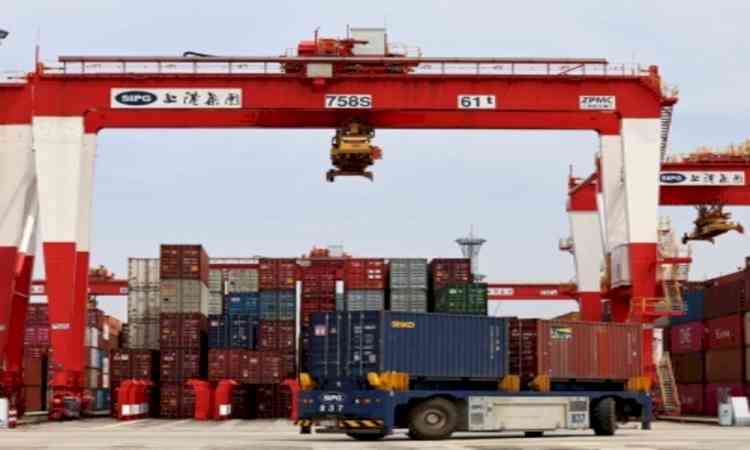
“The Union Budget sends a clear signal of India’s intent to strengthen its logistics and supply chain capabilities at a global scale. The focus on infrastructure development, coastal cargo movement, container manufacturing, and last-mile connectivity in tier-2 and tier-3 cities directly addresses the industry’s need for efficiency, resilience, and scalability. The emphasis on reducing import dependence, integrating rail, road, and coastal transport, and encouraging technology-enabled fleet management is particularly encouraging. For vehicle telematics companies, this creates an enabling environment for faster automation, improved fleet visibility, lower logistics costs, and a more tech-driven role for India in global trade.”
Rahul Mehra, Co-founder, Roadcast (Logistics, Supply Chain & Tech Mobility)
“While global developments such as US tariffs are being closely observed, the government is signalling that India is ready to think beyond reliance on any single market, expand opportunities in Europe, and improve ease of doing business. The Union Budget 2026–27’s announcement of a significant increase in defence capital expenditure to ₹2.3 lakh crore underscores a strong commitment to modernisation, self-reliance, and indigenisation. For domestic manufacturers, this presents a strategic opportunity to scale production, invest in advanced R&D, and develop mission-critical technologies. With domestic manufacturing capacity projected to grow 7%, India is not only reducing import dependency but also enhancing its defence readiness. At Krishna Defence, we view this renewed focus on embedding defence manufacturing into India’s broader industrial ecosystem as a pivotal moment. It positions us to deliver resilient, homegrown solutions that strengthen national security, foster technological innovation, and elevate India’s standing as a globally competitive defence manufacturer.”
Ankur Shah, Managing Director, Krishna Defence and Allied Industries Limited
"The Union Budget 2026 lays a strong foundation for India’s next phase of digital and industrial growth. While global developments such as US tariffs are being monitored, the government is signaling that India is prepared to think beyond dependency on any single market, expanding opportunities in Europe, and improving ease of doing business. Initiatives across healthcare, semiconductor manufacturing under the GaN-focused Semiconductor 2.0 plan, and the expansion of Digital Public Infrastructure (DPI) into agriculture, compliance, taxation, infrastructure, and healthcare reflect India’s intent to build globally competitive and resilient ecosystems. With this rapid digital and industrial growth, cybersecurity is no longer optional but essential, creating an urgent need for enterprises to adopt advanced solutions to protect critical data and enable trusted, scalable growth."
Deep Chanda, CEO at Ampcus Cyber
“India’s shift towards India’s push for electric mobility, with the government focusing on electric mobility with a specific focus on public transportation and sustainable last-mile delivery. The PM-eBus Sewa scheme will deploy 4,000 new electric buses, complemented by ₹2,000 crore under the PM E-DRIVE scheme for pan-India EV charging infrastructure, accelerating clean transport adoption. For last-mile delivery, this opens opportunities to electrify logistics fleets, reduce emissions, and enhance operational efficiency. At Green Drive, we see this industry's expectations for 38,000 e-buses by 2029; the government’s continued policy support provides the clarity and stability needed to drive India’s green mobility transition."
Hari Krishna, Founder & CEO at Green Drive Mobility
“The Union Budget 2026 proposes an allocation of ₹10,000 crore over five years under the Biopharma Shakti programme to strengthen domestic manufacturing of biologics and biosimilars. This will create the right ecosystem to shift India’s image from a Generic Hub to an Innovative Hub for the world. The initiative includes a dedicated biopharma institutional ecosystem with 3 new NIPERs and upgradation of 7 existing NIPERs, supporting advanced research, skill development, and building a future-ready pool for Young India. The BCD exemption for 17 cancer drugs and medicines for 7 rare diseases, including Food for Special Medical Purposes, will directly benefit public health.”
Abhay Kumar Shrivastava Chair PHDCCI Pharmaceutical Manufacturing Committee
“The Union Budget makes a clear and timely choice by placing biopharma at the centre of India’s next manufacturing wave, alongside other frontier sectors. As India’s disease burden shifts towards diabetes, cancer, and autoimmune disorders, and advanced NCD therapies gain wider adoption globally, the focus on biologics and biosimilars is both relevant and necessary. The Bio Pharma Shakti initiative recognises that longevity, quality of life, and affordability will define healthcare outcomes going forward.
The Finance Minister, Nirmala Sitharaman, has reinforced the Viksit Bharat vision through a ₹10,000 crore commitment to build a strong domestic biopharma ecosystem, strengthen institutions, upgrade the Central Drugs Standard Control Organization to global standards, and enable faster, predictable approvals. The full BCD exemption on 17 cancer drugs and targeted relief for rare diseases will further improve patient access while supporting innovation in high-need areas.
Over the coming years, the alignment of these reforms with the evolving **European Union–India trade framework will help Indian pharma move from scale to leadership, attract global investment, and strengthen India’s position as a trusted manufacturing and innovation partner in advanced therapies.”
Sheetal Arora, Promoter & CEO, Mankind Pharma
The Union Budget 2026 provides much-deserved momentum for India’s biopharma journey. We welcome the government’s intent to strengthen the biopharma ecosystem, and the Biopharma Shakti initiative is an encouraging step in this direction. The focus on building scale across strategic and frontier sectors creates the right environment for long-term improvements in health outcomes. The initiative recognises the need for innovation and research while creating a conducive ecosystem for good health through knowledge sharing and technology.
Alongside this, the emphasis on driving research by setting up new National Institutes of Pharmaceutical Education and Research will not only build talent but also augment the research capabilities of the country.
Strengthening the regulatory landscape through a robust biopharma-focused network, including enhanced capacity and faster approval timelines, will further support innovation and improve patient access.
Further, the proposed investment of Rs 10,000 crore over five years, along with the emphasis on domestic production, will go a long way in strengthening supply security and reducing dependence on imports. This aligns with the vision of BSV, as we remain committed to making in India for India and the world.
Additionally, the Budget’s proposal to promote India as a global hub for sports goods is also encouraging. Improved access to quality sports equipment can help drive wider participation of women in sports while supporting healthier lifestyles.”
Sanjiv Navangul, CEO, BSV ( A Mankind Group Company)
"The Union Budget 2026 presents a comprehensive roadmap for strengthening India’s healthcare ecosystem at a time when the country’s disease burden is shifting towards non-communicable diseases such as diabetes, cancer, and autoimmune disorders, alongside a rapidly ageing population. The proposed addition of one lakh allied health professionals will help bridge workforce gaps across hospitals, rehabilitation centres, and community-based care settings. This is complemented by plans to train 1.5 lakh caregivers through NSQF-aligned, multi-skilled programmes, strengthening long-term, elderly, and post-acute care services.
The establishment of five regional medical tourism hubs in partnership with the private sector reinforces India’s ambition to emerge as a preferred global healthcare destination. For hospital networks such as Park Hospitals, these initiatives create meaningful opportunities to scale specialised allied services, strengthen geriatric and rehabilitation care, and contribute to medical value tourism aligned with national healthcare priorities.”
Ankit Gupta, Managing Director, Park Medi World Limited
“The Union Budget 2026-27 seeks to push high-value agriculture as a forward-looking move that could meaningfully redefine farm incomes. Promoting high-density cultivation of almonds, cashews, walnuts, and pine nuts while linking production to processing, branding, and exports shows a clear shift from volume to value. Creating sustainable crop clusters can help farmers in hilly and coastal regions diversify beyond climate-vulnerable staples. If backed by strong infrastructure, extension support, and market access, this strategy can reduce import dependence and position Indian growers more competitively in the global premium agri-produce market.”
Ankush Jain, CFO at Proventus Agrocom Limited (ProV)
“The Union Budget 2026’s proposal to raise capital expenditure to ₹12.2 lakh crore for FY 2026–27 reinforces the government’s strong commitment to infrastructure-led growth, which is critical for the real estate sector. Sustained public investment in transport, urban infrastructure, and logistics will significantly improve connectivity and open up new development corridors, particularly in emerging Tier 2 and Tier 3 cities.
The proposed Infrastructure Risk Guarantee Fund is a timely and progressive step that will strengthen lender confidence, ease financing risks during the construction phase, and encourage greater private sector participation in large-scale developments. Additionally, accelerated monetisation of CPSE real estate assets and expansion of dedicated freight corridors will support commercial and industrial real estate growth, while enhancing overall urban livability. Collectively, these measures will drive sustainable real estate development and long-term demand across residential, commercial, and mixed-use segments.”
Prakhar Agrawal, Director – Rama Group
“This Budget brings together multiple strands of India’s manufacturing and technology growth story in a balanced and forward-looking manner. The ₹40,000 crore allocation for India Semiconductor Mission 2.0 and the enhanced outlay for electronics components manufacturing point to a clear focus on scale, depth, and ecosystem development. When seen alongside targeted support for MSMEs through a ₹10,000 crore growth fund, the policy framework addresses both large-scale manufacturing and the strength of the supplier base. By aligning capital support with capability building and innovation, the Budget creates a solid foundation for sustainable, technology-led growth and reinforces India’s ambition to emerge as a globally competitive electronics manufacturing hub.”
Benjamin Lin, President, Delta Electronics India
“What stands out in Union Budget 2026 is the scale, consistency, and seriousness with which the government is approaching electronics and advanced manufacturing. The launch of India Semiconductor Mission 2.0 with an outlay of ₹40,000 crore, along with the expansion of the electronics components manufacturing scheme to a similar level, clearly signals a long-term commitment to building strong domestic capabilities. Importantly, the focus goes beyond manufacturing capacity to include full-stack design, development of Indian intellectual property, skill creation, and stronger supply-chain resilience. This reflects a practical understanding of how globally competitive technology ecosystems are built. Such clarity and continuity in policy direction give industry the confidence to plan long-term investments, deepen local value addition, and steadily move India up the electronics manufacturing value chain.”
Niranjan Nayak, MD, Delta Electronics India
“The 2026-27 Union Budget, delivered from Kartavya Bhavan under the guiding principles of the three Kartavyas, delivers a robust, reform-oriented roadmap for Viksit Bharat. It sustains high capex momentum (up to ₹12.2 lakh crore), accelerates manufacturing in frontier sectors (e.g., ISM 2.0 with ₹40,000 crore, BioPharma Shakti at ₹10,000 crore), rejuvenates legacy clusters, champions MSMEs through equity funds and liquidity tweaks, and pushes infrastructure with high-speed rail corridors, waterways, and city economic regions.
Specifically for general insurance industry, the compassionate exemption of TDS (and full tax) on Motor Accident Claims Tribunal interest awards stands out as a victim-friendly relief, ensuring faster, untaxed access to compensation for those in distress— a thoughtful step toward ease of living.
A particularly positive move for investors and corporates is the revised taxation of share buybacks: proceeds are now taxed as capital gains for all shareholders, addressing past anomalies and aligning buybacks more equitably with other equity distributions. This promotes fairness for minority shareholders while curbing potential tax arbitrage—corporate promoters face an effective 22% rate, non-corporate at 30% via additional levies. Overall, it streamlines corporate capital allocation, reduces differential treatment, and could encourage more transparent shareholder returns without excessive complexity.
On the flip side, the hike in Securities Transaction Tax (STT) on futures and options—futures to 0.05% (from 0.02%) and options premium/exercise to 0.15% (from 0.1%/0.125%)—is a negative for active traders and the derivatives ecosystem. It raises transaction costs, potentially curbing speculative volumes, impacting liquidity in F&O, and contributing to immediate market pressure (e.g., Sensex/Nifty drops post-announcement). While aimed at moderating excessive derivatives activity and boosting revenue, it could dampen retail participation in a bull phase and affect broking revenues short-term.
Net-net, this is a growth-focused, simplification-heavy budget with strong welfare and infra underpinnings—balanced by prudent revenue measures. The buyback tweak is a clear win for equity market health, while the STT increase tempers enthusiasm in high-frequency trading circles. Execution and market adaptation will define its success in the coming year.”
Ashwani Dhanawat, Executive Director and Chief Investment Officer, Shriram General Insurance
“The Union Budget 2026–27 seeks to strengthen infrastructure critical for rural and beyond-metro logistics through new Dedicated Freight Corridors, expansion of inland waterways and coastal cargo, domestic container manufacturing, and targeted investment in Tier II and Tier III by establishing a new model - City Economic Regions. For platforms like Bharat Supply, serving over 2 lakh villages, CER-led infrastructure can enable modern fulfilment centres, aggregation hubs and multimodal connectivity closer to production clusters, reducing distance, time and cost for rural supply chains, and improving access from hinterlands to national markets.”
Taranbir Singh, Founder and Chief Executive Officer of Bharat Supply
:We welcome the recently announced Union Budget 2026. The year’s budget underscores a decisive push to structurally strengthen the MSME ecosystem by improving access to capital, liquidity and compliance support.
The ₹10,000-crore SME Growth Fund and the top-up to the Self-Reliant India Fund meaningfully addresses the risk-capital gap for micro and small enterprises. The mandatory participation of CPSEs on TReDS, backed by credit-guarantee support for invoice discounting and the securitisation of TReDS receivables, represents a structural shift that can materially strengthen MSME cash-flow certainty. The linkage of GeM with TReDS and the introduction of ‘Corporate Mitras’ to support compliance readiness further enhances transparency and ease of doing business.
Coupled with sustained capital expenditure and infrastructure development across tier 2 and 3 cities, the Budget lays foundation for a more scalable, resilient and growth-oriented ecosystem for MSMEs to emerge competitive manufacturing leaders.”
Hiren Shah, Managing Director, Jyoti Global Plast
“The overall gross and net borrowing numbers, along with the lack of any specific measures to address demand for bonds, will clearly weigh on market yields. Effectively, even as broader fiscal consolidation measures and the reduction in the debt-to-GDP ratio are long-term positives, the bond market in the near term will continue to depend on RBI’s open market operations to anchor yields. This remains a challenge and could keep yields elevated relative to underlying macroeconomic numbers.”
Rajeev Radhakrishnan, CFA, CIO - Fixed Income, SBI Mutual Fund
"The Union Budget 2026–27 introduces measures relevant to real estate, particularly across asset monetization, infrastructure spending, and transaction ease. The proposal to use REITs for monetizing Central Public Sector Enterprise assets is expected to unlock value from underutilized government land and attract institutional capital. Continued capital expenditure on infrastructure and urban connectivity may support demand in Tier-2 and Tier-3 markets. The removal of the TAN requirement for NRI property sales simplifies compliance, while tourism-focused initiatives could benefit hospitality-led real estate. However, expectations such as higher home loan interest deductions, a revised affordable housing definition, and industry status for real estate remain unaddressed and may require further policy attention."
Amit Chopra, President- NAR India