PoJK: Withholding bodies of slain protesters cruellest aspect of Pakistan's crackdown in occupied Kashmir
The recent violent crackdown on peaceful sit-ins by Pakistani security forces in the Rawalakot region of Pakistan-occupied Jammu and Kashmir (PoJK), along with the refusal to hand over the bodies of the deceased, represents one of the cruellest manifestations of the Pakistani authorities’ inhuman treatment of the people in the occupied territory, a report has stated.
 IANS
Nov 14, 2026 10:50
0
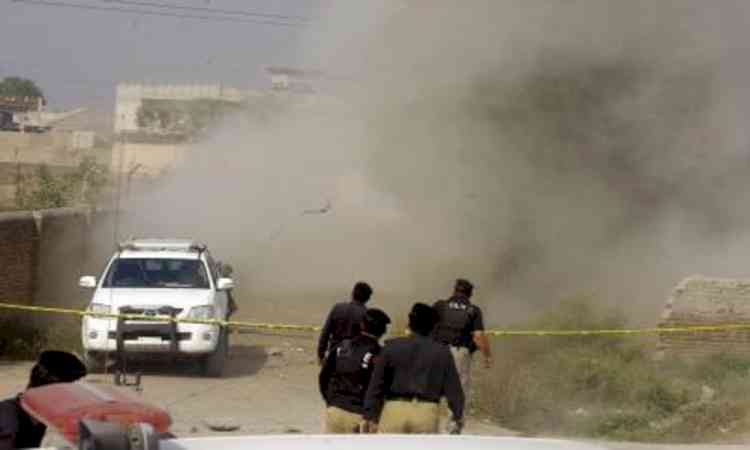
Athens, Nov 14 (IANS) The recent violent crackdown on peaceful sit-ins by Pakistani security forces in the Rawalakot region of Pakistan-occupied Jammu and Kashmir (PoJK), along with the refusal to hand over the bodies of the deceased, represents one of the cruellest manifestations of the Pakistani authorities’ inhuman treatment of the people in the occupied territory, a report has stated.
Three men identified as Atif Jardees, Ehtisham Younis and Adil Rashid were reported killed, while at least 18 others were seriously injured during the crackdown.
“Both the Joint Awami Action Committee (JAAC) and the opposition alliance have demanded the dead be handed to their families. This tactic was started in June this year when relatives of Fahad Barkat were reportedly told they would receive his body only after signing a statement declaring him a ‘terrorist’ killed in a police encounter. Extracting a fake confession of terrorism from grieving family as the price of a funeral is a clear technique of forced occupation of PoJK,” according to a report in 'Greek City Times'.
The report stated that organisers of the protest and Kashmiri diaspora parties have accused Pakistani security forces of using heavy machine guns, armoured vehicles and drones to crush the protests in PoJK. It added that the suppression of independent fact-finding in the region makes it increasingly difficult to expose the brutality of Pakistani forces.
“Five months after it began killing civilians in Pakistan-occupied Jammu and Kashmir (PoJK), the Pakistani state has settled on force as the whole of its policy there, and the emerging situation in Rawalakot confirms that the June crackdown was never an aberration but a working template to control the region. The sequence is now familiar enough to be predicted in advance,” the report detailed.
“Sit-ins across different parts of PoJK are cleared before dawn, communications are severed so nothing can be verified, bodies are held back until families accept Islamabad’s version, and the civilian movement is reclassified as ‘terrorism.’ What follows will not be accommodation but deeper centralisation, more paramilitary deployment, and a regional government in PoJK that is fully controlled by the military-backed government in Islamabad,” it mentioned.
Despite escalating human rights abuses in PoJK since June, the report said, there has been no investigation or inquiry to hold accountability of those responsible.
It highlighted that rather than addressing the alleged abuses, Pakistani authorities invoked anti-terrorism legislation to ban the Joint Awami Action Committee (JAAC) on June 5 this year, cut internet and mobile connectivity for a week, directed outsiders to leave the region, arrested more than 100 people within 48 hours and shut JAAC’s Muzaffarabad office.
Pakistani Journalist Sohrab Barkat was also arrested under cybercrime laws for covering the incident in PoJK, while activist Shahzaib Habib was shot that night.
The report noted that Pakistani authorities’ use of violence has failed to break the resolve of civilians staging a sit-in at Dareek Eidgah in Rawalakot, which has continued uninterrupted since June 10 and witnessed another turnout of thousands this month.
--IANS
scor/as