PM Modi's three-nation visit reflects India's integrated strategic approach
The Middle East and Africa are emerging as key pillars as India expands its global interests and outreach amid rising trade uncertainties and renewed tariff pressures from the United States, a report said on Friday.
 IANS
Dec 26, 2025 10:28
0
IANS
Dec 26, 2025 10:28
0

Washington, Dec 26 (IANS) The Middle East and Africa are emerging as key pillars as India expands its global interests and outreach amid rising trade uncertainties and renewed tariff pressures from the United States, a report said on Friday.
“Prime Minister Narendra Modi’s recent visit to Jordan, Ethiopia, and Oman reflects India’s integrated strategic approach to the Middle East, Africa, and the Indian Ocean. Rather than treating these regions in isolation, New Delhi is responding to their geopolitical interconnection, especially in the wake of disruptions to global trade routes,” a report in the US-based think tank 'Middle East Forum' detailed.
“The visit to Jordan, marking seventy-five years of diplomatic relations, is significant because it comes after a long gap and amid instability following the Gaza war. Conflict in Yemen and Sudan has destabilised the broader region, including the Red Sea littoral states,” it added.
According to the report, Jordan holds significance for India as a moderate and stabilising force in a volatile Middle Eastern region. By firmly rejecting extremism and maintaining balanced diplomacy, it said, Jordan enabled India to engage in the Middle East without being drawn into the intra-regional rivalries.
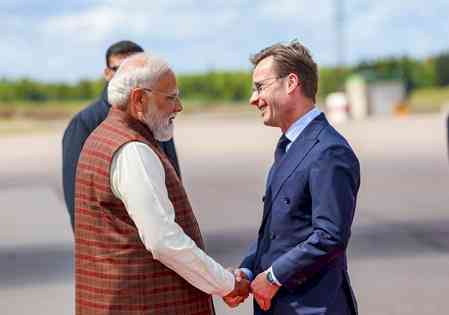
PM Modi’s warm welcome in Amman and his discussions with Jordan's King Abdullah II reflected the strengthening partnership.
As India continues to expand its global outreach and diversify its economic and strategic partnerships, PM Modi described his visit as "immensely productive", which had "strengthened the India-Jordan partnership across key areas such as renewable energy, water management, digital transformation, cultural exchanges, and heritage cooperation." The two countries, he said, “strongly reaffirmed their shared stand against terrorism.”
“For New Delhi, engaging Jordan sends the message that Middle Eastern stability is central to India’s energy security, diaspora protection, and regional strategy,” the report noted.
The report emphasised that Ethiopia serves as India’s gateway to Africa and, with over $200 billion of Indian trade moving through the Red Sea each year, makes regional instability, including piracy, trafficking, and recent attacks on shipping, pose a direct concern for India.
“During the visit, India and Ethiopia elevated their bilateral ties to a Strategic Partnership. Modi’s outreach reinforces India’s aspiration to consolidate its leadership of the Global South through development partnerships that prioritise transparency and capacity-building, rather than China-style debt dependency to which Ethiopia previously fell victim,” it mentioned.
Oman, meanwhile, continues to be among India’s most trusted partners in the Persian Gulf and plays a vital role in New Delhi’s energy and maritime security.
“Indo-Oman defence and naval cooperation is extensive, with Indian naval access to ports including Duqm, enhancing India’s reach in the western Indian Ocean. Oman also plays a key role in India’s Link West policy, MAHASAGAR vision, and extended neighbourhood strategy,” the report stated.
--IANS
scor/as