PM Modi's strategic restraint went so well with our students
Leadership is often judged by how firmly a leader stands by a decision. Yet history repeatedly reminds us that true statesmanship is not measured by stubbornness but by the wisdom to recognise when changing circumstances demand a different course. The recent developments surrounding the NEET examination controversy offer another example of this principle under Prime Minister Narendra Modi's leadership.
 City Air News
Jul 28, 2026 08:18
0
City Air News
Jul 28, 2026 08:18
0
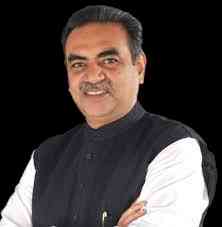
By Sanjay Tandon
Leadership is often judged by how firmly a leader stands by a decision. Yet history repeatedly reminds us that true statesmanship is not measured by stubbornness but by the wisdom to recognise when changing circumstances demand a different course. The recent developments surrounding the NEET examination controversy offer another example of this principle under Prime Minister Narendra Modi's leadership.
From the outset, the Union Government acted with seriousness. Investigations were initiated, those responsible were arrested, corrective measures were introduced, and reforms to strengthen the examination process were announced. A re-examination was also conducted successfully on July 21. These steps demonstrated the government's commitment to protecting the integrity of one of India's most important competitive examinations.
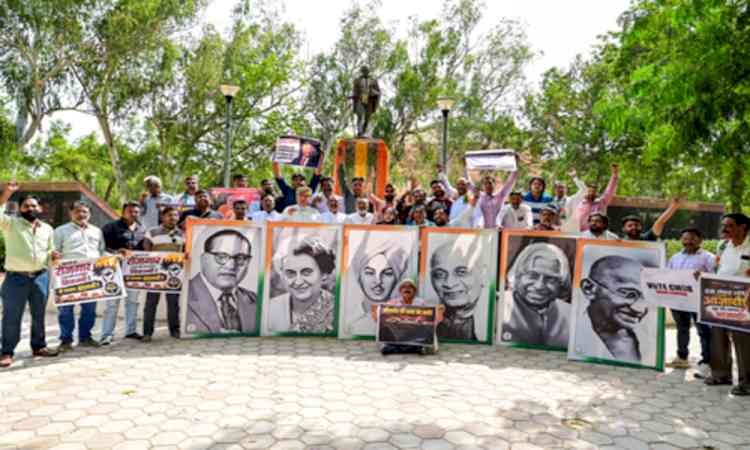
However, despite these measures, the protests continued. Many students and parents were unaware of the corrective steps already taken. At this stage, the challenge was no longer confined to administrative reforms alone. It had acquired the potential to evolve into a wider law-and-order and political issue.
Prime Minister Modi recognised this reality before it could spiral further. His intervention reflected strategic foresight. It ensured that a legitimate movement centred on students' concerns did not become vulnerable to forces seeking to exploit public discontent for purposes far removed from educational reform.
Democracy allows peaceful protest, and governments must remain responsive to genuine public concerns. Equally important, however, is the responsibility to prevent any agitation from being diverted by disruptive or anti-national elements that thrive on instability rather than solutions. A responsible government cannot afford to ignore such risks.
This is not the first time Prime Minister Modi has demonstrated such political maturity. The withdrawal of the three farm laws also reflected a willingness to prioritise larger national interests over political prestige. Critics portrayed that decision as a retreat. In reality, it illustrated an important principle of governance: protecting social stability is often more valuable than winning a political argument.
Politics, much like chess, is ultimately a contest of strategy rather than emotion. The strongest move is not always the most aggressive one. Sometimes the wiser course is to reposition, deny opponents an opportunity and secure a stronger long-term outcome. Football offers a similar lesson, where disciplined defence often lays the foundation for ultimate victory. Strategic restraint should never be mistaken for surrender.
The Opposition's conduct during the NEET controversy also deserves scrutiny. Congress leader Rahul Gandhi entered the issue only after the protests had gained momentum. His intervention appeared less driven by concern for students and more by the prospect of political advantage. As the agitation progressed, slogans unrelated to students' welfare and detrimental to national unity surfaced in certain places, reinforcing concerns that vested interests were attempting to divert the movement from its original objective.
Students deserved justice, transparency and confidence in the examination system, not political quietude. Everyone has the right to protest peacefully and the right to express their views. However, no one has the right to use abusive or derogatory language, especially against our Prime Minister. Freedom of expression does not extend to disrespectful or offensive rhetoric. At the same time, there is no justification for giving a platform to history-sheeters or individuals with criminal backgrounds. A public stage should not be turned into a platform for attacking or vilifying the Hindu faith. No one has the right to engage in vandalism, damage public property, or disrupt law and order.
The government's responsibility was therefore twofold: to address legitimate grievances while ensuring that the issue did not become a vehicle for that intent on creating instability and ordinary citizens should not be inconvenienced or harassed in the name of a protest. Prime Minister Modi demonstrated restraint and magnanimity. With the risk of the protest being hijacked by anti-national elements, he chose to prioritize peace and stability by displaying generosity of spirit and statesmanship.
Ultimately, Prime Minister Modi’s approach demonstrated that effective leadership combines decisiveness with flexibility. I should also admit with all humility that governments must have the confidence to defend their policies, but they must also possess the wisdom to adapt when circumstances require it. Strength lies not in rigidity but in the ability to take difficult decisions at the right moment for the larger national interest. In an increasingly polarized political environment, that distinction is worth remembering. Statesmanship is not about never changing course. It is about knowing precisely when doing so best serves the nation, as was amply reflected in our Prime Minister Modi’s way of handling the student protest.
(The writer is a senior BJP leader, National Council Member and Co-In charge for Himachal Pradesh Affairs. The views expressed are his personal.)