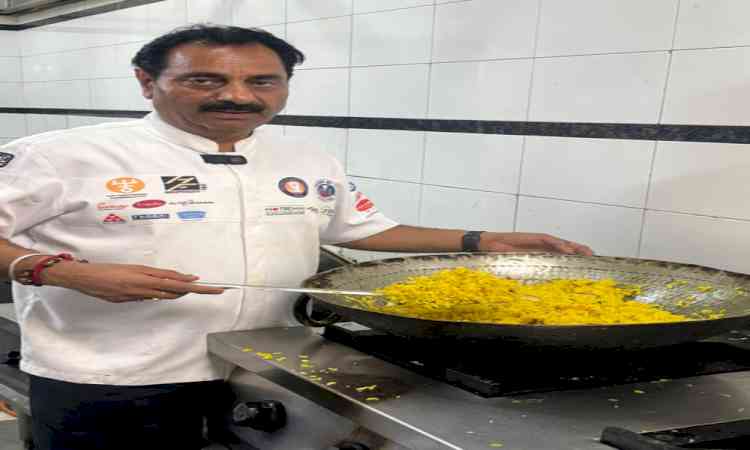
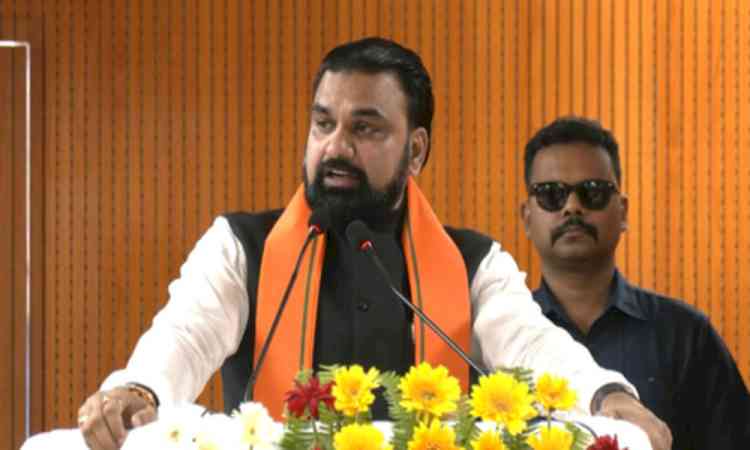
PM Modi congratulates RSP leadership on Nepal election victory
As the sweeping victory of the Rastriya Swatantra Party (RSP) in Nepal’s parliamentary elections held on March 5 was confirmed, its President Rabi Lamichhane and senior leader Balen Shah received congratulatory calls from Indian Prime Minister Narendra Modi on Monday.
 IANS
Mar 9, 2026 11:12
0
IANS
Mar 9, 2026 11:12
0
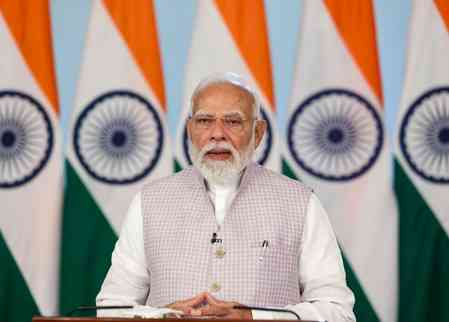
Kathmandu, March 9 (IANS) As the sweeping victory of the Rastriya Swatantra Party (RSP) in Nepal’s parliamentary elections held on March 5 was confirmed, its President Rabi Lamichhane and senior leader Balen Shah received congratulatory calls from Indian Prime Minister Narendra Modi on Monday.
PM Modi confirmed in a post on social media platform X that he had held telephone conversations with Lamichhane and Shah, who is expected to become the country’s next Prime Minister.
"Congratulated both leaders on their electoral victories and RSP's resounding success in the Nepal elections," PM Modi wrote.
"Conveyed my best wishes for their forthcoming new government and India’s commitment to work with them for the mutual prosperity, progress and well-being of our two countries. I am confident that with our joint endeavours, India–Nepal relations will scale new heights in the years ahead.”
As counting of votes concluded in 163 constituencies out of 165 under the First-Past-the-Post (FPTP) system by Monday evening, the RSP secured victory in 125 seats, accounting for around 76 per cent of the total seats.
The RSP is also leading under the proportional representation (PR) system with over 48 per cent of the vote share by Monday evening.
If the trend continues, the party is likely to secure close to a two-thirds majority -- around 184 seats -- in the 275-member House of Representatives, the lower house of Parliament.
India had supported Nepal in holding this year's elections by providing 650 vehicles and other election materials. India has been providing election-related support to Nepal since the 2008 Constituent Assembly elections, supplying 2,400 vehicles in previous polls.
In its election manifesto, the RSP emphasised renewing the nature of Nepal’s development partnership with India in a way that enables Nepal to benefit from the notable progress India has made over the past decade in areas such as digital public infrastructure; high-speed and quality physical infrastructure; formalisation of the economy; synergy between productive industries and the service sector; and the overall strengthening of state capacity, among others.
The party has also pledged to adopt a “balanced and dynamic diplomacy” to transform changing global geopolitics and the rise of neighbouring powers into opportunities for Nepal’s development, while placing Nepal’s sovereignty, territorial integrity and national interest above all else.
“Taking into account the strategic interests of neighbouring countries and shifts in the global balance of power, we will strive to transform Nepal from a ‘buffer state’ into a ‘vibrant bridge,’ ensuring national interests through trilateral economic partnerships and connectivity,” the manifesto reads.
Relations between Nepal and India have experienced ups and downs in recent years, with disagreements arising over Nepal’s 2015 Constitution and political maps issued by both countries covering disputed areas of Kalapani, Lipulek and Limpiyadhura on Nepal’s western border.
The border dispute has remained a constant irritant in bilateral relations for decades. Nepal has also sought amendments to the Nepal–India Friendship Treaty of 1950, which it says undermines its sovereignty.
The RSP stated that it would pursue diplomatic initiatives to resolve these issues.
“We will undertake high-level diplomatic initiatives to permanently resolve border disputes and longstanding treaties and agreements through institutional dialogue based on facts and evidence, rather than leaving them confined only to sentiment or rhetoric,” the manifesto said.
--IANS
int/scor/dan