PHDCCI’s Union Budget 2026–27 Proposals: Strengthening India’s MSME Growth Engine
Micro, Medium and Small Enterprises (MSME) hold the key to catapult India’s economy to 10% growth path. MSME sector contribution to manufacturing, exports, and employment has increased overtime. In 2025 the sector has contributed 30 percent to manufacturing output and has emerged as a second largest employer after only to agriculture. India’s total exports has steadily grown, reaching 43.59% in 2022-23, 45.73% in 2023-24, and 45.79% in 2024-25 (up to June 2025). These trends highlight the sector’s increasing amalgamation into global trade and value chains.
 City Air News
Jan 7, 2026 01:23
0
City Air News
Jan 7, 2026 01:23
0

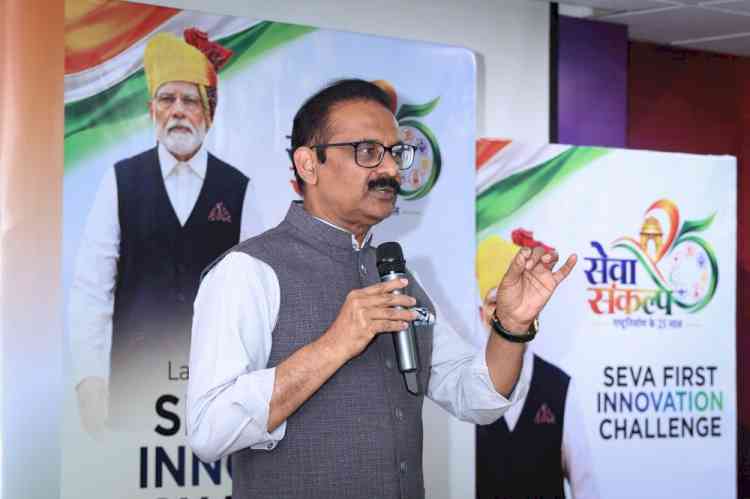
By Dr. Ranjeet Mehta, CEO & Secretary General, PHDCCI
Micro, Medium and Small Enterprises (MSME) hold the key to catapult India’s economy to 10% growth path. MSME sector contribution to manufacturing, exports, and employment has increased overtime. In 2025 the sector has contributed 30 percent to manufacturing output and has emerged as a second largest employer after only to agriculture. India’s total exports has steadily grown, reaching 43.59% in 2022-23, 45.73% in 2023-24, and 45.79% in 2024-25 (up to June 2025). These trends highlight the sector’s increasing amalgamation into global trade and value chains.
More than 7.30 crore enterprises have registered on Udyam Registration Portal and Udyam Assist Platform (UAP), from July 2020 to December 2025 bringing them into organized sector ambit. This trend hold the key to initiate targeted policies and schemes in a structured way.
The potential to further drive India’s position as a manufacturing and export hub require granular targeting of key areas of challenges for MSMEs. The PHD Chamber of Commerce and Industry has made key suggestions for the Union Budget 2026-27 to make it easier for MSME’s to cater to their financing needs, reduce regulatory burden thereby reducing costs associated with them, and make them globally competitive.
1. Reintroduction of Interest Subvention on MSME Credit
Cost of credit for MSMEs remains relatively high, therefore, reintroduction of an interest subvention scheme for MSMEs with a 2 per cent interest subsidy on new and incremental loans from banks and NBFCs is proposed. Lower borrowing costs are expected to improve repayment discipline and enhance competitiveness given the current geopolitical volatility realities.
2. Revision of MUDRA Loan Ceilings
The costs of projects have gone up a lot since the Pradhan Mantri MUDRA Yojana started in 2015, therefore, the Pradhan Mantri MUDRA Yojana loan limits should be revised upwards:
1. Shishu category: from ₹50,000 to ₹1 lakh
2. Kishore category: from ₹5 lakh to ₹10 lakh
3. Tarun and Tarun Plus category: up to ₹20 lakh
The goal is to match credit availability with the current financing needs of the enterprise.
3. Interest Equalization for Export Credit
To cushion MSME exporters amid rising global tariff pressures, we proposed the reintroduction of the Interest Equalization Scheme on pre- and post-shipment export credit. These includes extending eligibility to service exporters, alongside manufacturing exporters, to broaden the export support basket for improving price competitiveness in global markets.
4. Equity Infusion through Fund of Funds
To grow at faster rate MSMEs require cheaper financing options. To do so money from the Fund of Funds in form of equity should be infused especially for start-ups and will cater to seed capital requirements for these start-ups.
5. Expanding the Scope of MSME Facilitation Councils
Under the MSME Development Act, 2006 only small businesses can approach Facilitation Councils to get help with payments that are late. This help should also be available to medium sized businesses that need this protection.
6. Credit Linked Capital Subsidy for Technology Upgradation
To fast-track adoption of modern, green, and eco-friendly technologies, the Credit Linked Capital Subsidy Scheme shall be enhanced with investment ceiling of ₹2 crore from limit of ₹1 crore, as it no longer reflects current technology costs.
7. Removal of Tax Audit Burden for Micro Enterprises
Amendments to Section 44AB of the Income Tax Act is proposed to exempt all micro enterprises with turnover up to ₹10 crore from mandatory tax audits, irrespective of profit margins. This is expected to reduce compliance costs, estimated at ₹75,000–₹1.5 lakh annually.
Put together, our Union Budget 2026–27 proposals present a comprehensive policy package aimed at easy access to finance for growth, reducing regulatory burdens, and strengthening much required institutional support for MSMEs.