PHDCCI WCD&E Committee and Girl Effect India Organised Closed-Door Roundtable on ‘India Vs Tech हिंसा’
The Women, Child Development & Entrepreneurship Committee of the PHD Chamber of Commerce and Industry (PHDCCI), in collaboration with Girl Effect India, organised a closed-door roundtable titled “India Vs Tech हिंसा: Collective Action against Online Violence” at PHD House, New Delhi.
 City Air News
Feb 27, 2026 05:07
0
City Air News
Feb 27, 2026 05:07
0
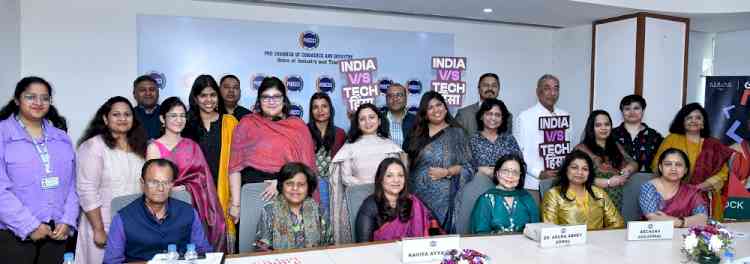
New Delhi, February 26, 2026: The Women, Child Development & Entrepreneurship Committee of the PHD Chamber of Commerce and Industry (PHDCCI), in collaboration with Girl Effect India, organised a closed-door roundtable titled “India Vs Tech हिंसा: Collective Action against Online Violence” at PHD House, New Delhi.
Delivering the Welcome Address, Shalini S. Sharma, Assistant Secretary General, PHDCCI, thanked the Chair and Co-Chairs of the Committee and emphasised that as India advances rapidly on the path of Digital India, ensuring that women and girls can access the internet freely and safely must remain a national priority. The session began with participant introductions, fostering an open and collaborative dialogue.
Introducing Girl Effect India, Kavita Ayyagari, Country Director – Girl Effect India, presented the organisation’s mission and impact. She shared that Girl Effect works to help girls stay in school and own their education, access critical healthcare including HPV immunisation, gain in-demand livelihood skills, and become independent decision-makers. She informed that the Girl Effect community now reaches over 150 million people globally, 90 percent of whom are women.
Highlighting digital initiatives, Ayyagari elaborated on ‘Bol Behen’, an AI-enabled chatbot that provides credible and verified information to girls on sexual and reproductive health, mental well-being, relationships, stress management, and safe digital practices. She also spoke about initiatives such as ChhaaJaa, Tipi Tipi Talk, and Youth Champions, which equip girls with the tools and information required to make informed decisions and safely navigate the digital world.
Setting the context on Tech हिंसा (Technology-Facilitated Gender-Based Violence – TFGBV), representatives from Girl Effect India shared research insights based on consultations with girls, boys, parents, and experts. The research highlighted that while digital access is a gateway to opportunity, nearly every girl online reports experiencing some form of cyber harm, including cyberstalking and online harassment. Key gaps identified included lack of confidence among girls to report abuse, reluctance to approach law enforcement authorities, absence of structured counselling and support mechanisms, and the need for parents to move from punitive reactions to supportive engagement in order to create safe spaces for their daughters.
Delivering the Keynote Address, Dr. Aruna Abhey Oswal, Chair – Women, Child Development & Entrepreneurship Committee, PHDCCI, appreciated that Girl Effect’s research includes both girls and boys, recognising that online exploitation impacts multiple groups and requires inclusive, systemic solutions. She underscored the importance of collective responsibility across government, industry, and civil society to address emerging digital risks.
During the Industry Dialogue, moderated by Archana Aggarwal, Co-Chair – WCD & E Committee, PHDCCI, participants deliberated on actionable pathways to prevent digital harm, strengthen institutional response systems, and empower girls to report abuse confidently. It was suggested that digital safety awareness and preventive education should be integrated alongside computer literacy programmes across educational institutions, and that structured recommendations may be submitted to relevant Government authorities for broader policy engagement.
Rekha Mody, Founder and Chairperson, Streeshakti - The Parallel Force, suggested that the Government of India should ensure that awareness about online harms and preventive measures is incorporated wherever computer education is imparted. She further proposed that a consolidated presentation and recommendations be submitted to the concerned Ministries to mobilise systemic action.
The roundtable concluded with a Collective Pledge Against Tech हिंसा, led jointly by PHDCCI and Girl Effect India, reaffirming the shared commitment to ensure that the future of Digital India is one where women and girls can participate fully, safely, and without fear.
The session ended with closing remarks and a vote of thanks by the Chair and Co-Chair of the Committee, followed by networking over hi-tea.