PHDCCI Seeks Calibrated Customs Duty Framework and Raw Material Support For Paper And Packaging Industry In Pre-Budget 2027–28 Proposals
The PHD Chamber of Commerce and Industry (PHDCCI) has called for a comprehensive set of customs duty rationalisation and trade facilitation measures to strengthen India's paper and packaging industry in its Pre-Union Budget 2027–28 recommendations.
 City Air News
Nov 10, 2026 07:19
0

New Delhi, November 10, 2026: The PHD Chamber of Commerce and Industry (PHDCCI) has called for a comprehensive set of customs duty rationalisation and trade facilitation measures to strengthen India's paper and packaging industry in its Pre-Union Budget 2027–28 recommendations.
Recommendations emphasized the need to improve the competitiveness of domestic paper manufacturers, address raw material constraints and ensure a level playing field in international trade, particularly in view of rising input and energy costs and increasing import competition.
India's packaging sector has emerged as an important contributor to the economy, supported by industrialization, growing consumer demand and the expansion of organized retail. The industry was valued at approximately USD 80 billion as of June 2026 and has recorded annual growth of around 6–7%.
The domestic paper industry has also witnessed strong demand. During FY2025–26, Indian Paper Manufacturers Association (IPMA) member mills reported production of 5,208 thousand tonnes against installed capacity of 5,368 thousand tonnes, translating into capacity utilization of approximately 97.01%. India's exports of paper, paperboard and newsprint stood at 1,536.5 thousand tonnes during FY2026.
To support domestic manufacturers, PHDCCI has recommended increasing the Basic Customs Duty on specified categories of paper and paperboard, covering HSN headings 4802, 4803, 4804, 4805, 4808 and 4810, from 10% to 25%.
The Chamber has additionally proposed retaining paper in the negative lists of Free Trade Agreements (FTAs), shifting specified imports from the Free to Restricted category under an actual-user licensing framework, and mandating BIS certification and Quality Control Orders (QCOs). It has also called for appropriate use of safeguard, anti-dumping and countervailing measures, wherever justified under the applicable trade framework.
Recognising the raw material constraints faced by the industry, PHDCCI has proposed conditional exemption of Basic Customs Duty on imports of wood in chips or particles and specified wood logs, subject to actual-user conditions, where these are used in the manufacture of paper, paperboard and newsprint.
We also call for improved market access for Indian packaging exporters through preferential tariff negotiations under FTAs with Algeria, Kenya and Sri Lanka. It has highlighted the need to address tariff disadvantages faced by Indian exporters in Bangladesh and to facilitate zero-duty access for specified Indian packing material exports to the Philippines under the ASEAN-India FTA. Simplification of import licensing procedures to avail applicable zero-duty benefits in Myanmar has also been recommended.
Paper and paperboard products are essential inputs for food processing, pharmaceuticals, printing and publishing, textiles, automotive, electronics, retail and e-commerce. They support a wide range of applications, including corrugated packaging, cartons, kraft paper bags, wrapping materials, tissue products and specialised industrial packaging.
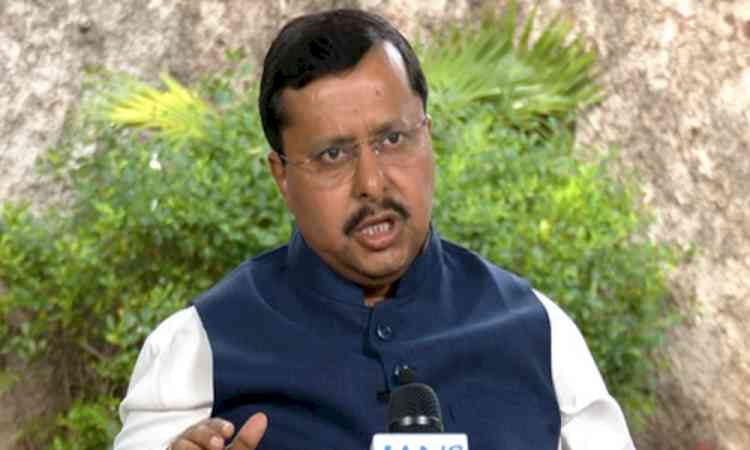
"The paper and packaging industry is an important enabler of India's manufacturing, retail, food processing and pharmaceutical sectors. However, rising input costs, raw material constraints and increasing import competition are placing pressure on domestic manufacturers, particularly MSMEs said Anil Gupta, President, PHDCCI."
We believe that addressing the industry's input cost disadvantages while improving access to international markets will be important for sustaining domestic capacity utilisation, attracting fresh investments and strengthening India's position in the global paper and packaging value chain.