PHDCCI Organizes “IBC & NCLT @10” to Celebrate a Decade of Transformative Insolvency Reforms
PHD Chamber of Commerce and Industry (PHDCCI) successfully organized “IBC & NCLT @10 – Celebrating a Decade of Insolvency Reforms” on Saturday at Hotel Taj Mahal, New Delhi, commemorating ten years of the Insolvency and Bankruptcy Code (IBC), 2016, and the establishment of the National Company Law Tribunal (NCLT).
 City Air News
May 30, 2026 04:48
0
City Air News
May 30, 2026 04:48
0
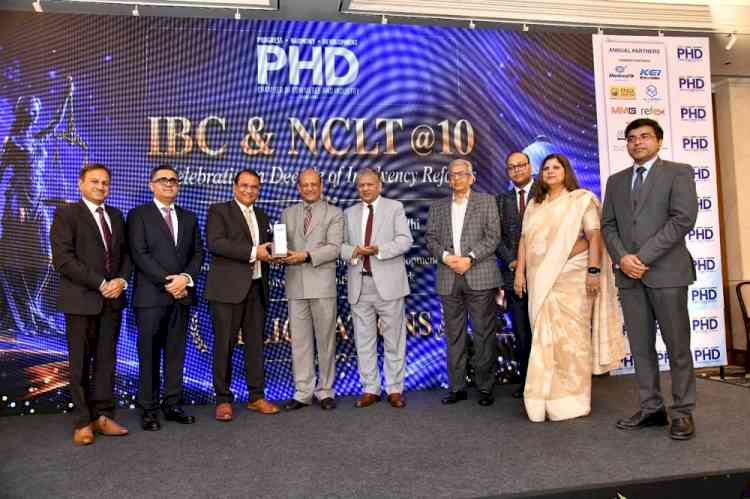
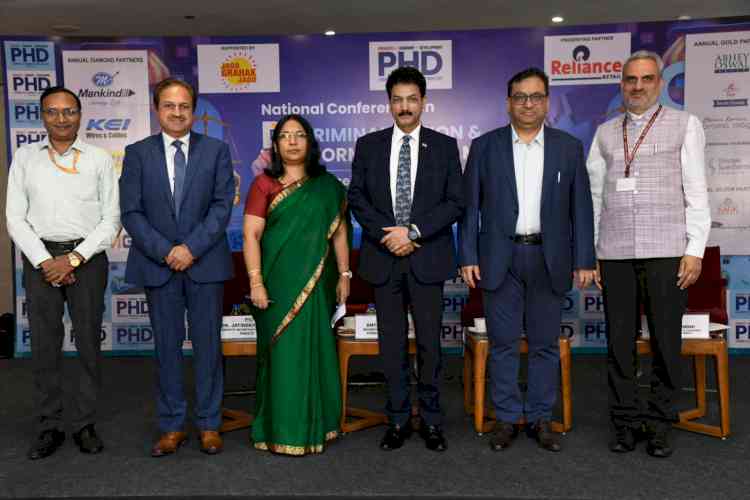
New Delhi, May 30, 2026: PHD Chamber of Commerce and Industry (PHDCCI) successfully organized “IBC & NCLT @10 – Celebrating a Decade of Insolvency Reforms” on Saturday at Hotel Taj Mahal, New Delhi, commemorating ten years of the Insolvency and Bankruptcy Code (IBC), 2016, and the establishment of the National Company Law Tribunal (NCLT). The event brought together eminent judicial dignitaries, policymakers, regulators, insolvency professionals, financial institutions, legal experts, industry leaders, and key stakeholders to reflect on the transformative impact of India's insolvency framework and deliberate on the future roadmap for strengthening the insolvency ecosystem.
The event was graced by Justice Ashok Bhushan, Chairperson, NCLAT; Justice Rajesh Bindal, Former Judge, Supreme Court of India; Justice M.M. Kumar, Founder President, NCLT and Former Chief Justice of the Jammu & Kashmir High Court; Dr. Anju Rathi Rana, Member Secretary, Department of Legal Affairs, Government of India; Shri Debajyoti Ray Chaudhuri, MD & CEO, National e-Governance Services Ltd. (NeSL); Shri Gyaneswar Kumar Singh, Director General & CEO, IICA and Member Secretary, BLRC; Dr. U.K. Chaudhary, Senior Advocate and President, NCLT Bar Association; Dr. M.S. Sahoo, Former Chairperson, IBBI; Mr. P.K. Malhotra, Former Secretary, Ministry of Law & Justice; Mr. Santosh Shukla, Chief General Manager, SEBI; Mr. Rajnish Kumar, Former Chairman, State Bank of India; and Hon'ble Justice Rajesh Bindal, Former Judge, Supreme Court of India, along with distinguished members of the insolvency and legal fraternity.
Addressing the gathering, Justice Ashok Bhushan described the IBC as one of India's most significant legal and economic reforms, transforming a fragmented and delay-prone insolvency regime into a unified, creditor-driven framework focused on time-bound resolution, value maximization, and accountability. While highlighting the important role of NCLT and NCLAT in developing insolvency jurisprudence, he emphasized the need to address challenges relating to resolution timelines, institutional capacity, cross-border insolvency, and group insolvency mechanisms to further strengthen the framework.
In his address, Justice Rajesh Bindal underscored the transformative impact of the Insolvency and Bankruptcy Code (IBC) in replacing a fragmented and inefficient insolvency regime with a resolution-oriented framework focused on preserving businesses and economic value. He highlighted the significant improvement in resolution outcomes, recoveries, revival of stressed enterprises, reduction in NPAs, and enhanced credit discipline over the past decade. Emphasizing that the success of the insolvency ecosystem has been driven by collective efforts across institutions, regulators, the judiciary, financial institutions, and industry stakeholders, he called for continued strengthening of infrastructure, technology adoption, institutional capacity, and timely resolution mechanisms to support India's vision of becoming a developed economy by 2047. He also stressed the importance of leveraging data, digital platforms, and collaborative approaches to facilitate early resolution of financial distress and further enhance the effectiveness of the insolvency framework.
Justice M.M. Kumar reflected on the challenging initial years of establishing the NCLT and recalled how the institution began functioning with limited infrastructure and resources. He noted that despite capacity constraints, NCLT successfully implemented the IBC, facilitated significant recoveries, reduced non-performing assets, and contributed to improving India's Ease of Doing Business rankings. He also highlighted the need to ensure greater accessibility of insolvency mechanisms for MSMEs.
Speaking on the occasion, Dr. Anju Rathi Rana stated that the IBC was far more than a legislative reform and represented a fundamental shift in India's approach to business distress and insolvency. She noted that the Code has strengthened credit culture, enhanced investor confidence, and established a structured and accountable framework for resolution while underscoring the critical role played by NCLT in its successful implementation.
Debajyoti Ray Chaudhuri highlighted the transformative role of information utilities in reducing information asymmetry and strengthening creditor confidence. Referring to more than 32,000 applications involving debt of nearly ₹14 lakh crore that were resolved before admission, he observed that the IBC has significantly changed debtor behaviour by encouraging early settlements and constructive negotiations. He further reaffirmed NeSL's readiness to support upcoming reforms through its robust Record of Default framework.
Gyaneswar Kumar Singh reflected on the collaborative efforts of the government, judiciary, regulators, insolvency professionals, and industry stakeholders in shaping India's insolvency ecosystem. Highlighting the Code's role in strengthening financial discipline and improving credit culture, he outlined future priorities including personal insolvency, cross-border insolvency, technology-driven reforms, creditor-led restructuring, and enhanced institutional capacity.
Dr. U.K. Chaudhary praised the significant contribution of the legal fraternity in supporting the development of insolvency jurisprudence and strengthening the functioning of NCLT and NCLAT. He called for greater institutional capacity, timely appointment of members, and enhanced infrastructure to ensure faster and more effective resolution of cases.
Earlier, Dr. Jatinder Singh, Deputy Secretary General, PHDCCI, welcomed the distinguished gathering and highlighted the transformative impact of the IBC and NCLT in promoting accountability, transparency, and a rules-based economic framework. He emphasized the active role played by PHDCCI's IBC & NCLT Committee in facilitating policy dialogue, stakeholder consultations, and industry engagement to support the evolution of India's insolvency framework.
G.P. Madaan, Chair, IBC & NCLT Committee, PHDCCI, in the theme address, highlighted the remarkable journey of the IBC and NCLT over the last decade, noting their contribution to strengthening credit discipline, improving debt resolution outcomes, reducing NPAs, and enhancing India's business environment. He described the ten-year milestone as a celebration of institutional resilience, economic reform, and the collective efforts of all stakeholders associated with the insolvency ecosystem.
Ranjana Roy Gawai, Co-Chair, IBC & NCLT Committee, PHDCCI, addressed the gathering and expressed gratitude to the distinguished speakers, stakeholders, and participants for their continued contribution to strengthening India's insolvency framework.
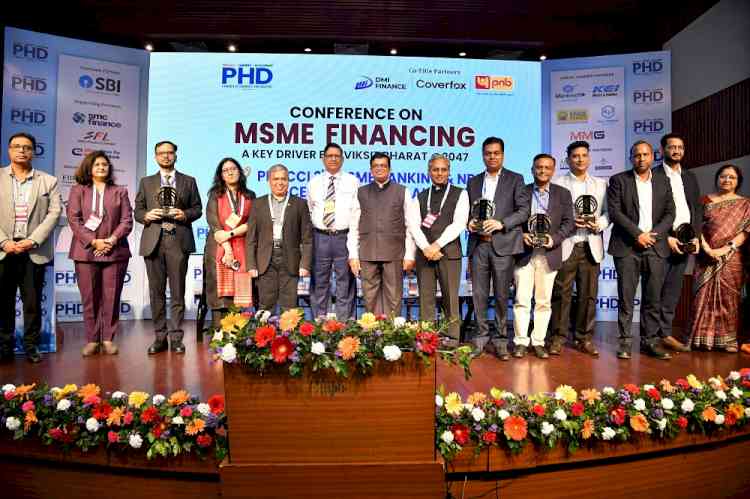
In a landmark gathering uniting the many officials of the IBC Ecosystem, a felicitation ceremony was presided over by G P Madaan, Chair, NCLT & IBC Committee, joined by Co-Chairs Ranjana Roy Gawai, Rachit Mittal, Abhishek Anand, and Harish Taneja, underscoring the committee's commitment to recognizing excellence across the insolvency landscape.
The event also featured insightful addresses by Dr. M.S. Sahoo, Former Chairperson, IBBI; P.K. Malhotra, Former Secretary, Ministry of Law & Justice; Santosh Shukla, Chief General Manager, SEBI; Rajnish Kumar, Former Chairman, SBI; and Justice Rajesh Bindal, Former Judge, Supreme Court of India, who shared their perspectives on the achievements of the IBC, ongoing challenges, and the reforms required to strengthen the insolvency ecosystem for the next decade.
The event was also graced by many stalwarts from the IBC ecosystem including sitting and former NCLT members. The programme concluded with a felicitation ceremony honouring distinguished contributors, policymakers, judicial members, insolvency professionals, and institutional stakeholders whose efforts have been instrumental in shaping and strengthening India's insolvency and bankruptcy framework over the past ten years.