PHDCCI organized Seminar on “New Law, New Forms, New Responsibilities" New Income Tax Act 2025
 City Air News
Jul 9, 2026 03:37
0
City Air News
Jul 9, 2026 03:37
0

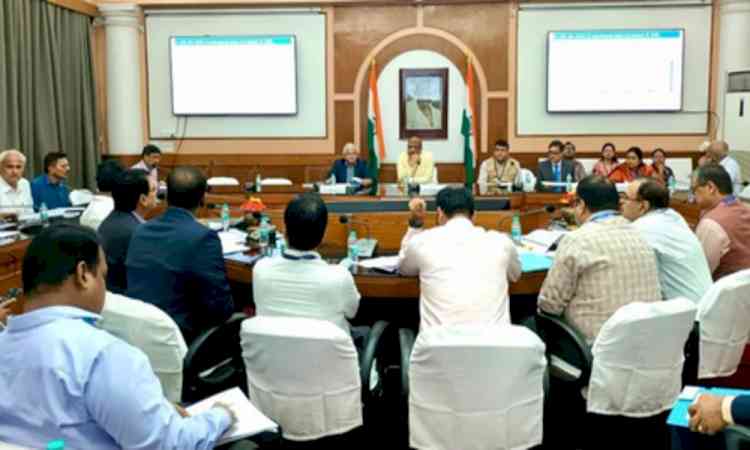
New Delhi, July 9, 2026: The New Income Tax Act represents a significant effort towards simplifying tax legislation by reducing complexity, reorganizing provisions, and making the law easier to understand. While only its implementation will determine how effectively it reduces litigation, the intent is clearly to create a more structured and accessible framework. Welcoming the participants, Mukul Bagla, Chair - Direct Tax Committee, PHDCCI emphasized that accurate filing of Income Tax Returns (ITRs) is essential for ensuring proper tax compliance and timely refunds. highlighted several common mistakes made while filing Income Tax Returns, including incorrect or non-disclosure of foreign assets. He stressed that timely reconciliation and accurate disclosures are essential to avoid notices, penalties, and unnecessary litigation.
The government's approach under the Income Tax Act, 2025 is focused on promoting voluntary compliance rather than relying solely on punitive measures. Taxpayer-friendly provisions, opportunities for voluntary disclosures, and the decriminalization of certain offences reflect an effort to simplify compliance while ensuring accountability said Dr. Rakesh Gupta, Co-Chair, Direct Tax Committee, PHDCCI. The objective is to create a more transparent, practical, and litigation-efficient tax framework. He summed up the through iconic poetry, blending insight with artistic expression
The key changes in the Income Tax Return (ITR) Forms for Assessment Year 2026–27, were highlighted by Pallavi Dinodia, Co – Chair, Direct tax Committee, explaining that the revisions are aimed at simplifying return filing, enhancing transparency, and aligning the forms with the New Income Tax Act. She also discussed important amendments relating to the new tax regime, capital gains, digital donation reporting under Section 80G, and changes across various ITR forms, while emphasizing the need for accurate reporting and timely compliance.
Sunil Bhansali, Co – Chair, Direct Tax Committee deliberated an insightful session on cash transaction provisions under the Income Tax Act, 2025. He covered TDS on cash withdrawals under Section 393(3) (earlier Section 194N), reporting of cash transactions, Statement of Financial Transactions (SFT), Form 97 declarations where PAN is unavailable, and key provisions governing cash receipts, deposits, withdrawals, loans, repayments, and cash expenditure. He emphasized that the new Act promotes a transparent, digitally driven, and taxpayer-friendly regime by strengthening compliance while reducing unnecessary litigation.
The seminar also featured the key provisions of the Digital Personal Data Protection (DPDP) Act, 2023 and the DPDP Rules, 2025, emphasizing their growing relevance for Chartered Accountants. Suyash Raj Nahata, Co-Chair, Direct Tax Committee explained that every audit, tax filing, payroll process, and KYC exercise involves the handling of personal data, making CA firms Data Fiduciaries or Data Processors with direct statutory responsibilities under the new data protection framework.
Gagan Kumar. Partner, Khaitan Legal Associates explained about the tax treatment of royalty, fees for technical services (FTS), and interest under the Income Tax Act, 2025, in the light of recent judicial pronouncements. He elaborated the taxability of interest income in the hands of non-residents, including interest paid by the Government to NRIs and interest paid by one non-resident to another, along with the applicable taxability criteria.
While many provisions of the Income Tax Act, 2025 appear similar to the existing law, several procedural changes carry significant legal consequences. The shift of mandatory procedures from the Act to the Rules, changes in reassessment provisions, and revised limitation periods can materially impact taxpayers' rights, assessment proceedings, and future litigation said Rohit Jain, Partner, Vaish Associates Advocates. These amendments should be understood not only from a compliance perspective but also for their practical, interpretational, and long-term implications for tax administration.
Babeeta Sharma, Director, PHDCCI highlighted the importance and relevance of the Seminar. She emphasized that the introduction of the New Income Tax Act marks a significant milestone in India's direct tax regime, making it essential for taxpayers, professionals, and businesses to understand the new legal framework, revised compliance requirements, and updated tax forms.