PHDCCI Leads National Dialogue on Scaling Carbon Capture Technologies for Sustainable Industrial Development
National Consultation Recommends Dedicated CCUS Mission, Carbon Market Integration and Large-Scale Demonstration Projects to Accelerate India's Net-Zero Transition
 City Air News
Jun 17, 2026 08:18
0
City Air News
Jun 17, 2026 08:18
0
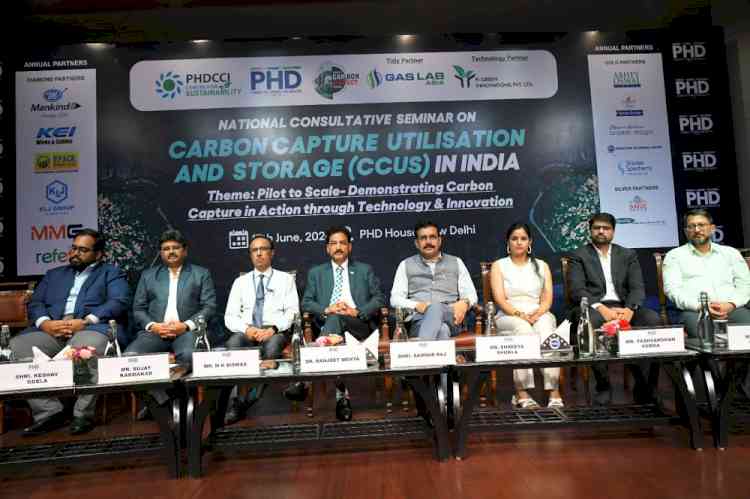
New Delhi, June 17, 2026: The PHD Chamber of Commerce and Industry (PHDCCI) successfully organized the National Consultative Seminar on Carbon Capture, Utilisation and Storage (CCUS) in India under the theme, “From Pilot to Scale: Demonstrating Carbon Capture in Action through Technology & Innovation,” at PHD House, New Delhi. The seminar brought together senior government officials, industry leaders, researchers, technology providers, investors, and sustainability experts to deliberate on the pivotal role of CCUS in India's decarbonization journey and identify the policy, financial, and technological interventions required to accelerate its large-scale deployment across hard-to-abate sectors.
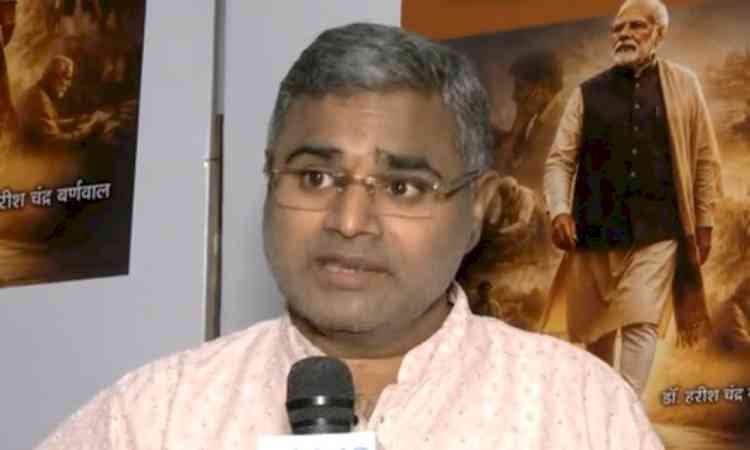
The event was inaugurated by Dr. Ranjeet Mehta, CEO & Secretary General, PHDCCI, in the presence of Shri Aadhar Raj, Joint Secretary, Ministry of Power, Government of India, along with distinguished representatives from industry, academia, and the sustainability ecosystem.
Addressing the gathering, Dr. Ranjeet Mehta emphasized that while renewable energy remains central to India's climate strategy, achieving the nation's long-term net-zero goals will require complementary technologies capable of addressing residual industrial emissions.
“India's decarbonization journey cannot rely solely on renewable energy. CCUS will play a critical role in reducing emissions from hard-to-abate sectors while supporting sustainable industrial growth. The time has come to move beyond pilot projects and accelerate commercial-scale deployment through collaborative action involving government, industry, technology providers, and investors,” said Dr. Mehta.
Speaking on the occasion, Aadhar Raj highlighted the importance of creating an enabling ecosystem for emerging low-carbon technologies through policy support, institutional frameworks, and strategic investments.
“CCUS represents a significant opportunity for India to balance economic growth with its climate commitments. Strong collaboration among policymakers, industry, research institutions, and investors will be essential to develop scalable, commercially viable carbon management solutions that can contribute meaningfully to India's net-zero ambitions,” he said.
Aadhar Raj also noted that the Union Budget 2026-27 has proposed an outlay of ₹20,000 crore over the next five years for the promotion of Carbon Capture, Utilisation and Storage technologies. The proposal aligns with India's commitment to achieving net-zero emissions by 2070 while sustaining industrial growth and meeting rising energy demand. He informed participants that the proposed framework is currently under the Cabinet approval process.
A key outcome of the seminar was the broad consensus among stakeholders that India has reached a critical stage where CCUS must transition from pilot projects and feasibility assessments to commercial-scale implementation. Participants called for the formulation of a comprehensive National CCUS Strategy supported by targeted policy interventions, regulatory clarity, and financial mechanisms.
Industry leaders recommended establishing a dedicated National CCUS Mission to provide long-term policy direction, facilitate inter-ministerial coordination, identify priority sectors, and support the development of carbon transport and storage infrastructure.
Stakeholders further emphasized the need for financial support mechanisms, including viability gap funding, concessional financing, tax incentives, carbon abatement credits, and other market-based instruments to address the high capital costs associated with CCUS deployment. The discussions also highlighted the importance of integrating CCUS within India's emerging carbon market framework through robust monitoring, reporting, verification, and certification mechanisms that can create sustainable revenue streams and improve project bankability.
Experts underscored the need to accelerate large-scale demonstration projects across key sectors including cement, steel, power, fertilizers, refineries, and chemicals to validate technologies, de-risk investments, and build industry confidence.
PHDCCI announced that it will compile the recommendations emerging from the consultation and submit them to relevant ministries and government agencies to support future policy development and industry action on carbon management and industrial decarbonization.
“The recommendations emerging from this consultation reflect a shared commitment to creating an enabling ecosystem for CCUS in India. Timely policy support, investment mobilization, and innovation-led deployment will be crucial for scaling carbon capture technologies and advancing national climate objectives,” Dr. Mehta added.