Pension is self-respect in retirement: Joint Labour Commissioner, Govt of Telangana
“Pension is self-respect when you retire, especially for those working in the private sector. While the system provides pension benefits to many government employees, those working in the private sector need to plan early to ensure a regular income after retirement. One should not have to depend on others after retirement and compromise on one’s self-respect,” said R. Chandrasekaran, Joint Labour Commissioner, Department of Labour, Government of Telangana.
 City Air News
Sep 17, 2026 07:55
0
City Air News
Sep 17, 2026 07:55
0
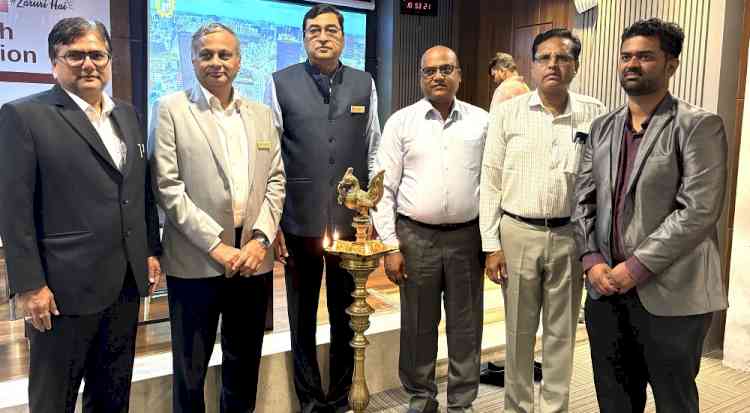
Hyderabad, September 17, 2026: “Pension is self-respect when you retire, especially for those working in the private sector. While the system provides pension benefits to many government employees, those working in the private sector need to plan early to ensure a regular income after retirement. One should not have to depend on others after retirement and compromise on one’s self-respect,” said R. Chandrasekaran, Joint Labour Commissioner, Department of Labour, Government of Telangana.
He was speaking as the Chief Guest at a workshop on “National Pension System (NPS) – Strengthening MSMEs through Social Security and Workforce Retention”, organised by FTCCI – Federation of Telangana Chambers of Commerce & Industry, in association with the Pension Fund Regulatory and Development Authority (PFRDA), the statutory regulator for India’s pension sector.
Addressing a gathering of more than 100 participants after inaugurating the workshop, Chandrasekaran described the NPS as a “silent saving” mechanism and urged MSMEs to consider adopting NPS for their employees. He also encouraged employees to become “pressure groups” advocating the adoption of NPS within their organisations.
E.S. Ganesh Ram, General Manager, District Industries Centre (DIC), said NPS can be beneficial for both employees and employers. He described it as a form of financial protection for the future and highlighted the significant role of MSMEs in employment generation.
Ajinkya Deshpande, Assistant Manager, PFRDA, gave an overview of NPS and its relevance to MSMEs. He said MSMEs are among the key growth engines of the Indian economy and play a major role in employment generation.
He said NPS was introduced for new Central Government employees with effect from January 1, 2004, and was subsequently adopted by State Governments and extended to the corporate sector. NPS was opened to all citizens on a voluntary basis from May 1, 2009.
“For many people, retirement planning takes a back seat during their working years. This is where NPS can play an important role,” he said, highlighting its potential to support retirement security while also helping organisations attract and retain talent.
The scale of the MSME workforce makes retirement planning a significant social-security issue. Government of India data shows that MSMEs employ more than 32.82 crore people across over 7.47 crore enterprises, making the sector the second-largest source of employment after agriculture. MSMEs also contribute around 31.1% of India’s GDP, 35.4% of manufacturing output and 48.58% of exports.
Against this backdrop, the workshop focused on the need to bring retirement planning and social security into the employee-benefit framework of MSMEs.
The scale of NPS itself has also expanded significantly. According to PFRDA, as of September 13, 2026, NPS had 2.32 crore subscribers and assets under management of ₹17.57 lakh crore.
The private-sector segment has been growing rapidly as well. PFRDA’s Annual Report 2024-25 states that active NPS accounts under the private sector stood at 66.45 lakh as of March 31, 2025, compared with 55.12 lakh a year earlier — a 20.6% year-on-year increase. During FY2024-25, 12.01 lakh new subscribers enrolled under the private-sector segment. The report also states that 19,867 corporates had adopted NPS as of March 31, 2025.
K.K. Maheshwari, President, FTCCI, said NPS has emerged as an important retirement-planning mechanism and stressed the importance of understanding its features, investment framework and benefits.
“You may retire from work, but you cannot retire from financial needs. Retirement planning therefore needs to become an important part of the employee-benefit framework, particularly in the private sector,” he said.
He said NPS can be particularly relevant for private-sector employees and MSMEs as they look at ways to strengthen employee welfare while also attracting and retaining talent.
Srinivas Garimella, Senior Vice President, FTCCI, said that while NPS is mandatory for certain categories of government employees, participation in NPS by private-sector employees remains voluntary. He expressed hope that greater awareness among MSMEs and employees would lead to wider adoption of the system.
The half-day workshop, attended by more than 100 private-sector employees and representatives of MSMEs, focused on retirement planning, social security and workforce retention.
Raghava Sampreet Mandali, Key Account Manager – AP & Telangana, HDFC Pension Fund Management Ltd., and Anathagiri Sai Ganesh, Relationship Manager, UTI Pension Funds, provided detailed information on NPS products, processes and implementation.
The speakers highlighted that the fundamental objective of NPS is to help individuals build a retirement corpus during their working years, providing financial support after retirement. They noted that a large section of India’s workforce does not have access to a traditional guaranteed pension and that NPS provides a structured and regulated mechanism for retirement savings.
The workshop also highlighted that retirement benefits can contribute not only to employees’ long-term financial security but also to employee satisfaction, talent attraction and workforce retention, making social security an increasingly important consideration for MSMEs.