Panjab University Hosts Panel Discussion on Representation of Underprivileged Women in Policy and Parliament
Panjab University's (PU) Department-cum-Centre for Women’s Studies and Development (DCWSD) organised a panel discussion on the theme “Representation of Underprivileged Women in Policy Formulation, and Parliament.”
 City Air News
Apr 11, 2026 10:36
0
City Air News
Apr 11, 2026 10:36
0
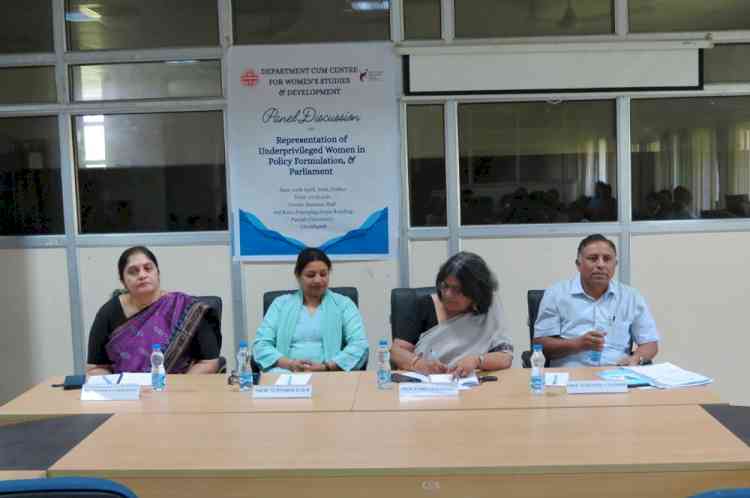
Chandigarh, April 10, 2026: Panjab University's (PU) Department-cum-Centre for Women’s Studies and Development (DCWSD) organised a panel discussion on the theme “Representation of Underprivileged Women in Policy Formulation, and Parliament.”
The session brought together Prof. Pampa Mukherjee (Moderator), Prajakta Neelkanth, and Dr. Supinder Kaur to examine the challenges and pathways for inclusive political representation.
The session commenced with a welcome address by the Chairperson, Prof. Rajesh Kumar Chander who observed that the representation of underprivileged women in policy formulation and Parliament continues to remain a significant governance concern. He noted that women from marginalised sections, including SC, ST, and OBC communities, economically weaker backgrounds, rural areas, and minority groups, encounter structural, cultural, and institutional barriers that limit their participation.
Prof. Pampa Mukherjee, moderating the discussion, underlined the relevance of the theme in the context of ongoing deliberations on the Women’s Reservation Bill. She emphasised that while reservation provides an entry point, substantive participation in decision-making processes is critical. She also highlighted the issue of proxy representation in local governance, linking it to entrenched patriarchal norms.
Prajakta Neelkanth, drawing on her grassroots experience, discussed gaps in the implementation of the 73rd Constitutional Amendment and the challenges faced by women in leadership roles at the local level. She stressed the need for a “quota within quota” to ensure representation of marginalised women and called for strengthened policy implementation and leadership development initiatives.
Dr. Supinder Kaur focused on socio-cultural constraints that shape women’s political participation, highlighting the role of socialisation and intersectionality. She emphasised the need for inclusive policy frameworks that reflect the diverse realities of women across caste, class, and other social locations.
The discussion highlighted the need to move beyond symbolic representation towards meaningful participation, with emphasis on capacity-building, institutional support, and training for first-time elected women representatives, particularly from underprivileged backgrounds. The session concluded with an interactive discussion with students from multiple disciplines and a vote of thanks by Prof. Rajesh Kumar Chander.