Over 42 pc of govt welfare benefits to be allocated to North Karnataka, says CM Siddaramaiah in Assembly
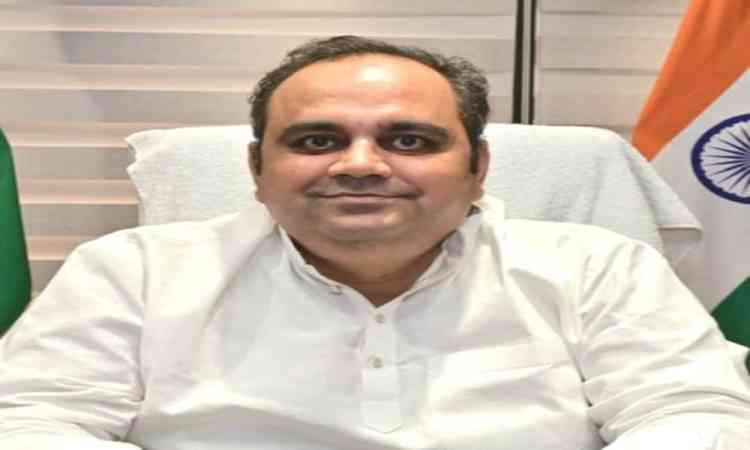
Karnataka Chief Minister Siddaramaiah said on Friday that his government intends to allocate at least 42 to 43 per cent of the benefits of government schemes to the North Karnataka region, in proportion to its geographical area and population, to address regional backwardness.
 IANS
Dec 19, 2025 02:30
0
IANS
Dec 19, 2025 02:30
0
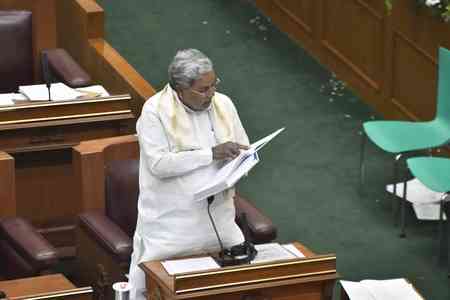
Belagavi, Dec 19 (IANS) Karnataka Chief Minister Siddaramaiah said on Friday that his government intends to allocate at least 42 to 43 per cent of the benefits of government schemes to the North Karnataka region, in proportion to its geographical area and population, to address regional backwardness.
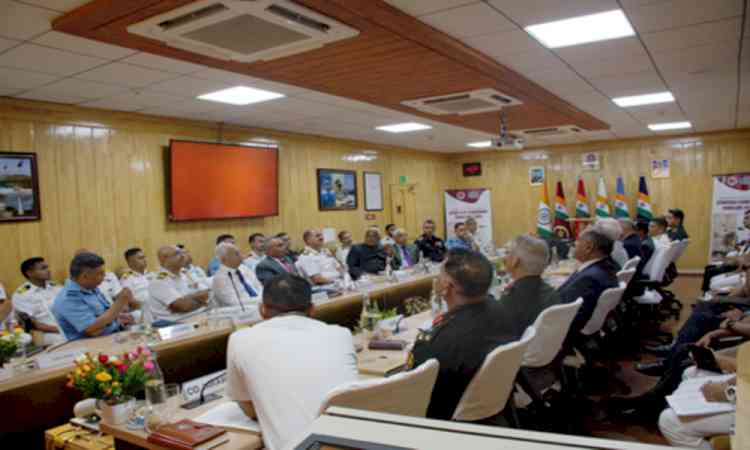
The Chief Minister made the statement in the House while replying to a special discussion held during the session on issues related to the backwardness of the North Karnataka region.
CM Siddaramaiah stated, "The state’s current estimated population is around 6.95 crore. Of this, 2,96,28,767 people live in the 14 districts of North Karnataka. This means nearly 42 per cent of the state’s population resides in this region. Karnataka’s total geographical area is 1,91,791 square kilometres, of which the 14 districts of North Karnataka account for 1,01,708 square kilometres. In terms of area, about 53 per cent of the state’s land lies in this region. In terms of population density, North Karnataka has 292 people per square kilometre, while South Karnataka has a density of 443 people per square kilometre. The state has a total of 224 Assembly constituencies. Of these, 97 constituencies are located in the 14 districts of North Karnataka, accounting for about 43 per cent of the total seats. Therefore, it is our intention that at least 42 to 43 per cent of the benefits of government schemes should be allocated to this region as well."
He said that the tenure of a former member of the 14th Finance Commission, Prof. R. Govinda Rao, has been extended for an additional two months. His report is expected by January 2026. The government will implement the report to address the regional imbalance in North Karnataka.
"The report is expected by January 2026. Prof. Govinda Rao is an economist from North Karnataka, and after examining the report, its recommendations will be implemented," the Chief Minister said.
"A request has been made to allocate Rs 500 crore for the development of Kittur, Karnataka. This will be considered after receiving the Govinda Rao report. The committee was constituted specifically to address regional imbalance," he stated.
As the region was identified as backward, a committee headed by D.M. Nanjundappa was constituted in 2001. After extensive study and visits to all districts, the committee submitted its report in 2002. It identified 39 taluks as extremely backward, 40 taluks as very backward, and 35 taluks as backward, totalling 114 backward taluks, he said.
The committee had recommended that Rs 31,000 crore be spent over eight years. Of this, Rs 15,000 crore would come through regular allocations, while an additional Rs 16,000 crore was to be spent over eight years. At present, more than Rs 31,000 crore has already been spent, CM Siddaramaiah stated.
After the implementation of the Nanjundappa report, dairy activities have increased. Karnataka Milk Federation now produces one lakh litres of milk per day. There is a vast disparity between these regions. Old Mysuru region produces one crore litres of milk daily, while North Karnataka produces just over 10 lakh litres. In the Bidar, Kalaburagi and Yadgir milk unions, daily production stands at 67,000 litres, he noted.
He said the government has increased the subsidy per litre of milk twice, once by Rs 3 and again by Rs 4. This entire amount goes directly to farmers. The present government has cleared Rs 600 crore left unpaid by the previous BJP-led government. As fodder costs have increased, the Chief Minister assured that, as promised in the manifesto, an incentive of Rs 7 per litre will be provided within the current term, he stated.
While attacking the opposition, the CM said, "The special status under Article 371J for the region was granted when the Congress was in power at the Centre. It was opposed by BJP leader and then Deputy Prime Minister L.K. Advani. Therefore, the opposition has no moral right to speak on this issue."
An allocation of Rs 3,000 crore was released in 2023, and Rs 5,000 crore has been released in 2025–26, he noted.
"For the development of North Karnataka, 300 Karnataka Public Schools (KPS) are being opened. Rs 1,800 crore has been spent this year, and directions have been issued to ensure that Rs 5,000 crore is spent within the year. Despite this expenditure, the region continues to lag in education, nutrition and health sectors. To give more focus to education and health, a committee headed by Prof. Chhaya Devadgaonkar was formed. The committee has submitted its report, which will be examined and implemented by the government. This will improve literacy levels," he said.
Greater emphasis has been placed on health, with directions to establish more hospitals, he stated.
"After this government came to power, Rs 3,000 crore has been spent under a special development programme. Despite this expenditure, regional imbalance has not been fully eliminated. Of the 39 extremely backward taluks, 27 fall in the Kalyana Karnataka region. Even after spending Rs 31,000 crore, regional imbalance continues, it was noted," he said.
The Chief Minister said Karnataka ranks first in the country in per capita income. He pointed out that while opposition leaders have been speaking about per capita income ever since the announcement of guarantee schemes, after the implementation of these schemes, Karnataka has achieved the top position nationally in per capita income.
"True equality can be achieved only when all districts develop equally. Due to the caste system, equal opportunities have not been available to all," he said.
Quoting Dr B.R. Ambedkar’s speech of November 25, 1949, the Chief Minister said political democracy cannot succeed without social and economic democracy.
--IANS
mka/dpb