One-Day Sensitization Training Programme Organized in Block Samrala, to Create Awareness About HIV/AIDS Among Rural Population
Under the vision and objectives of the Punjab State AIDS Control Society (PSACS), a one-day sensitization and awareness training programme for the rural population was organized in Block Samrala, District Ludhiana, by the District Programme Officer and CDPO, Samrala, under the guidance of Gurmeet Singh, in collaboration with various NGOs.
 City Air News
Sep 26, 2026 08:08
0
City Air News
Sep 26, 2026 08:08
0
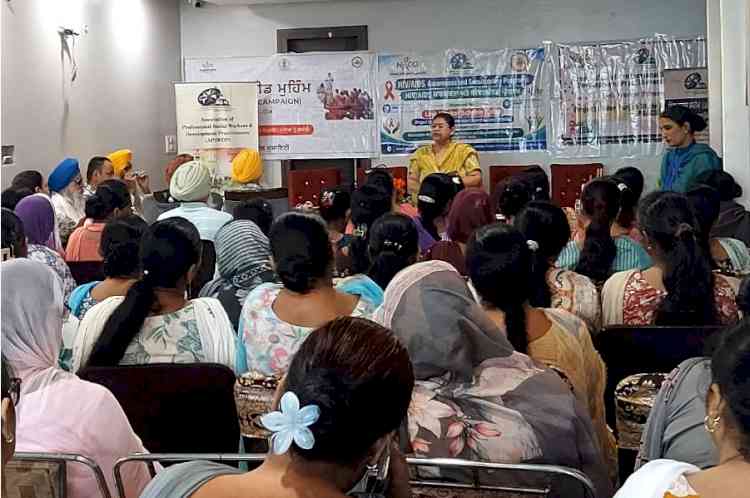
Samrala (Ludhiana0, September 26, 2026: Under the vision and objectives of the Punjab State AIDS Control Society (PSACS), a one-day sensitization and awareness training programme for the rural population was organized in Block Samrala, District Ludhiana, by the District Programme Officer and CDPO, Samrala, under the guidance of Gurmeet Singh, in collaboration with various NGOs.
The main objective of the programme was to create awareness among the rural population about HIV/AIDS, its prevention, treatment, and available healthcare services. During the programme, participants were provided detailed information regarding the modes of HIV transmission, necessary preventive measures, the importance of timely testing, and access to healthcare services.
On this occasion, Anganwadi Workers, ASHA Workers, ANMs, members of Panchayati Raj Institutions (PRIs), and representatives from various villages of Block Samrala, District Ludhiana, participated in the programme. During the training, participants were encouraged to disseminate correct information about HIV/AIDS in their respective villages and play an active role in creating awareness among the community.
The speakers highlighted that awareness, accurate information, safe practices, and timely HIV testing are important for preventing HIV transmission. They also emphasized that it is the collective responsibility of society to treat people living with HIV with respect, sensitivity, dignity, and without discrimination. No person living with HIV should face discrimination in society or while accessing healthcare and other essential services.
During the programme, participants were also informed about the importance of ensuring access to healthcare services, counselling, testing, treatment, and other necessary support services for people living with HIV. The speakers stressed the need for coordinated efforts among the Health Department, NGOs, community workers, and other concerned organizations to ensure that these services reach the rural population effectively.
At the conclusion of the programme, participants were urged to disseminate accurate and scientific information about HIV/AIDS in their villages and surrounding areas. Such efforts can help increase awareness, address misconceptions, and reduce stigma and discrimination against people living with HIV.
The programme reinforced the message that HIV prevention, timely testing, access to healthcare, awareness, and a discrimination-free environment are essential for building a healthy, informed, and supportive community.