Maharashtra formulates policy for complete eradication of drugs by 2029
In a landmark decision aimed at securing the state’s future, the Maharashtra Cabinet, chaired by Chief Minister Devendra Fadnavis, on Tuesday approved a comprehensive policy to completely eradicate narcotics and synthetic drugs from the state by 2029.
 IANS
Sep 1, 2026 10:13
0
IANS
Sep 1, 2026 10:13
0
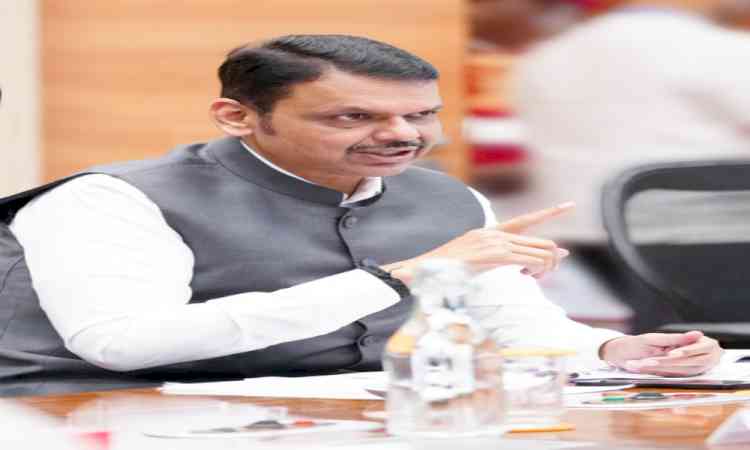
Mumbai, Sep 1 (IANS) In a landmark decision aimed at securing the state’s future, the Maharashtra Cabinet, chaired by Chief Minister Devendra Fadnavis, on Tuesday approved a comprehensive policy to completely eradicate narcotics and synthetic drugs from the state by 2029.
With this move, Maharashtra becomes the first state in India to launch a synchronised, multi-departmental campaign of this scale, setting a benchmark for state-level execution under the Union Government's national Nasha Mukt Bharat Abhiyan (Drug-Free India Campaign).
The newly approved policy establishes a "Whole-of-Government Approach," mandating seamless coordination across all administrative tiers—from grassroots village panchayats to district, divisional, and ministerial levels. To ensure strict accountability, every government department will appoint a nodal officer of the rank of Deputy Secretary to coordinate directly with the Anti-Drug Task Force (ANTF).
"Under this policy, strict action will be taken against the cultivation, cultivation of crops that are responsible for the production of illegal drugs, production, transportation, sale and consumption of natural and synthetic drugs in the state. Also, a large-scale public awareness campaign will be implemented in this regard. For the successful implementation of this campaign, all departments will have to work in coordination with the ‘Anti-Drug Task Force’ (ANTF). For this, a nodal officer of the rank of Deputy Secretary will be appointed from each department for coordination at the ministry level," said a statement.
Action plans have been prepared for various departments for the implementation of this policy. In this, at least one lesson on drug awareness will be included in school education from the next academic year (2027) from class 5 onwards. Additional marks will be given for anti-drug awareness in Mukhyamantri Majhi Shala, Sundar Shala Phase-3.
The Higher and Technical Education Department will have to take action to keep the premises of all educational institutions as drug-free campuses. Additional marks will also be given in the Mukhyamantri Samriddhi Panchayat Raj Abhiyan, Maja Gaon, Arogya Sampan Gaon Abhiyan. Apart from this, awards will be declared every year on June 26 for the best drug-free district. In this, the performance of each district from October 2 to April 30 will be evaluated.
The policy has defined four pillars for drug control: effective implementation, drastic reduction in drug supply, effective reduction in drug demand, and addiction, treatment and rehabilitation. The responsibility for effective implementation of drug control will be on the Home, Transport, Ports, Law and Justice departments. The responsibility for curbing the supply of drugs has been entrusted to the Revenue, Agriculture and Forest departments. Whereas, the Food and Drug Administration Department and the Industries Department will have to take action regarding the illegal drugs that are artificially produced.
In order to effectively reduce the demand for drugs, the responsibility has been given to the School Education Department, Higher and Technical Education, Sports Department, Rural Development, Public Health, Women and Child Development, Skill and Entrepreneurship, and Information and Public Relations Department.
The responsibility for addiction de-addiction, treatment and rehabilitation will be with the Social Justice and Special Assistance, Public Health, Medical Education Department, Urban Development as well as the Skill, Employment, Entrepreneurship and Innovation Department.
--IANS
sj/uk