Maha Cabinet clears implementation of urban challenge fund scheme
The Maharashtra Cabinet on Tuesday approved the implementation of the centrally sponsored Urban Challenge Fund (UCF) scheme (running from 2025-26 to 2030-31).
 IANS
Jul 14, 2026 11:11
0
IANS
Jul 14, 2026 11:11
0
Mumbai, July 14 (IANS) The Maharashtra Cabinet on Tuesday approved the implementation of the centrally sponsored Urban Challenge Fund (UCF) scheme (running from 2025-26 to 2030-31).
It aims to transition ULBs towards market-based financing, bond issuance, and bank loans to create sustainable revenue infrastructure under three core pillars: Water & Sanitation, Creative Urban Redevelopment, and Cities as Growth Hubs.
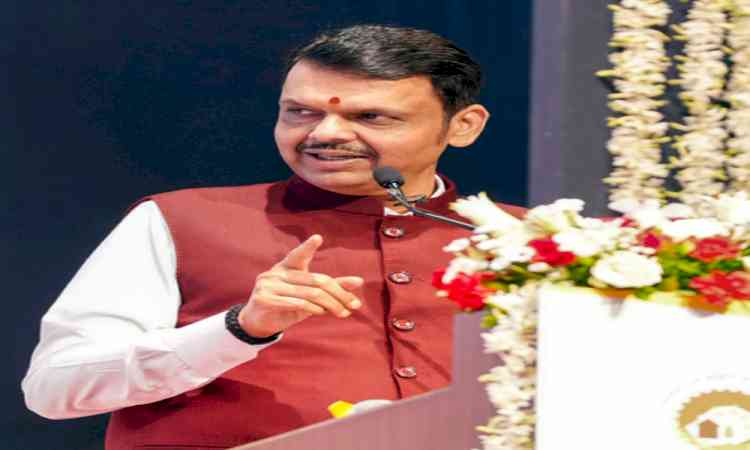
Chief Minister Devendra Fadnavis hopes that the creation of an UCF will position cities as engines of growth and systematically eliminate roadblocks hindering their progress.
Expressing strong confidence in the initiative, the chief minister stated that this innovative campaign will lead to significant improvements in civic infrastructure and service delivery across urban areas.
The government proposed an overall project fund of Rs 90,000 crore. Out of this, a target mobilising framework of Rs 44,800 crore has been mapped out for Maharashtra, comprising Rs 11,200 crore from the Central government, Rs 11,200 crore from the state government, and Rs 22,400 crore sourced through market-based mechanisms to kickstart these transformative urban projects.
Highlighting the state's proactive measures in raising capital for local bodies, the government noted that Maharashtra has already taken successful steps in this direction.
Previously, the Nashik and Pune Municipal Corporations successfully raised dedicated funds for water supply and sanitation projects. These fund-raising initiatives have also received approval from the National Executive Committee (NEC).
Additionally, similar funding mechanisms will soon be extended to support projects under the Pimpri-Chinchwad and Nagpur Municipal Corporations.
The UCF is expected to play a crucial role in overcoming these bottlenecks by enabling cities to raise capital through municipal bonds and Public-Private Partnerships (PPP).
The UCF campaign will encompass approximately 22 key focus areas. These include digital governance and core civic infrastructure development, circular economy initiatives, de-congestion and traffic management projects, last-mile connectivity, revitalisation of urban zones spanning 5 to 20 sq km, developing small and medium towns as growth centres, marketplace redevelopment, pedestrian and bicycle-friendly transport projects, demonstration or pilot projects, upgradation of transit hubs and Transit-Oriented Development (TOD) infrastructure, and creative urban renewal, water supply, and sanitation projects, said the government release.
--IANS
sj/dan