Maha: BEST composite billing, prepaid meters mandated for govt offices in Mumbai
To streamline utility management, the Maharashtra Cabinet, chaired by Chief Minister Devendra Fadnavis on Tuesday approved the implementation of a Composite Billing System by the Brihanmumbai Electric Supply and Transport (BEST) Undertaking for all state government and Brihanmumbai Municipal Corporation (BMC) offices within Mumbai city. All government electricity connections will switch to a prepaid mode starting April 1, 2026.
 IANS
Aug 4, 2026 10:59
0
IANS
Aug 4, 2026 10:59
0
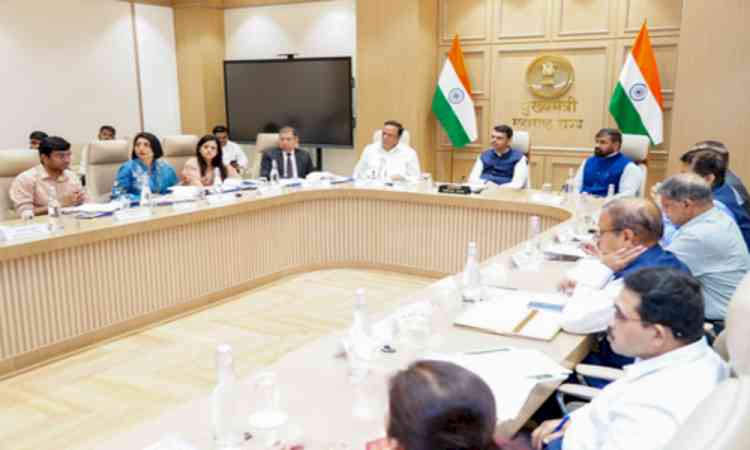
Mumbai, Aug 4 (IANS) To streamline utility management, the Maharashtra Cabinet, chaired by Chief Minister Devendra Fadnavis on Tuesday approved the implementation of a Composite Billing System by the Brihanmumbai Electric Supply and Transport (BEST) Undertaking for all state government and Brihanmumbai Municipal Corporation (BMC) offices within Mumbai city. All government electricity connections will switch to a prepaid mode starting April 1, 2026.
All departments must complete registration on the composite billing portal and verify connection data within 30 days. The Finance Department will frame advance fund allocation procedures, while the Energy Department will conduct quarterly reconciliations.
A single dashboard will provide Management Information Systems (MIS) data, real‑time consumption, outstanding dues and transaction histories. The auto‑debit facility will eliminate payment delays, interest penalties (12–15 per cent) and late fees. Tariff discounts under the ‘Go Green’ initiative and prepaid usage schemes will also apply, said the government release.
The system will immediately benefit 10,017 consumers across 322 groups under BEST’s authorised code system, along with 869 state government consumers across 104 groups. The rollout will occur in four phases: departmental registration, consumer verification, fund allocation and system ‘Go‑Live’.
Further, the Cabinet approved a three‑year extension for the Gopinath Munde Shetkari Apghat Suraksha Sanugrah Anudan Yojana (Farmers’ Accident Protection Scheme), extending its validity up to March 31, 2031. In addition to the extension, the Cabinet broadened the scope of the scheme. Landless agricultural labourers who work directly on farms as well as women farmers holding a certificate under the Maharashtra Women Farmers Empowerment Act, 2026, along with their family members, are now eligible.
Previously capped at two members per household, the scheme will now cover all members of an eligible farmer’s or landless labourer’s family aged between 10 and 75 years. The scheme now includes deaths or disabilities caused by internal bleeding due to accidents and heat strokes, alongside existing coverage for natural calamities (lightning, floods, snakebites, scorpion bites, electric shock) and vehicular/road accidents. Financial aid ranges from Rs 1 lakh to Rs 2 lakh.
The claim proposal submission timeline is set at two months. An Integrated Online Portal will be launched to disburse financial assistance directly into beneficiaries’ bank accounts via Direct Benefit Transfer (DBT). The Appellate Committee will now be headed by the Additional Collector instead of the District Collector. The Cabinet sanctioned Rs 200 crore for the implementation of the expanded scheme, said the release.
Further, to expedite disposal of a growing backlog of second appeals under the Right to Information (RTI) Act, the Cabinet approved the creation of three temporary posts of Additional State Information Commissioners for three years. One Additional Commissioner each will be posted at the Brihanmumbai, Nashik and Amravati benches. A total of 18 support posts have been sanctioned across the three benches. Each bench will receive two deputed officers (one Deputy Secretary and one Section Officer) and three contractual staff (one Stenographer, one Clerk‑Typist and one Peon) recruited via external agencies. The Chief Information Commissioner has been empowered to redeploy these Additional Commissioners or transfer pending cases to other benches based on workloads.
Moreover, to decentralise legal infrastructure and reduce pendency, the Cabinet sanctioned the creation of new courts, public prosecutor offices and judicial posts across multiple districts including Sillod (Chhatrapati Sambhajinagar District), Chandwad (Nashik District), Kinwat (Nanded District), Kej (Beed District) and Pimpri Chinchwad (Pune District).
--IANS
sj/dan