KMVites gain real-world insights through Educational cum Industrial Training in Clinical Diagnostics
Kanya Maha Vidyalaya (Autonomous) Department of Biotechnology organized an extensive educational cum industrial training program for the students. This initiative was specifically designed to enhance students’ understanding by bridging the gap between theoretical classroom learning and real-world professional practices across diverse environments. Throughout the training, students were provided with practical exposure to critical sectors, including clinical diagnostics, healthcare services, industrial biotechnology, and food and nutrition-based applications.
 Rajat Kumar
Feb 27, 2026 10:20
0
Rajat Kumar
Feb 27, 2026 10:20
0
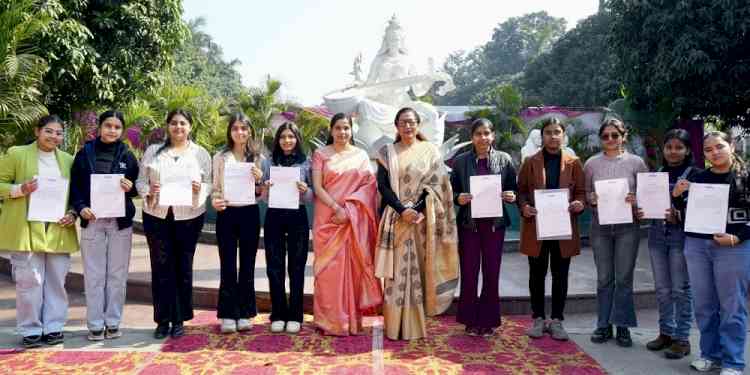
Jalandhar, February 27, 2026: Kanya Maha Vidyalaya (Autonomous) Department of Biotechnology organized an extensive educational cum industrial training program for the students. This initiative was specifically designed to enhance students’ understanding by bridging the gap between theoretical classroom learning and real-world professional practices across diverse environments. Throughout the training, students were provided with practical exposure to critical sectors, including clinical diagnostics, healthcare services, industrial biotechnology, and food and nutrition-based applications.
The comprehensive training schedule included a visit to Epillo Diagnostic Laboratory, where students were introduced to modern diagnostic techniques, sophisticated laboratory instrumentation, and essential quality control procedures. During this session, industry experts emphasized the vital importance of precision, biosafety, and ethical practices, allowing students to fully appreciate the role of biotechnology in disease detection and health monitoring. The learning journey continued at PIMS Hospital, where students gained valuable insights into the integration of biotechnology within healthcare settings. By familiarizing themselves with various diagnostic and laboratory services, the students understood how advanced technologies contribute directly to patient care, medical research, and clinical decision-making.
Shifting focus toward the industrial sector, the visit to the Verka Milk Plant provided significant exposure to industrial and food biotechnology processes. Students observed large-scale milk processing, quality assurance measures, packaging systems, and hygiene protocols, which highlighted the practical application of biotechnology in ensuring food safety. Furthermore, a visit to MC Food and Nutrition allowed students to learn about food quality, nutritional assessment, and product development practices, thereby enhancing their awareness of the relationship between biotechnology, nutrition, and public health.
This industrial interface proved to be highly informative and interactive, enabling KMV students to engage with experts and relate their academic concepts to practical applications. The exposure significantly enriched their scientific knowledge and strengthened their analytical skills. Prof. Dr. Atima Sharma Dwivedi averred that the training served as a meaningful learning experience that reinforced the institution’s dedication to producing skilled professionals through industry exposure.