Kerala ready to become the first state to operationalise an electric truck corridor aligned with PM E-DRIVE
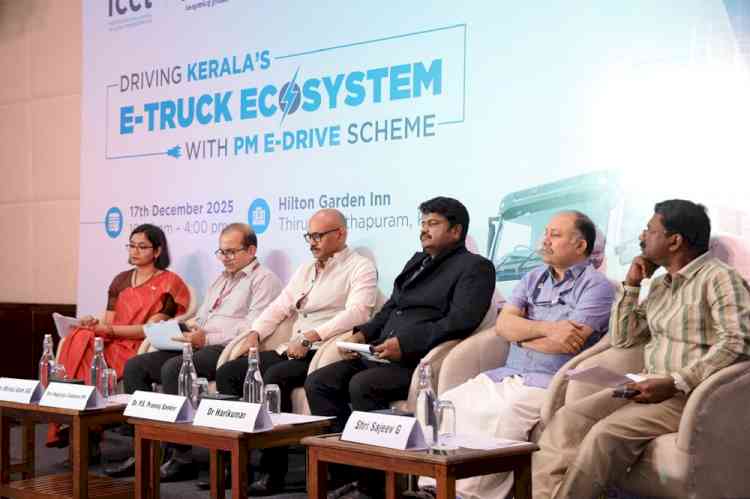
Kerala State Electricity Board (KSEBL) and ICCT hosted a high-level workshop on ‘Driving Kerala’s E-Truck Ecosystem with the PM E-DRIVE Scheme’
 City Air News
Dec 17, 2025 05:13
0
City Air News
Dec 17, 2025 05:13
0
Thiruvananthapuram, December 17, 2025: Kerala is laying the groundwork for India’s first state-led e-truck corridor on NH-66, one of the country’s busiest and important corridors that carries a substantial share of the state’s port-linked and industrial freight, marking a clear alignment between state agencies and the PM E-DRIVE programme to accelerate electric freight adoption.
The state reaffirmed its leadership in India’s clean mobility transition by hosting a high-level workshop that brought together top state government officials, utilities, electric vehicle companies, logistics operators, and technical experts to chart the state’s roadmap for electric freight. PM E-DRIVE scheme, with an allocation of ₹2,000 crore for developing e-truck and e-bus charging infrastructure along major national and state highways, strengthens Kerala’s momentum.
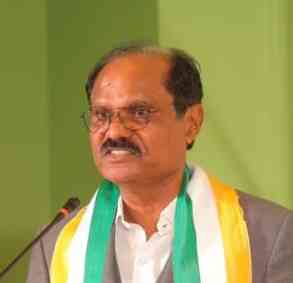
At the workshop, K. Krishnankutty, Hon’ble Minister for Electricity, Kerala, launched a dedicated web portal to support the effective implementation of the PM E-DRIVE Scheme for privately owned lands under Category C. Developed by KSEBL—the first such initiative in India, the portal allows eligible Charge Point Operators (CPOs) to upload details of private land parcels that meet Category C requirements.
This initiative will enable the systematic aggregation of suitable private lands and facilitate the timely submission of proposals to the Ministry of Heavy Industries (MHI) for approval.
Kerala’s Early Leadership Under PM E-DRIVE
Kerala was one of the first states in India to aggregate land parcels and submit proposals to the Ministry of Heavy Industries (MHI) for PM E-DRIVE even before nodal agency designation. After the operational guidelines were released, KSEBL was assigned as the nodal agency and immediately accelerated the land aggregation process.
Kerala has already demonstrated national leadership in clean mobility, with over 3,00,000 EVs registered and make up more than 10% of new vehicle sales, among the highest in India. The state’s coordinated institutional ecosystem, involving KSEBL, the Power Department, the Motor Vehicles Department (MVD), the EV Accelerator Cell, and local industries, provides a strong foundation for scaling electric freight.
K. Krishnankutty, Hon’ble Minister for Electricity, Kerala, said, “To meaningfully reduce pollution from freight movement, it is essential to accelerate the electrification of medium and heavy commercial vehicles. The PM E-DRIVE scheme presents a timely opportunity to do so by enabling the deployment of the necessary charging infrastructure to support electric freight adoption."
Krithika PR, Program Lead, International Council on Clean Transportation (ICCT) said: “Freight electrification is not only critical for protecting the environment, but also for enhancing the competitiveness of India’s freight logistics. Through the PM E-DRIVE scheme, India is laying the foundation for a national transition to cleaner freight transport. Kerala, with its proactive leadership and strong presence of food and agro-based industries, is well-positioned to lead this shift at the state level. By improving logistics efficiency, these sectors can become among the first adopters of electric freight, setting an example for the rest of the country.”
Minhaj Alam, Chairman & Managing Director, Kerala State Electricity Board Ltd. (KSEBL) said in the opening address, “As the nodal agency for PM E-DRIVE in Kerala, KSEBL’s responsibility is clear: to translate a national programme into a charging ecosystem that is reliable, scalable, and user-friendly for medium and heavy-duty electric trucks.”
Puneet Kumar, Additional Chief Secretary, Power Department, Government of Kerala, in the inaugural address shared: “Submissions under the PM E Drive would focus extensively on high-capacity configurations of 120 kilowatt and 240 kilowatt. This reflects forward-looking planning for long-haul freight operations, higher vehicle utilization, and next-generation truck platforms rather than incremental expansion based solely on the current number of fleets.”
Nagaraju Chakilam IPS, Transport Commissioner, Motor Vehicles Department (MVD), Kerala shared “The Transport Department of Kerala views mobility not merely as a consumer of energy, but also as a potential provider and storage of energy. By developing world-class charging infrastructure and wayside amenities, we aim to build a future-ready and sustainable transport system that protects Kerala’s fragile environment while enhancing logistics efficiency and economic competitiveness. In collaboration with the Ministry of Road Transport and Highways (MoRTH), we will facilitate wayside amenities for truck drivers equipped with charging facilities for both vehicles and drivers. These facilities will also provide real-time information on road conditions through videos, helping drivers better prepare for the journey ahead.”
As Kerala’s primary freight backbone, NH-66 carries a substantial share of the state's industrial, port-linked, and construction-material movement. With the expansion of Vizhinjam Port, growing coastal industrial activity, and increasing throughput at logistics parks, freight volumes along this corridor are expected to rise sharply. Without a structured electrification pathway, this growth risks higher logistics emissions, worsening congestion, and pressure on densely populated districts such as Ernakulam, Kollam, Kozhikode, Alappuzha, and Thiruvananthapuram.
Medium- and heavy-duty trucks are among the largest contributors to road-transport pollution in India. Electrifying freight movement along NH-66 presents a significant opportunity to improve air quality, reduce operating costs for industries, and strengthen Kerala’s competitiveness in export sectors such as rubber, seafood, cashew, and plantations, all of which face tightening global climate and carbon-disclosure expectations.