JP Nadda defends ECI's voter roll purification in RS, accuses Cong of deflecting electoral defeats
In a fiery rebuttal during the Rajya Sabha debate on electoral reforms, Union Minister, BJP President and leader of the House, J.P. Nadda strongly defended the Election Commission of India's (ECI) Special Intensive Revision (SIR) of electoral rolls, accusing the Congress of tarnishing the institution's image to mask its own electoral failures and cadre frustration.
 IANS
Dec 16, 2025 03:41
0
IANS
Dec 16, 2025 03:41
0
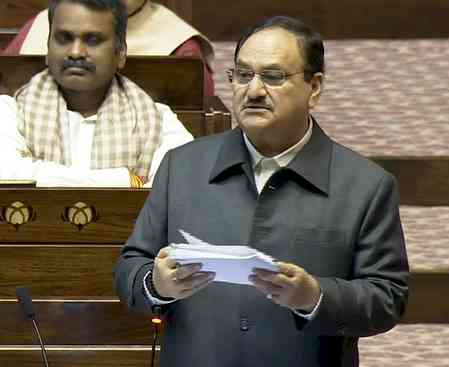
New Delhi, Dec 16 (IANS) In a fiery rebuttal during the Rajya Sabha debate on electoral reforms, Union Minister, BJP President and leader of the House, J.P. Nadda strongly defended the Election Commission of India's (ECI) Special Intensive Revision (SIR) of electoral rolls, accusing the Congress of tarnishing the institution's image to mask its own electoral failures and cadre frustration.
He was replying to a debate on electoral reforms. Nadda emphasised the ECI's constitutional duty to purify voter lists, stating that restricting foreign nationals from influencing elections is essential for democratic integrity.
He cited a Supreme Court judgment, referencing cases like Lal Babu Hussain, underscoring that Electoral Registration Officers must verify citizenship. "Tarnishing the ECI is tantamount to tarnishing democracy," Nadda asserted, likening opposition criticism to the Hindi proverb, "Jeet jaao tau Sikandar, haar jaao tau umpire kharab (Win and you're Alexander, lose and the umpire is faulty)".
Addressing EVM concerns raised by Congress member Digvijaya Singh, Nadda highlighted that Electronic Voting Machines were introduced during Rajiv Gandhi's era. But Singh interrupted him and said VVPAT (Voter Verifiable Paper Audit Trail) was mandated by a Supreme Court order in 2013. Nadda noted no mismatches in mandatory VVPAT verifications of over 60,000 machines and challenged critics to attempt hacking, as the ECI has publicly invited demonstrations, but none turned up.
Nadda warned against reverting to ballot papers, recalling booth capturing and vanishing boxes in pre-EVM eras, including Bihar elections.
On voter rolls, Nadda pointed to significant increases in West Bengal since the last SIR in 2002, with voter numbers rising from 4.58 crore to 7.63 crore (66 per cent growth).
He cited the ECI data showing the sharpest surges in Bangladesh-bordering districts: Uttar Dinajpur (105 per cent), Malda (95 per cent), Murshidabad (88 per cent), South Parganas (83 per cent), and Jalpaiguri (82 per cent). The draft rolls published on December 16 revealed over 58 lakh deletions under SIR, including duplicates, deceased, and shifted voters, with high transparency, but few objections were raised.
Nadda accused Congress of submitting no reform suggestions since 2014 despite holding press conferences.
He contrasted ECI's independence, noting multi-member commissions since 1989 and recent laws maintaining immunity.
Highlighting Congress' long absences from power in states like Gujarat (30+ years), Odisha, and West Bengal (post-2011), he urged them to introspect on leadership issues rather than blame the ECI.
Digvijaya Singh countered, demanding VVPAT slips be handed to voters for verification and alleging pre-VVPAT EVM vulnerabilities. The debate underscored partisan divides, with the government framing SIR as cleansing for fair elections, while the opposition sees it as targeted disenfranchisement ahead of polls.