'Inherited abnormal state, intend to change it to aggressively market economy' : West Bengal Finance Minister Swapan Dasgupta on first Budget (IANS Interview)
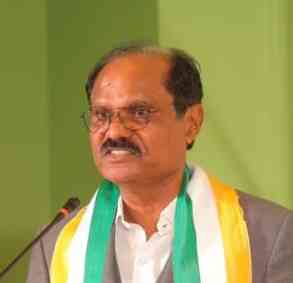
West Bengal Finance Minister Swapan Dasgupta on Wednesday said that the BJP government inherited an "abnormal state, bequeathed with large debts" from the previous Trinamool Congress regime, but is attempting to transform it into an "aggressively market economy".
 IANS
Jun 24, 2026 09:15
0
IANS
Jun 24, 2026 09:15
0
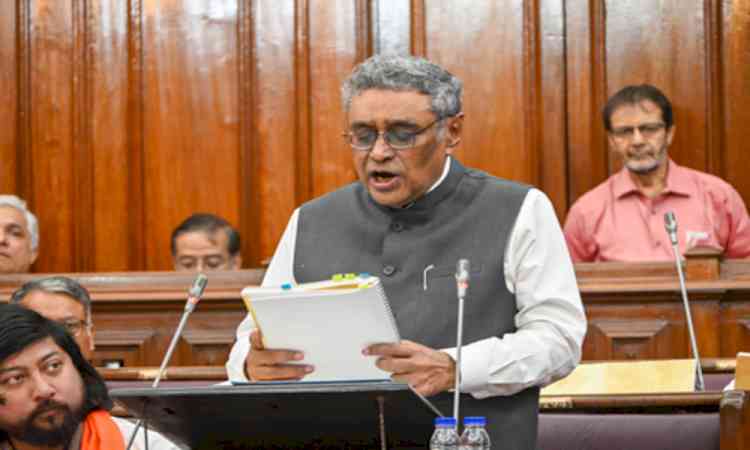
Kolkata, June 24 (IANS) West Bengal Finance Minister Swapan Dasgupta on Wednesday said that the BJP government inherited an "abnormal state, bequeathed with large debts" from the previous Trinamool Congress regime, but is attempting to transform it into an "aggressively market economy".
In an exclusive interaction with IANS following the presentation of the state Budget 2026-27, Dasgupta dwelled on the long-pervading challenges, his key focus areas, and the future prospects.
Excerpts from the interview:
IANS: Tell us about your preparation for the West Bengal budget since it is also the BJP government's first budget in the state.
Swapan Dasgupta: There was nervousness on my part, because you don’t want to have a very bureaucratic budget nor a so political budget that will overwhelm the process. You had to find a balance; I think it worked out well.
You've been bequeathed a hideously large amount of Rs 8 lakh crore debt. How do you plan to meet it, meet the obligations therein? Now there are two ways in which this can be done. The first, which I think has been very important in this and which people didn't realise, is that for the past 15 or at least the past 10 years, West Bengal has more or less bypassed all Central schemes and projects, nearly all of them. So, the benefits which accrued to the state from Central projects were completely unknown, even by some officials.
Union Finance Minister Nirmala Sitharaman pointed out various things that the state was unaware of. That has been a big bonanza.
The other important thing for us is increased compliance.
Yesterday, the Chief Minister (Suvendu Adhikari) had pointed out how there had been an exponential growth in the quality of sand and mines (at stone quarries) in Birbhum district. That was one area completely left to the mercy of predators. It was total loot which took place there. Royalty was just not paid. Out of eight trucks which exited, probably just one paid. It was a loot of that scale.
Now we are trying to curb it using detection technologies, but it will take some time.
We inherited a state full of grievances. Everyone had grievances. Government employees, students, parents... regarding the recruitment of teachers, businessmen were getting mad with 'syndicate raj'. People were planning to move out.
We had to try to deal with these grievances.
We are trying to normalise what has become a completely abnormal state. This budget should be seen as a political intervention to restore the confidence of Bengal's people and those from outside.
Many of the reforms were made keeping in mind that after Singur, industrialists lost their faith in the state. Consensus was that it was too difficult to do business in Bengal. We had to get out of that syndrome.
I said ours is going to be a business-friendly government.
We are planning to get a new industrial policy on the ground as soon as possible. We are racing against time. We lost 50 years, and we are trying to make it up.
IANS: What is the government's plan to bring business and industries back into the state?
Dasgupta: Nobody wants to write off a state. There was a relief when we won the elections. It will not get any worse. We are telling investors that come over, it will be reliable.
I am confident that Bengal is not a new place in the country; many started the industries in Bengal. They will test the waters, and if we can deliver, then it will gain momentum.
IANS: What are the government's plans on infrastructural development in the state?
Dasgupta: The ports are longer-term. Investment will be needed. There is the freight corridor from Ludhiana to Dankuni that ends in Bihar. The last government didn’t give permission. We are determined to finish it.
We have already announced our decision to review the Urban Land (Ceiling and Regulation) Act, 1976, to improve land availability for projects. I feel that this archaic act is just a relic of the old socialist days and should be scrapped.
There is land which is not being used despite being given for industries. Why do we construct shopping malls on these lands? It is better to use those for industrial development.
We want to make people excited about what can happen in Bengal.
We always were the 'Gateway of the East' but lost midway...after 1966, when the left came to power and militant trade unions started, some say it was due to the Trinamool Congress's actions. It (Trinamool) was the final nail in the coffin.
Companies have been reaching out. Privately, many have called me, also individually, to the Chief Minister and me. We will pool in all our things and then start. No summit like that. We need to get our act together first before inviting people.
I am not saying Bengal Global Business Summit should be scrapped but it is not a priority. It had turned into a joke. People are testing the waters; they want to invest.
IANS: How to plan to tackle the revenue from liquor?
Dasgupta: Liquor had gone out of control; it was a social problem. Women were complaining that there are liquor shops in residential areas, open air drinking was seen in residential places. There is over-dependence on liquor at present; we aim to change it.
We aim to become the fastest-growing state in the country with the highest growth rate. We aim to accelerate the growth and do our bit for the national economy.
IANS: There is a row over the BJP government's decision to have ISKCON implement the midday meal scheme in the state that will exclude eggs.
Dasgupta: It can be sensitive, but we want to run it efficiently. ISCKON can tweak their menu to suit Bengali tastes. It will work, but it is too much to ask them to serve eggs. If there is a problem, we will solve it. The erstwhile Maa kitchens are serving eggs and fish; it is not like we are promoting vegetarianism or something.
IANS: How is the Bengal government planning to develop the state's economy?
Dasgupta: We are trying to make it an aggressively market economy. There is no other alternative to it as of now. We will allow shops and merchant establishments to run on a 24x7 basis. It will give a push to revenue collection and also generate employment. Kolkata will be a very different city henceforth.
We are taking risks and becoming audacious. Everyone is looking at us; we can't fail.
--IANS
cg/vd