Industry expectations from Union Budget 2026
 City Air News
Jan 28, 2026 02:33
0
City Air News
Jan 28, 2026 02:33
0

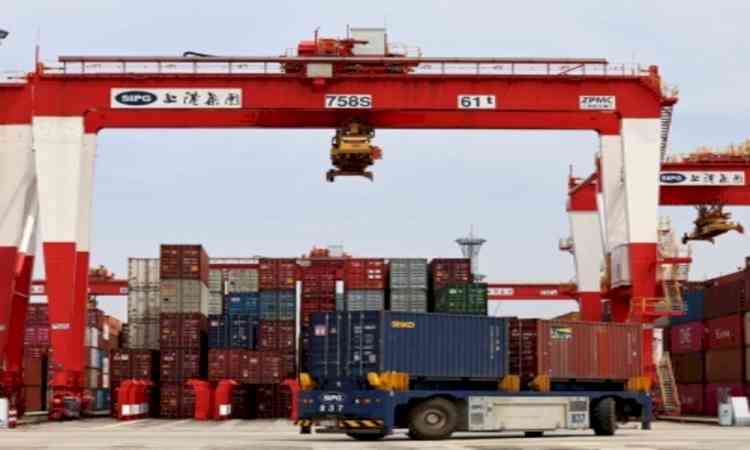
“The logistics and infrastructure sectors are currently at a defining juncture, presenting a distinct chance to greatly improve India’s competitiveness and foster long-term growth. Government initiatives like the National Logistics Policy, PM Gati Shakti, and the establishment of dedicated freight corridors reflect a robust commitment to enhancing supply chains and national connectivity. Furthermore, investments in multimodal transport, logistics parks, and economic corridors are establishing the groundwork for a more efficient and resilient ecosystem. As we approach Budget 2026, it is crucial to sustain this momentum through strategies that expedite infrastructure implementation, lower logistics costs to align with global standards, and facilitate seamless multimodal integration. Equally vital is a strong emphasis on technology-driven modernization, which includes digital platforms, automation, and data-informed planning, along with incentives for sustainable logistics practices such as green infrastructure and energy-efficient transport. Additionally, focusing on capacity building in Tier II and Tier III regions will further promote inclusive growth, job creation, and MSME involvement. A progressive budget that aligns policy objectives with effective execution on the ground can unlock new opportunities for businesses and communities, alleviate structural bottlenecks, improve connectivity, and firmly establish logistics as a cornerstone of India’s economic progress and a crucial driver of national development.”
Gregory Goba Ble, Head of UPS India and Director of MOVIN Express
“To have the government be more all-in and to be more invested both in letter, money and spirit, for that matter, as far as the ecosystem is concerned. The Government set aside a budget for Rs. 10,300+ Crore to boost the India AI mission over 5 years might not be sufficient for scaling up the AI powered ecosystem. We need to treat AI as a future technology and treat it like Infrastructure to ensure better accessibility to funding.
We would also like to highlight that if the government is more invested in the business then the ecosystem will be primed to support the startups. If a startup gets the 1st set of funding from the government and they need to scale up, going back to the government is not an option. The startup has to depend on VC’s. Therefore, we would like the Government to set up funds to facilitate the funding for scaling up particularly for the startups with a proven track record for performance.
AI startups we can allocate only 10 to 15 percent budget allocated for AI R&D, which is not sufficient to scaleup. Moreover, currently we use the GPUs that are not in India we're always living on borrowed technology and have to pay substantial amount for the same. With the high velocity of AI startups in the country, we need to build that capability inside India – a budget allocation for the same will be a great trigger for future growth. If the government is backing an initiative it is going to be the nation's competitive advantage.
The Centre must fully commit to AI startups in Budget 2026 with enhanced funding and security measures to power India's deep-tech ecosystem.”
Varun Kashyap and Sridevi Reddy, Co-Founders, Zithara.AI
“Medical inflation continues to be one of the biggest challenges facing India’s healthcare system, projected at 11.5%–14%, among the highest in Asia. While measures such as the removal of GST on insurance premiums and allowing 100 percent FDI in insurance can improve affordability and sector resilience, rising medical costs continue to put pressure on Indian households.
As the Union Budget 2026–27 approaches, there is an opportunity to strengthen healthcare affordability through higher public health spending and a sharper focus on prevention. Currently, public health expenditure in India remains below global benchmarks and even short of the National Health Policy target of 2.5% of GDP in 2025. Enhancing the budgetary outlay for public health would strengthen primary care networks, expand preventive services, and relieve financial stress on citizens.
At the same time, policy measures that encourage preventive healthcare can significantly lower long-term treatment costs. Industry reports indicate that preventive care reduces hospitalisations and improves health outcomes. Introducing separate and enhanced tax benefits for OPD services and preventive health screenings, beyond the current limits under Section 80D, would encourage wider adoption of preventive care.
With India’s ageing population and rising burden of chronic diseases, a prevention-led approach, supported by budgetary reforms, can play a critical role in improving health outcomes in the country.”
Srikanth Kandikonda, Chief Financial Officer, ManipalCigna Health Insurance
“As work patterns evolve and India’s urban workforce becomes increasingly mobile, we expect the upcoming Union Budget to formally recognise organised corporate and employee transportation as a vital productivity enabler. With hybrid work models, late-hour shifts, and business travel on the rise, reliable and compliant chauffeur-driven mobility has become integral to ensuring workforce efficiency, safety, and continuity. From the Budget, there is a strong expectation of policy support that encourages a shift from unorganised transport to technology-led, professionally managed mobility solutions particularly those that prioritise chauffeur training, service standards, and regulatory compliance. At the same time, we look forward to targeted and higher incentives to accelerate the transition to clean mobility in corporate fleets. Incentivising EV adoption in commercial, high-usage fleets where fuel savings and emission reductions per rupee of incentive are significantly higher than private vehicles can deliver faster and more meaningful environmental impact.
A Budget that reinforces road safety, fleet-ready charging infrastructure, and a hospitality-led approach to mobility where customer experience, accountability, and consistency are central will help build a safer, greener, and more resilient corporate mobility ecosystem for India’s future.”
Rajesh Loomba, CMD, ECOS (India) Mobility & Hospitality Limited.
"As India intensifies its focus on cleaner and more efficient freight mobility, we look forward to the upcoming Union Budget recognizing LNG as a critical transition fuel for long-haul transportation. While LNG trucks offer significant economic and environmental advantages, their adoption continues to face challenges such as higher upfront vehicle costs, limited refueling infrastructure, and fuel pricing complexities arising from multi-layered taxation.
From the Budget, there is a strong expectation of targeted fiscal measures that can bridge this cost parity gap, including rationalization of GST, accelerated depreciation benefits, and direct purchase incentives for LNG-powered heavy vehicles. Equally important will be policy support to accelerate the development of LNG refueling corridors through viability gap funding, concessional financing, and strategic land allocation along national highways.
A forward-looking Budget that prioritizes uniform taxation, competitive fuel pricing, and infrastructure-led growth can significantly boost LNG adoption across logistics fleets. This will not only reduce freight emissions and operating costs but also strengthen India’s energy security, support domestic manufacturing of cryogenic equipment, and contribute meaningfully to the nation’s long-term decarbonization goals.”
Deepak Acharya, Chief Executive Officer at INOX India Limited.
“The medical tourism sector expects the Union Budget 2026–27 to respond to the growing global demand for India’s ‘Heal in India’ initiative, as international patients increasingly seek affordable, high quality and outcome driven healthcare.
We expect the government to allocate a specific budget to promote ‘Heal in India’ initiative in the priority markets like Africa, middle east, SAARC and other emerging markets to promote medical tourism to India. Besides we expect specific measures to ease medical visa processes, support internationally accredited hospitals, and expand quality healthcare facilities into Tier II and Tier III cities.
As demand for complex procedures and treatments such as cardiology, oncology, orthopaedics and fertility care continues to rise, expectations also include policies that attract foreign capital and strategic partnerships, along with rationalisation of import duties on advanced medical equipment and incentives for digital health and AI enabled diagnostics.
Overall, the sector expects the Union Budget 2026–27 to scale the Heal in India initiative into a globally competitive medical value travel framework by combining affordability, clinical excellence and sustained global investment.”
Ishaan Dodhiwala, Co-founder, Medijourn Solutions Private Limited
“As the auto industry continues to evolve, the Union Budget 2026 comes at a crucial time, especially after a strong recovery driven by GST 2.0 reforms that have improved compliance and strengthened supply chains. Sustained focus on infrastructure development, support for domestic manufacturing and skill upgradation will be key to maintaining growth momentum across the auto and auto ancillary sector as volumes rebound across segments. The industry is also looking for continuity, along with a renewed push towards localization, innovation and ease of operations to enhance global competitiveness. A forward looking budget that supports manufacturing scale-up, road safety and policy stability will enable companies like ours to invest with confidence, create employment and contribute meaningfully to India’s journey as a global automotive manufacturing hub.”
Sidhartha Khurana, Managing Director, STUDDS Accessories Ltd.
“From Budget 2026, we anticipate enablers for continued investment in infrastructure, as the logistic industry continues to contribute significantly to the GDP. On the electric mobility front, we expect the government to further strengthen consumer-led incentives and schemes to accelerate EV adoption. Rationalization of duties on EV components would be a welcome move, along with greater support for localization of EV manufacturing. While the charging network has expanded, there is still considerable progress to be made, and we would greatly appreciate strong fiscal support for the expansion of charging infrastructure.”
Anurag Mehrotra, Managing Director, JSW MG Motor India
“The Union Budget 2026-27 will be focus on affordable housing, tax rationalization, rapid approvals & sanctions, uniform land policies and infrastructure-led growth to sustain momentum in India’s real estate sector.
Dr. Nitesh Kumar Said, “The real estate sector is one for the major driver of the economic growth of India along with employment generation, and urban transformation. We hope the upcoming budget to provide a strong push for affordable housing and extension of tax incentives under Section 80-IBA. This will help bridge the housing gap and make home ownership more accessible to the mid-income segment.”
We request that the government ease the GST rates on properties that are under construction and ease in the stamp duty and registration charges. These measures will enhance affordability and demand in Tier II and Tier III cities where the government wants to accelerate growth.
We have seen that regulatory frameworks like RERA and tribunals have already corporatized and regularized the real estate industry, bringing significantly greater transparency for end consumers. In the same way, ease of doing business for economic drivers such as real estate developers is equally essential. This can be achieved by introducing uniform land policies across states, ensuring rapid approvals and sanctions, implementing a single-window clearance system, and rationalizing GST rates to curb rising construction costs, especially for metals and other key inputs, is also the need of the hour.
Higher spending on urban infrastructure like metros, roads, and smart cities will boost real estate by improving connectivity and quality of life. At the same time, incentives for green buildings and renewable energy will encourage sustainable development in line with India’s climate goals.
Easy access to funding for long term, simpler FDI rules, and supportive tax policies for REITs and InvITs will attract more investment into the sector. In addition, policy support for rental housing can create new demand, improve affordability, and meet the housing needs of India’s rapidly growing urban population.”
Nitesh Kumar, MD & CEO Emami Realty Ltd.